
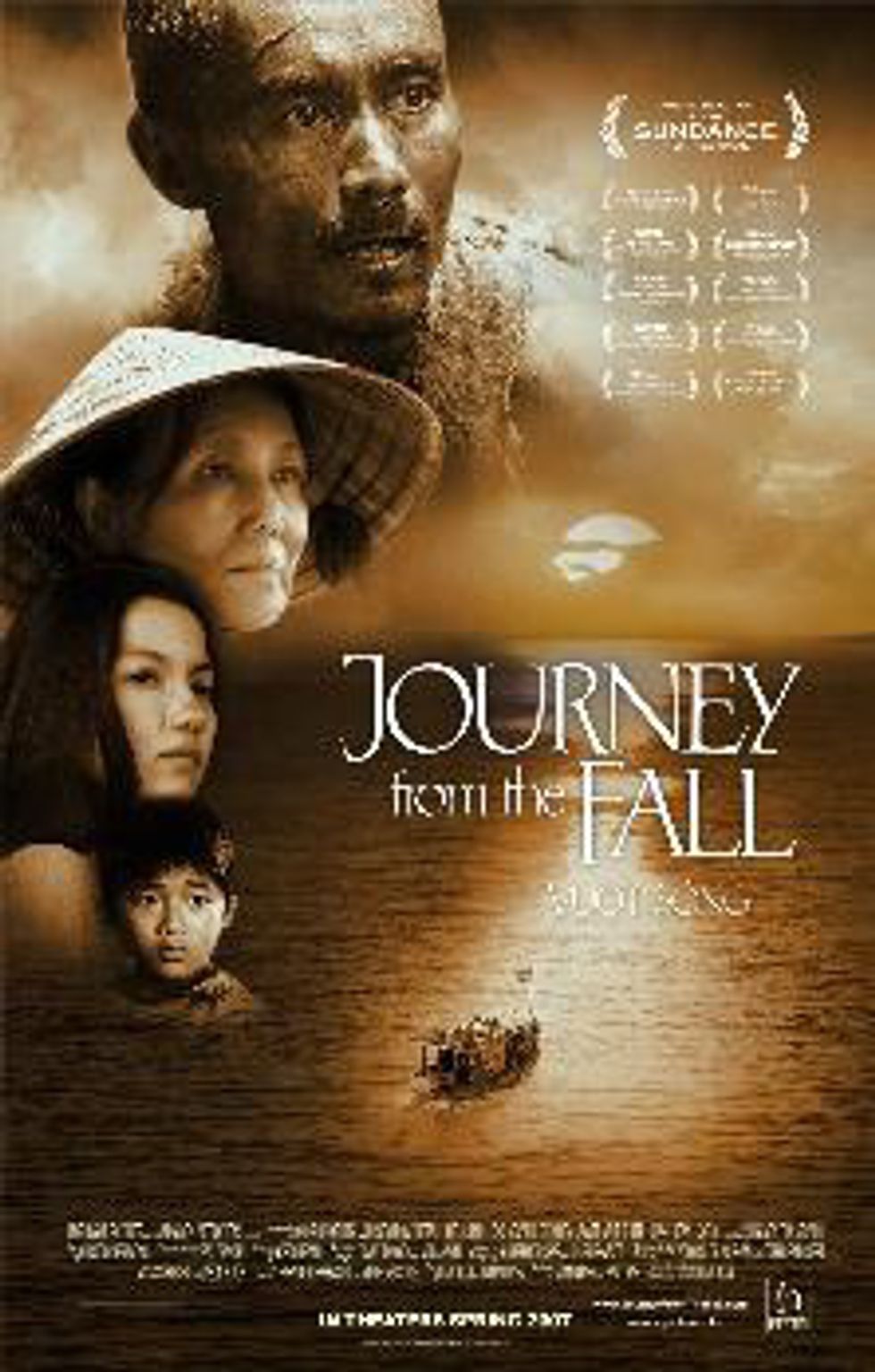
On January 16, 2009, the Vietnamese art gallery “F.O.B. II: Art Speaks” had two cases of vandalism, forcing the show to shut its doors to the public. The pieces in question were controversial in their sympathetic view of Northern Vietnam and Ho Chi Minh, chosen by the gallery as an artistic attempt to open up communication about topics that are generally regarded as taboo in the Vietnamese-American community. Three years earlier, the independent film Journey from the Fall, a story about a Southern Vietnamese family torn apart from the fall of Saigon, received much warmer treatment. In addition to winning many festival awards, it is held in high regard having been financed entirely by the Vietnamese-American community.
Journey from the Fall is a wonderfully crafted window into the stories of Vietnamese boat people, their escape from Vietnam, and their adjustments and struggles in the United States. The film can be analyzed with the theoretical framework provided in important literature on the Vietnamese American diaspora, notably Yen Le Espiritu’s “Toward a Critical Refugee Study,” Lisa Lowe’s “Immigration, Citizenship, Racialization,” and Karin Aguilar-San Juan’s Little Saigons. However, in exploring the diasporic nature of Vietnamese-Americans, it is important to keep in mind the reactions to both Journey from the Fall and the “Art Speaks” gallery, and what they say about the constructed practice of memory.
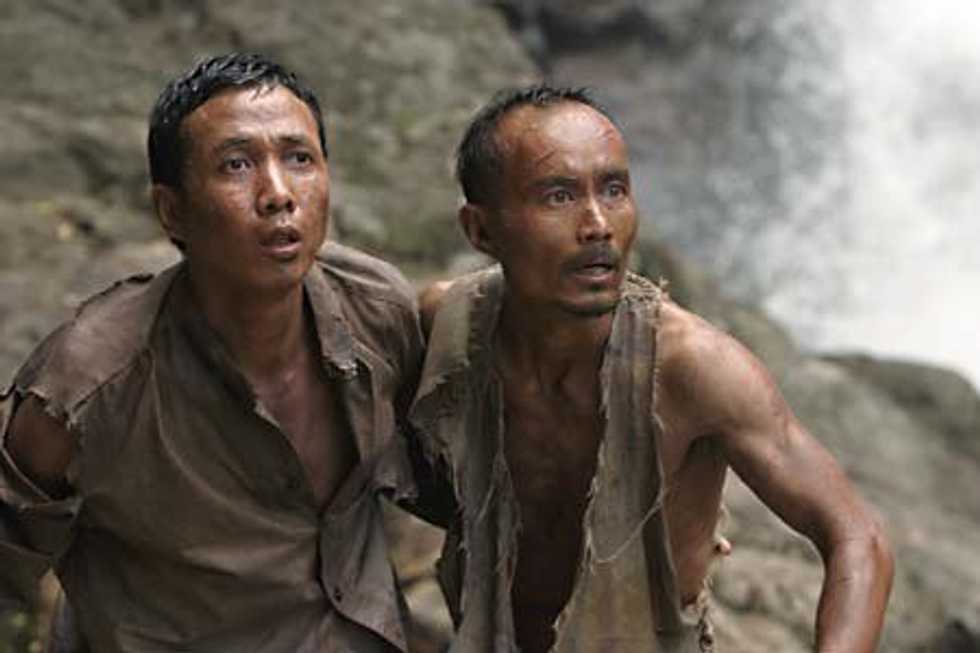
The plot of Journey takes two paths: one of Long, who gets imprisoned in a North Vietnamese reeducation camp, and the other of his family, who escape Vietnam by boat. This allows the audience to see two perspectives of displacement following the war. Long’s time in the reeducation camp is tainted by the harsh treatment he receives from the Communist camp leaders. Long and the rest of his fellow inmates are subject to physical punishment and getting shot if they escape. In addition to these conditions, Long faces psychological torture as he hears rumors of his family’s death, and loses the will to persevere. His wife Mai, son and grandmother meanwhile, escape via boat under threat of being captured. In the United States, they must deal with the loss of Long while struggling to adapt in their new hostland.
Long’s side of the story gives us context to the cultural and ideological separation between peoples of North Vietnam and South Vietnam. In the reeducation camp, Long is expected to renounce his alignment with South Vietnam and become “re-educated” into the new communist doctrine. There are scenes in the movie where Long faces an official who mocks his values and lost cause, and even quotes french philosophers insofar as to expose Long’s ignorance. Long is hardheaded to submit to the communists, but is obviously aware that Vietnam has become a hostile place for him.
The filmmakers wanted to show both the cruel nature of the re-education camps and different ideologies that dominated Vietnam at the time. Obviously, this film is sympathetic to the plight of the South Vietnamese troops and refugees that were affected violently by the war. This is not to suggest that the film is exaggerated, but Karin Aguilar in Little Saigons suggests that the film fits the collective memories that Vietnamese-Americans keep alive within their communities. These memories are preserved and then reshaped through stories, traditions, and monuments like the ones constructed in Orange County. But with the War in Vietnam, many Vietnamese are so affected that discussion about topics like North Vietnam and communist ideologies cannot have a permanent home in the collective memory of Vietnamese communities. This is why a Hi-Tek video store in Little Saigon caused a riot because the owner displayed a figure of Ho Chi Minh in his store, according to Aguilar. In the film, Mai does not bring up Long to her son because of the traumatic memories she has concerning him. As she cries near the end of the movie “I died that day on the boat,” referring to the refugee boat where she was burned.
The film places much emphasis on the effect war has on people, especially during Long’s timeline and his family’s timeline during their escape. The later parts of the movie show Mai and the rest of her family living in California, and the struggles they face as minorities. Long’s son is misunderstood at school and gets picked on by latino bullies. The principal, in one scene, regretfully scolds him for initiating a fight and is forced to suspend him. This scene is symbolic of some of the attitude towards refugees, where there cannot be an understanding of the refugee’s past so they must be treated as a citizen under the law. In Espiritu’s Critical Refugee Study, she quotes, “The Vietnamese role was passive: things were done to them; they did very little. And, like much of the camp life that followed, they stood in interminable lines waiting for something to happen;” This was especially true for Long’s son, who had no control over the events that were happening around him. His grandmother told him stories of Vietnam and encouraged him to write letters to his father, in order to give him hope. Mai represents the other perspective, since she does not wish to remember Vietnam. A climactic argument arises between Mai and Grandmother over the cards that her grandson was writing, something she feels is psychologically unhealthy for her son.
The film does not answer the question of how memories of Vietnam should be dealt with. Mai and Grandmother offer two extremes, but in the end, the connection that the family holds to Vietnam and Long is settled somewhere in the middle. The last scene shows the family flying a kite, like Mai, Long, and their son used to do. Mai tells her son that she remembers the day they first flew a kite and he almost got lost; it was the scariest day of her life. They burn the letters to Long to send him off into the spirit world, one of the traditions they as Vietnamese still hold on to in America.