
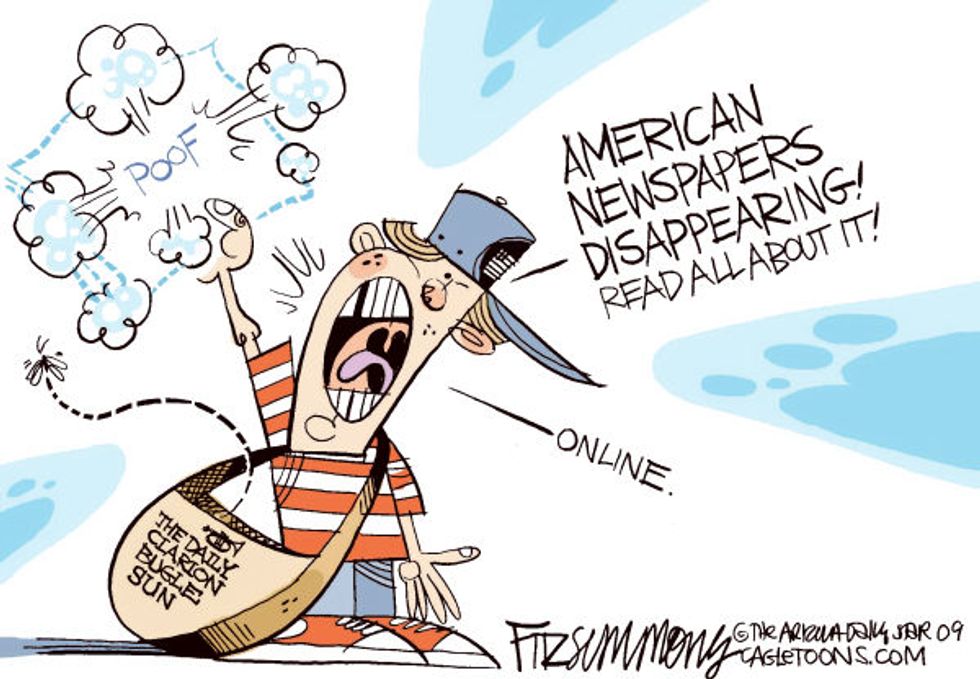
“Journalism..ahh the dying field,” or, “Why Journalism? Journalism is dying,” are the two most common reactions I receive when I tell adults that I plan to major in the field of journalism. Notice that I said I receive those reactions from adults, rather than people my age or even younger. I believe the reason my peers do not say the field of journalism is “dying” is because we, as young adults and teenagers, are overseeing journalism change.
However, I have to give adults partial credit for their belief that journalism is dying, because parts of journalism are dying. Statistics show that print newspapers and magazines are slowly dying out. In fact, I wouldn’t be surprised if print media didn’t even exist by 2050. What adults fail to understand is that just because print media is dying, that doesn’t mean it’s not being replaced by other media outlets.
A major media outlet that has began to replace print media and become a crucial addition to online media is social media. Corporations are making strides to beat competition and gain/maintain loyal fans is by contacting them directly and immediately through the networks that keep our young generation glued to their phones and computer screens.
Some of these networks are Facebook, Twitter, Instagram, Tumblr and Pinterest. In just a single tweet, billions of international followers of People magazine’s Twitter account discovered that Kate Middleton’s royal baby was a boy. Instead of placing an ad in a local newspaper, personal trainers and small startup gyms are creating Instagram accounts showcasing videos of workout routines, enticing people to join that gym/trainer in a workout.
In addition, print media are now streaming articles online and through social media accounts rather than in print because they reach a more widespread audience. With online links and "share" options, readers can share an article to all of their followers or to a friend in just the click of a button. Sharing a tangible newspaper isn't very easy to do. So, just because print media is dying, doesn't mean the content isn't still being created and read.I think another major point adults seem to overlook is the fact that journalism can’t die out in the first place. If it were to, how would people receive the information they need? Journalism is often referred to as the “gathering, processing, and dissemination of news and information related to the news to an audience” (Wikipedia). In other words, journalism is the act of relaying information from one person or audience to another person or audience.
Our society simply can’t function without outlets to send and receive information; therefore, journalism can’t die out. Due to journalism, Americans can stay up to date on the protests occurring in Ferguson, Milwaukee and New York, towns can be notified of a missing person or a local fire, and we, individually, get to stay in touch with our favorite celebrities, TV shows and friends.
Although the appearance of newspapers and other print media are disintegrating, people’s need to receive and connect with information persists, meaning that media has found and will continue to find different and innovative outlets to reach their audiences. As long as media can keep up with the continuous technological changes upon each generation, journalism will always find its way to keep the world functioning as it will gather, process, and disseminate news and information.
















