

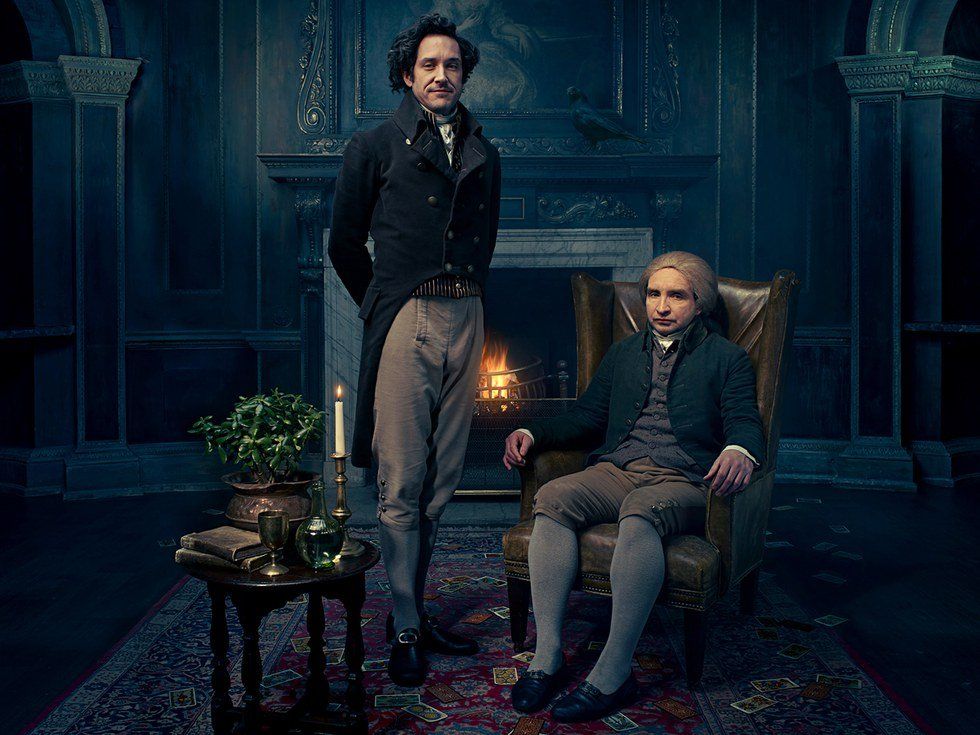
As a lover of magic, magic-based narratives, and 19th century England, one of my truest loves of the past few years has been the BBC miniseries “Jonathan Strange and Mr. Norrell.” Based on the “New York Times” Bestseller by Susanna Clarke, “Jonathan Strange and Mr. Norrell” tells the story of Regency-era England struggling in the Napoleonic War. When a countryside society of theoretical magicians discovers a man who claims he can do “practical magic”—that is, actual, legitimate magic—they ask him to prove his words. Little do they know this will be the catalyst for an even larger, greater narrative, which will determine once and for all the fate of English magic.
I am ecstatic that the series has finally arrived on Netflix, as I had originally watched it not too long after its original airing and found it one of the most exciting shows I have ever watched. I’m a picky viewer when it comes to television, since watching a show in full takes a large amount of time and dedication, and I don’t like to waste either of those things. But the drama and intrigue of the show is instantaneous, and once the plot really kicks into full gear (which doesn’t take very long), it’s hard to stop watching.
All of the characters are exceedingly well-cast, and every storyline adds to each other rather than detracting from one another. The visuals are stunning, the sets are incredible, and what was taken from the book (which I shall write about soon enough) and what was left out do not detract in any way from the coherency of the narrative.
From a more personal perspective, I am exceedingly fond of all the things this show consists of, as I said before. But my love for the era and the subject matter should not deter anyone from watching it. The characters transcend mere archetypes and become human beings in all of their complexities, and everything that happens in the story lights a spark of curiosity that leads to the pursuit of newer information. I loved the “Harry Potter” series, including the thickness and reality of the world built around the characters, and a lot of the same care has been put into laying the groundwork for Clarke’s own magical world. So if you’re looking for another fully-immersive world to dive into, especially one with a complex narrative, the show (and the book) may give you what you’re looking for.
If you’re a Friend of English Magic, then this may be the show for you. So please, we ask you: will you dance with us?