
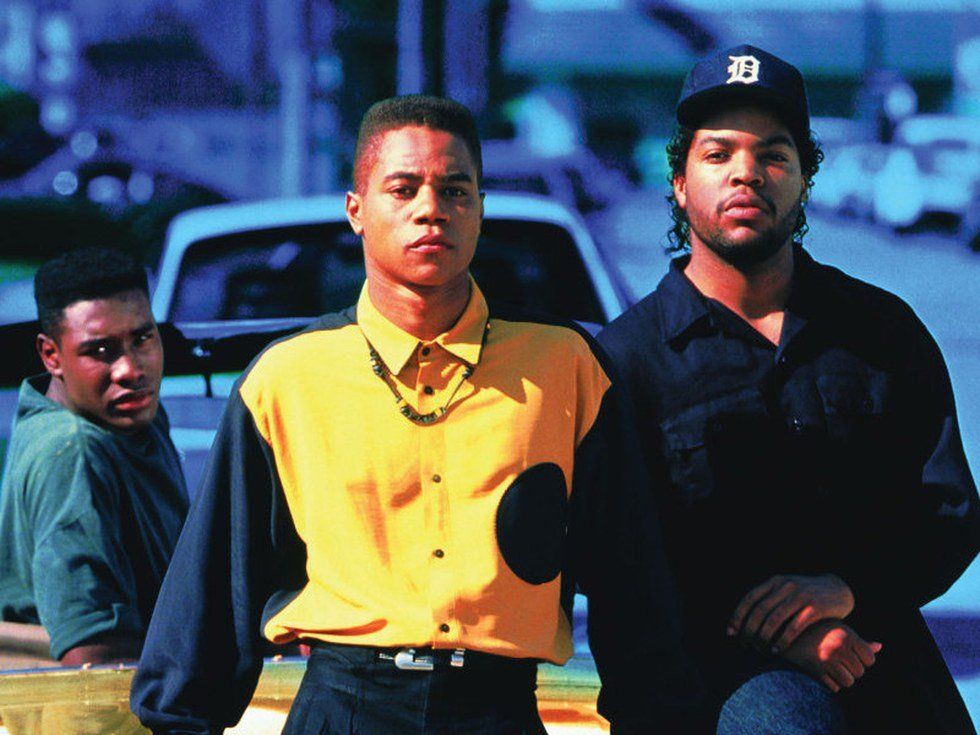
Movie: Boyz N the Hood
Cast: Cuba Gooding Jr. as Trey
Ice Cube as Darrin “Doughboy”
Morris Chesnut as Ricky
Laurence Fishburn as Furious (Trey’s father)
John Singleton, director of “Boyz N the Hood,” depicts crime and violence in South Central Los Angeles as a means to express a state of imprisonment and confinement within the community.
The film opens with how one in every twenty-one Black American males are killed in their lifetime. Most die at the hands of another "brother:" another black male. They are doing to this to themselves and they are killing each other.
In fact, there’s a moment where Furious, Trey’s father, questions why there is a gun shop and liquor store at every corner, to which he then replies, because "they want us to kill ourselves."
It's almost as if the communities in South Central Los Angeles are intentionally left to die. What good is it if there’s no way in trying to repair such a broken neighborhood? What about the lives of the men and children in the neighborhood?
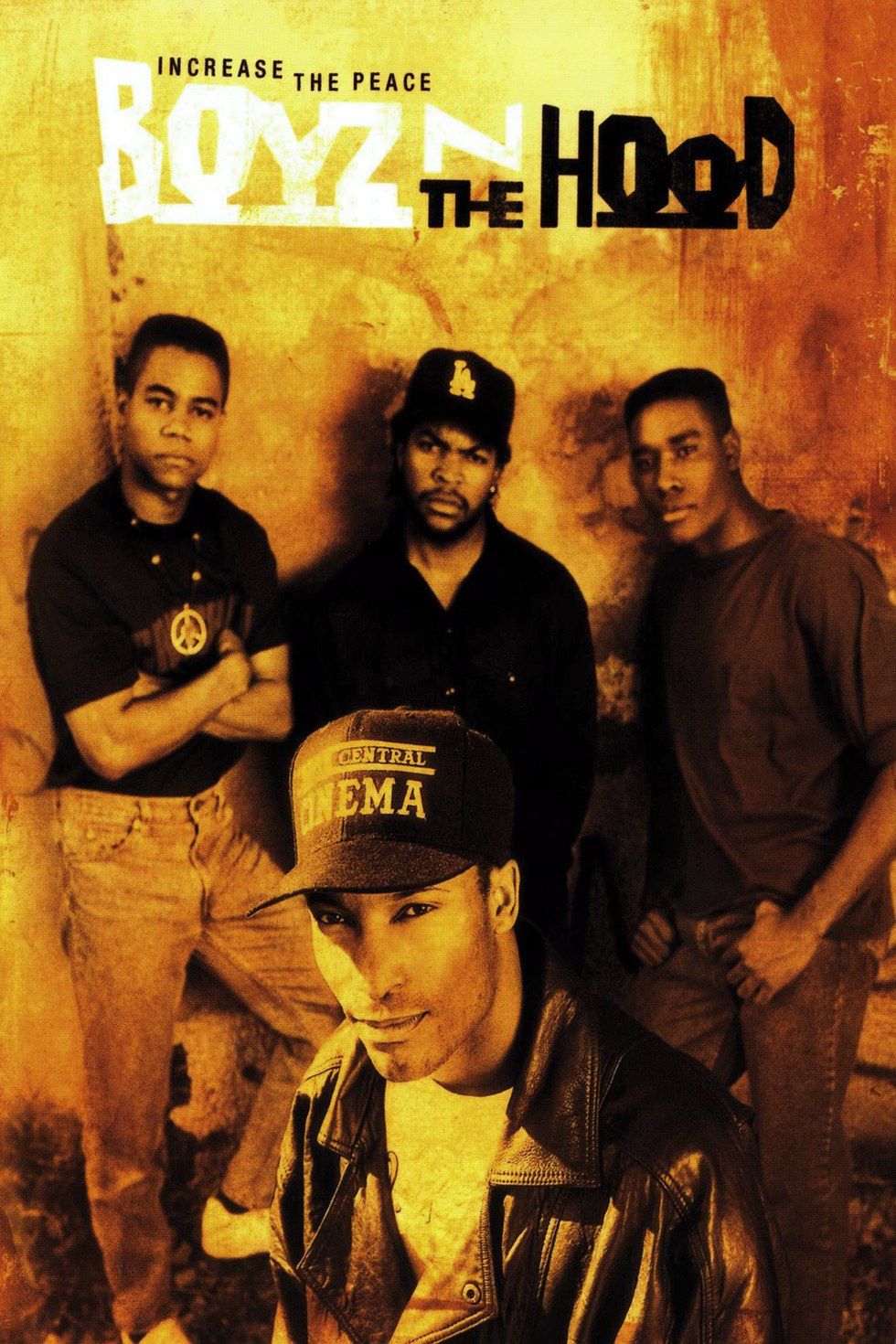
Singleton argues that in these dangerous neighborhoods, its difficult for minorities such as blacks to progress, build a career or succeed when they’re more preoccupied with trying to stay alive. In fact, surviving is essential, especially for the men who are constantly murdered.
The influence of drugs and gangs, however, pulls them away from what life has to offer them or better yet, the kind of life it can offer them. But even without these influences, they feel entrapped by the sightings of the helicopters that constantly watch over them.
Despite living in a dead-beat neighborhood, the characters are brought up differently. Trey, for instance, is disciplined by Furious, who teaches him about manhood and responsibility. Doughboy, on the other hand, is scolded and neglected by his mother, who appears to have not disciplined her child enough that he became an ill-tempered boy.
Doughboy is very instinctual and emotional and throughout the film, he loses his way and his wellbeing because he lets booze and drugs get the best of him. In fact, he even commits murder, despite avenging his brother.
Doughboy’s upbringing, however, has to do with the parenting he received (or lack thereof). Whether the absence of his father or another male authority figure is responsible for his way of being is opened to discussion. But, his mother isn’t entirely to blame because she raised both boys as a single parent and the film itself shows difficulties of single parenting and the significance of disciplining.
These issues, specifically in terms of depicting crime, violence and murder in certain neighborhoods or the "ghettos" is something that most people can relate to, especially minorities. Even those who grew up around these neighborhoods can one way or another, relate to this societal problems. Growing up in a place where you not only fear for your life, but you don't know whether you'll be able to be someone in life is in itself frightening.
But it is precisely these kind of edutainment subjects that film makers and the public are interested in. “Boyz n the Hood” places emphasis on the struggle of the everyday black American male and the difficulties he encounters.
It also captures the role decision making plays in the lives of these characters. Ricky, for instance, is this man, who despite being an early-on dad, is determined, focused and concerned with his life and long-term goals. In fact, he is an example of a man who showcases his full potential.
And despite the misfortune of his death, he stills represents the man with full potential. He is representative of the man who could’ve been someone successful and was on the verge of being, but unfortunately, fate interfered and had another plan for him that no one could see his potential follow through.
Moreover, Singleton does a wonderful job by encouraging young men to be more reflective and cautious with their decisions. Through this film, he reveals how the rational and intuitive sides of these characters can be consequential depending on their decisions. In the end, he reinforces the statement that we are leaders of our destiny, that we are capable of much more, and that we can prosper in life.