Over the past two weeks, you have most likely seen headlines about the Greek economy and their inability to meet their payment deadline.
On Tuesday, June 30 at midnight, Greece failed to make a payment of 1.6 billion euros to the IMF (International Monetary Fund, also called “the troika”), who, among other countries, contributed to loaning them over 220 billion euros in two separate bailouts in 2010 and 2012.
In the next month, Greece also owes 3.5 billion euros to the European Central Bank, which is the bank of the Eurozone. The country also owes 2 billion euros in public salaries in pensions.
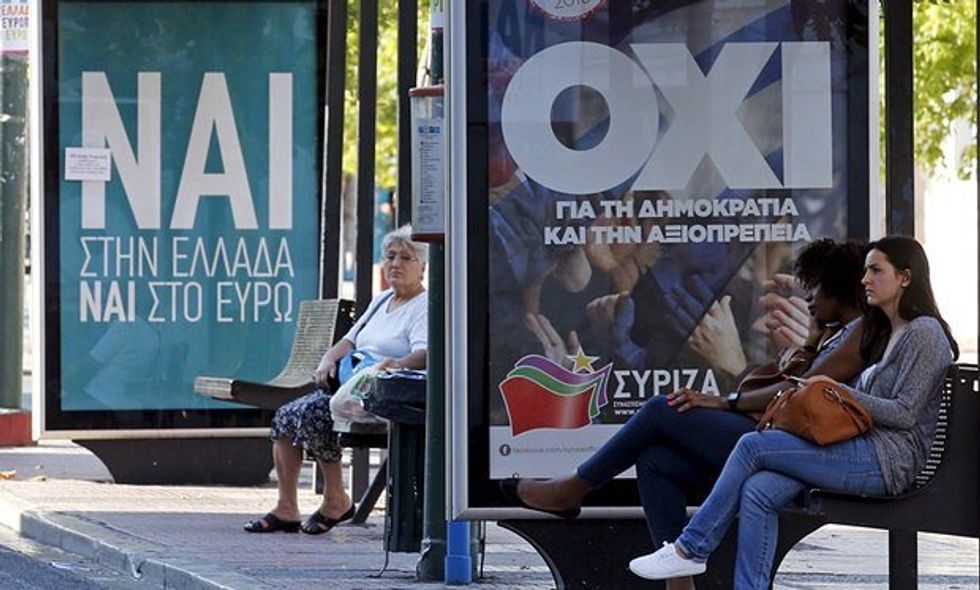
The deadline quickly passed, and on Sunday, Greece headed to the polls to decide whether to accept more bailout money that comes with serious strings attached. They must decide to continue with austerity measures (think spending cuts, heavy tax hikes, and negotiations that will last a few months), or to say “thanks, but no thanks” and possibly exit the Eurozone.
Greece voted no to this decision, and since then, the European Union and Greece have been in talks about how to continue.
Regardless of the implications of the referendum—a no vote could trigger a Eurozone collapse if other countries decide to follow Greece—the vote itself was confusing. Pictures of the released ballot show that the “no” selection is actually placed above the “yes” box, and the question itself is nearly as long as this paragraph.
Was there a simple error, or is Prime Minister Alexis Tsipras really just trying to get his way? The night before the referendum, he was seen leading anti-austerity rallies, encouraging his citizens to check no.
Currently, Greece is in limbo. An exit of the Eurzone, a monetary union that was founded in 1999 and consists of 19 members, could open doors for others to exit. These 19 countries use the euro as their “sole legal tender” (aka money).
For example, Britain isn’t a part of the Eurozone, so that’s why you have to use the pound to ride the London Eye. However, to make things more confusing, Britain is a part of the European Union, which has 24 countries.
No country has exited the Eurozone, so politicians and economists are concerned that it could trigger a collapse of the euro and start a financial crisis that will be felt around the world. These past two weeks, ATM withdrawals have been limited to 60 euros to prevent bank runs, which should evoke images of the 1929 stock market crash.
It is estimated that there are only about 1 billion physical euros left in the country. Friday night, Buzzfeed reported that services such as the Apple App Store and PayPal were not working, since overseas payments are blocked as part of the government’s attempt to preserve capital.
Sunday was a historic day, as Tsipras and his anti-bailout, pro-Greece party showed that the Greek people want their voices heard. This ruling will likely determine how the Eurozone functions and could create a precedent on how countries enter and exit the monetary union, as well as the European Union.
Even a week out from the vote, the drachma has been used and shown as currency, which was the old currency Greece used before they switched to the euro. Over the next few weeks, Greece, the EU, and the IMF, as well as leaders from EU countries will be meeting to decide how to deal with this situation.