
“E come potrebbe essere salda una città,
quando si strappano e si falciano via i giovani coraggiosi,
come le spighe nei campi a primavera?”
"How can then a city remain stable,
when one cuts short all enterprise and mows down the young
like spikes in the fields at spring-time?" ("The Suppliantes," Euripides)
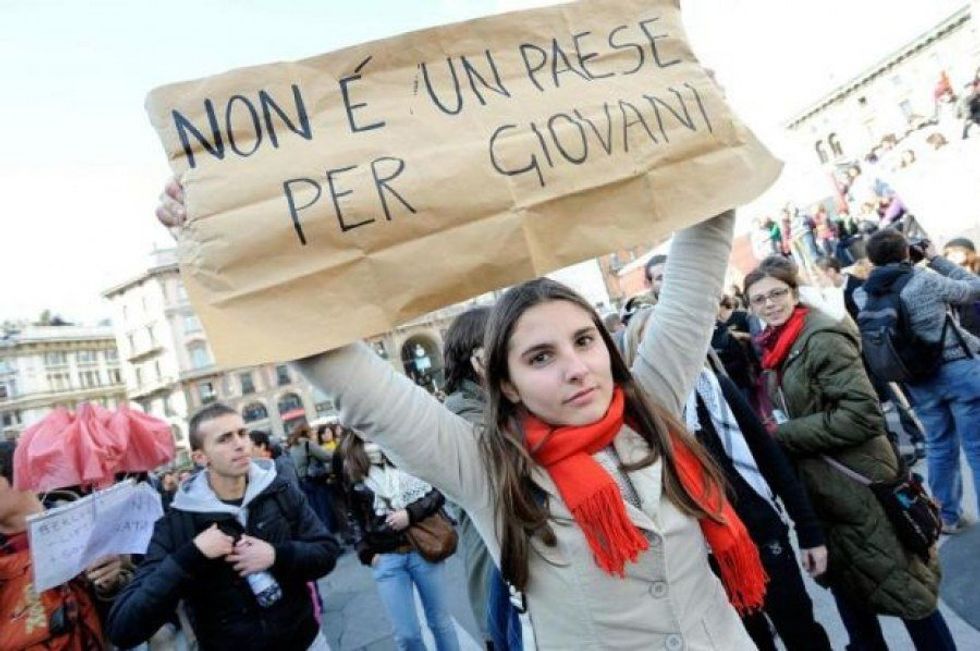
It is no secret that the youth unemployment in Italy is very high, alarmingly high (36.7 percent according to Istat). The causes of this occurrence are various and shift from the economic crisis to the lack of practical experience of graduates, used to studying in books what they could experience on the field. Yet, I fear there is another reason, more difficult to grasp, that prevents companies and employers from hiring young people: They don’t believe in them.
Italy has a distorted vision of the “millennials:” Tommaso Padoa-Schioppa, the minister of economy and finance from 2006 to 2008, referred to young people as bamboccioni --grown-ups acting like children, mama's boys; Enrico Giovannini, minister of labor from 2013 to 2014, called them inoccupabili --the unemployable. According to Michele Serra’s bestseller, "Gli Sdraiati" -- "those who lay down," meaning those who lay down on the couch and do nothing all day -- young Italians are spoiled and bored, economically depending on their families. They are the ones who "sleep while the rest of the world is awake" (Michele Serra). The "millennials" are, according to this stereotyped view, not ready to face the responsibilities a demanding job requires, they are not willing to work hard, and they don’t have enough experience to obtain the (practical) job they (theoretically) studied for. They live their lives through smartphones and websites. They know nothing about the real world.
I don’t negate that some young Italians may actually correspond to this description, but is it possible that the total amount of bamboccioni in Italy corresponds to the 36.7 percent? "Emergency Exit: Italians Abroad" is an eye-opening documentary from this point of view. 120 minutes of stories of Italian graduates, of young, passionate people, of ambitious boys and girls who migrated abroad hoping for the opportunity that their home country denied them: the job they studied for. These young graduates are smart and determined kids, students that graduated with the highest GPAs, that are passionate about their studies, that believe in their work. They represent the phenomena that is known as fuga di cervelli, or brain drain. In 2014, almost 90 thousand young Italians moved abroad. In 2016 this “exodus” grew by 34.4 percent (Dati Aire). They go away because Great Britain believes in them. And so do Germany, the United States, France, China, and a lot more. These countries appreciate young Italians for their eagerness to learn, their passion, and their academic preparation – which is (one of) the best in the world.
Our best students, our best graduates, our hardest workers are leaving our country. What does this mean for Italy? Maybe we don’t realize it now, but this brain drain is going to have a terrible impact on the growth of the country. If this phenomena keeps growing, we will reach a point where we will not only lose our students, but our potential professors, our potential doctors, our potential computer scientists, our potential physicists...
Italy is not simply losing its human capital. It's losing its future.