
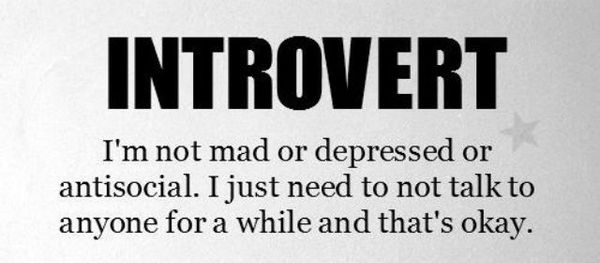
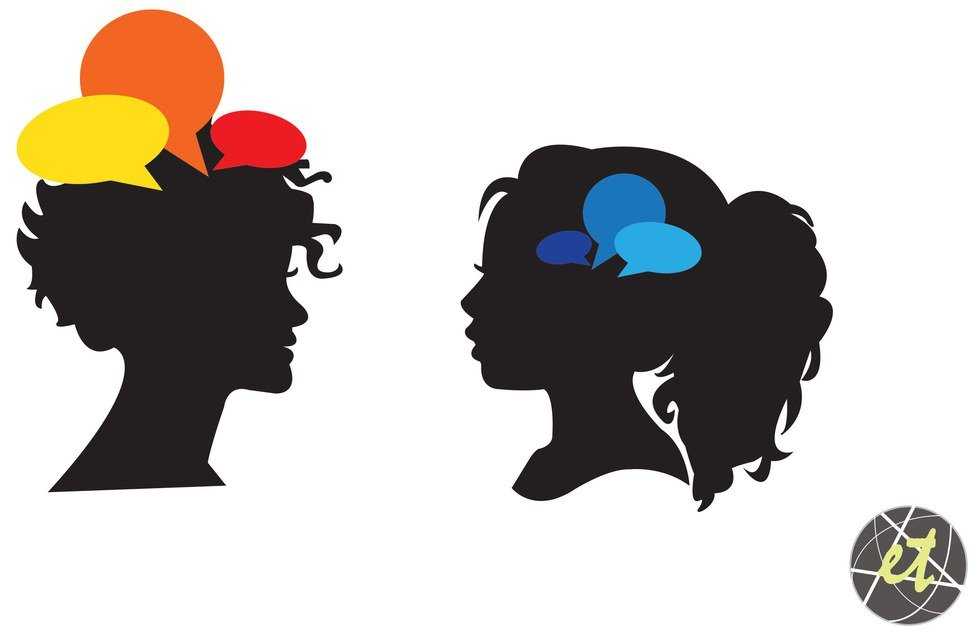
When thinking of introverts, the exact definition from Merriam-Webster’s dictionary comes to mind: a shy person; a quiet person who does not find it easy to talk to other people. If you are an introvert who is actually outgoing and confident but happens to prefer alone time, this definition probably leads you to believe that you are the opposite: an extrovert. Now imagine the disservice done to someone that goes their entire life thinking that they are an extrovert – because of the way introverts are portrayed - only to find out that he/she is not.
When I was younger I learned, by social construct, that to be social is to be cool, so everyone aimed to be a social butterfly. The more friends you had, the more accepted you were; no one wanted to be perceived as the quiet, awkward kid with only a small number of friends – because that was our idea of an introvert. It was just something I didn’t want to be. I went my entire life identifying myself as an extrovert for that reason. I was never a weird, loner kid with communication issues, who never made eye contact and only had one friend – something that annoyingly became a romanticized fad, which seems to be used as an excuse to be blatantly mean-spirited. My friends will agree that I speak and engage with people, I’m everything but shy, and I’m always the one cracking jokes or looking for our next adventure. But that’s just it. My friends know me.
A few weeks ago, I had a one-on-one chat with someone I admire and she said, “I can tell that you’re naturally an introvert, like me.” I was caught off-guard. I loved that she compared me to herself but I have always identified with extroverts. I wondered if I seemed forceful or unnatural during our conversation to cause her to think this way. She explained that while many of us are good at forcing ourselves to step out of our comfort zone to engage with a total stranger, others won’t have to challenge themselves since it comes natural to them.

The perception of whether someone is an introvert or extrovert seems to come, not from your friends that know you on a personal level and engage with you daily, but from the people that have no idea who you are, and their first impression of you. Maybe you’re the type of person that will randomly approach someone, introduce yourself and feel completely comfortable holding a conversation with them; you might be an extrovert. But if you’re like me and you like to think that you’re outgoing but only with a select few people, or you’re not always the first one to strike a conversation with a total stranger but you’re not shy either; you could be an introvert and that’s absolutely fine.
You will never really know yourself and be able to accept who you are if Webster’s (and other dictionaries’) definition coincides with this flawed social construct. Anyone can self proclaim themselves both introverted and extroverted, or neither of the two; we don’t always have to establish our identity by being one or the other but by simply being.
Sidebar: My favorite personality test (according to C.G. Jung’s and Briggs-Myer’s theories of personality type revealed that I’m 1% more Extraverted than I am Introverted. Take the test here.)