
When I bring up the subject of poetry, it probably brings to mind memories of passively reading lines by Robert Frost or Emily Dickinson in high school. Perhaps you remember trudging through one or two lessons about the greats like T.S. Eliot or Walt Whitman while joking with your friends about how your teacher overanalyzed every minute detail. Or maybe you recall something about iambic pentameter, but only because it sounds weird. For most people, that’s about the only exposure to poetry they’ll receive.
Now let me share with you some facts. In 2012, only 6.7% of Americans had read a work of poetry in the previous year, compared to 17% in 1992. According to this study, poetry is less popular than knitting or jazz. Even with all the accessibility of the Internet, Google searches for poetry have dropped by four-fifths in the past 10 years.
If nobody is reading poetry, is it even a valid medium anymore? Poetry had been regarded as a fine art for centuries; it is disciplined and moving. However, if it is no longer relevant to our society, should we let it fall into extinction, like frescos or Latin?
Our education system seems to think so. Originally, the central focus of education was the humanities. While science still served as an important tool for understanding the universe, the most deserving subject of study was mankind itself. However, since the beginning of the Cold War, American schools have been pushing for proficiency in maths and sciences in an attempt to remain an influential global superpower. Arts and humanities, like poetry, fell to the wayside, and today more than half of Americans feel that their creativity is being stifled by the education system.
I believe collectively we have grown cranky from a deficiency in our intellectual diets. We have placed so much priority on technological progress and scientific advances that we have become slow to recognize beauty and have lost that humane contact with each other.
Is poetry important? Yes.
Poetry, like all art, serves a crucial and unappreciated purpose—it helps us find ourselves. Rooted in a rich history of storytelling, poetry is a means of practicing tradition, preserving culture and identifying our feelings. It brings us together. It makes us whole.
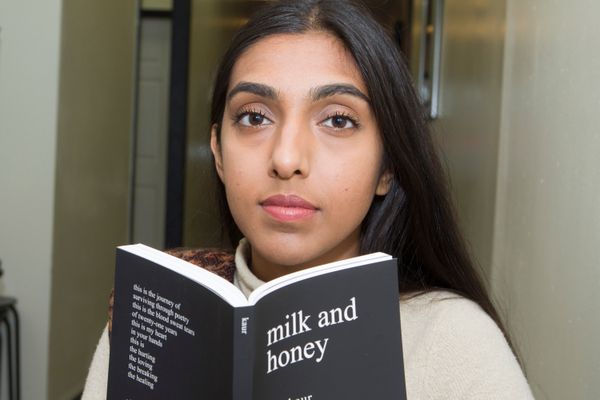
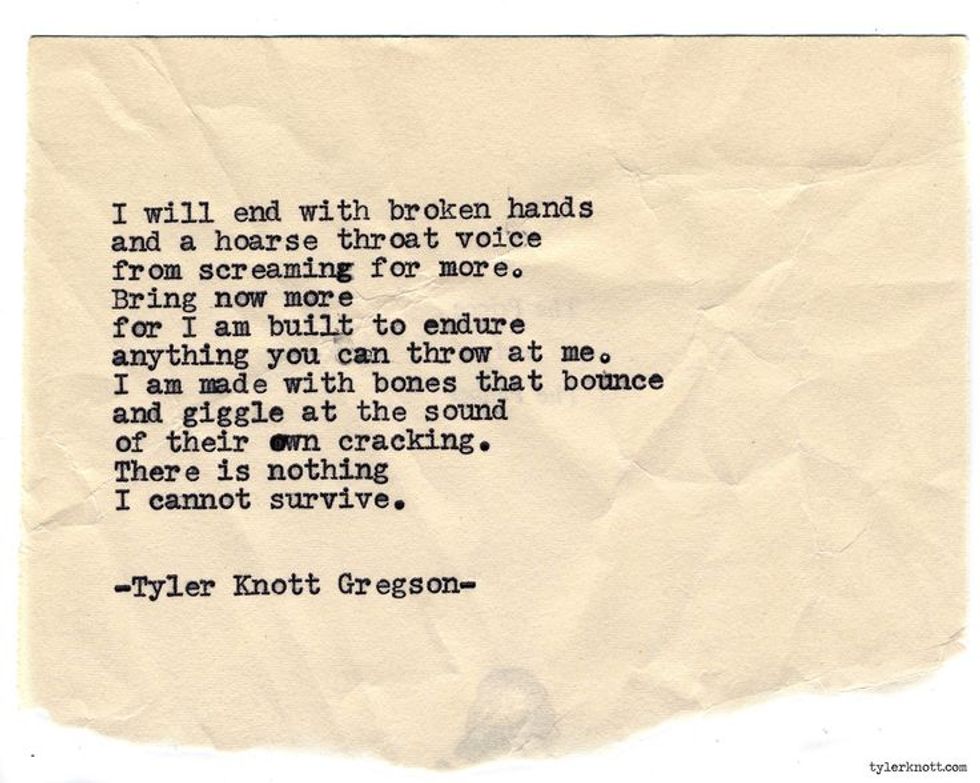
Also, despite all the dismal statistics, there are people today fighting to keep poetry alive. Tyler Knott Gregson is a wonderful poet who has recently published two books of verse and regularly posts haikus and poems online. Rattle is an online publication that is striving to “promote the practice of poetry.” They accept poetry from anyone and award annual prizes to the best submissions.