
Our world is constantly evolving. As the world modernizes, becoming a smaller, more connected planet, we humans are ever-eager to confront immoral practices that smear humanity’s reputation. Where we see unethical customs, we make changes in order to help better the world as a whole. One area in which ethical violations have occurred for centuries is the world of business.
I welcome you to my five-part series on modern business ethics. Last week, we discussed today’s moral problems with slavery. To continue this week, in the process of determining whether your business fulfills today’s ethical requirements, you should analyze your dealings with other nations -- namely, underdeveloped ones. And, history necessitates an analysis of your business’ commerce with these “third-world” nations.
Societies throughout history have used lesser-developed countries to yield greater profits. A perfect example can be found with colonialism. To summarize, following the discovery of the Americas, this system evolved naturally into a massive industry. After Columbus opened the New World to Europe, kingdoms such as Spain created enormous colonial empires. These empires pillaged the Americas of natural resources, namely gold, shipping their finds back to Europe. As a result, in many cases, the Americas were stripped of natural resources, leaving the Western Hemisphere permanently scarred.
However, natural resources weren’t the only part of colonialism. The colonialist system depended heavily on agriculture. Knowing entire populations of native peoples resided in the countries from which they needed to produce crops, kingdoms like Spain were able to produce enormous wealth. Without any ethical parameters, Europe thus compelled natives to cultivate for barely any gains. All the gains were to cross the Atlantic, strengthening economies of the small European continent.
As their economies progressively improved, yields from the colonies fed the mouths of Europeans whose standards of living continued to improve. Meanwhile, people in the colonies saw barely, if any, enhancement in their standards of living.
Several realities fueled colonialism. Specifically, the desire for profits and a downright disinterest in the rights of extra-European peoples brought slavery to the New World. Needing a location from which slaves could be taken, colonial empires turned to the untapped continent of Africa. As I’ve already discussed the ethical troubles of slavery, I shan’t delve into the matter too deeply. But, I will reiterate the fact that, as slavery is in violation of basic human rights, it has automatic ethical problems.
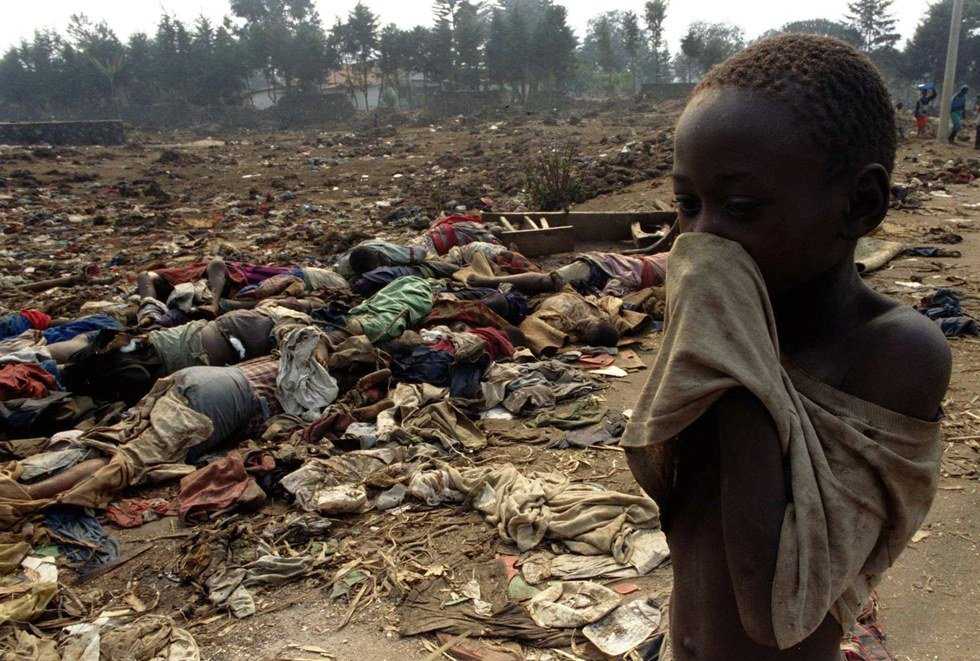
Colonialism is but one historical example of commercial exploitation. The system resulted in uncountable human rights abused over a period of centuries. Exploiting natural and human resources, few places remained unscathed by colonialism. The regions around the world affected by colonialism have, in many cases, never fully recovered. In Africa, Rwanda exemplifies the negative consequences of colonialism.
For the majority of the 20th century, Belgium ruled Rwanda. The African nation was ethnically divided under Belgian rule. Two main ethnic groups populate Rwanda: the Tutsis, who are a minority, and the Hutus, who are a majority. Considering them racially superior, Belgians showed favor upon the Tutsis. So, for over half a century, the colonialist system subjugated a majority of the country.
Consequently, once Rwanda gained independence from Belgium, the Hutus pursued revenge against their Tutsis neighbors. Violence against the Tutsis remained minimal throughout the 1960s and 1970s, as the Hutus plotted for Tutsi extermination. The plot went into action in 1994, when Hutus around Rwanda commenced genocidal atrocities against their fellow-Rwandan Tutsis. Ultimately, over a period of 100 days, Hutus killed 800,000 Tutsis in cold blood.
Unfortunately, those 800,000 Tutsis weren’t the only victims of colonialism. This form of commercial exploitation left latent hatred in other colonies around the world. When you capitalize a less-developed people for your own economic benefit, you ignore the desires and rights of that people.
So, when examining the ethos of your business, make sure you check to see if you exploit underdeveloped nations. Pay them well, speak with them, see that you don’t offend their culture, etc., since these efforts can ensure your business dealings with them won’t ultimately result negatively for you. Just because they don’t have running water -- or some other modern innovation that we consider crucial to be a developed society -- does not mean that they aren’t people. In fact, as they lead simpler lives, they may even be better people than you or me. Their lives may very well be a struggle on a daily basis. They didn’t have to walk to school uphill both ways because they might not have had a school to which they could go.
If you care about your business partners, you will be rewarded. When in doubt, don’t exploit. Instead, care. If you care about the people with whom you do business, your pre-Christmas Ebenezer Scrooge personality will become a post-Christmas Ebenezer Scrooge one, with your heart growing like the Grinch’s (also post-Christmas). Profits are minute when compared to genuine human kindness and compassion. As a business-owner you have the opportunity to pump money into that less-developed nation’s economy. You have the chance to lift its people from poverty. And, you have the turn to be generous and charitable.
Be a good person and don’t commercially exploit third-world countries. It’s simply ethically and morally wrong. It is with this advice that you will be able to do business with underdeveloped nations ethically in the modern world.