


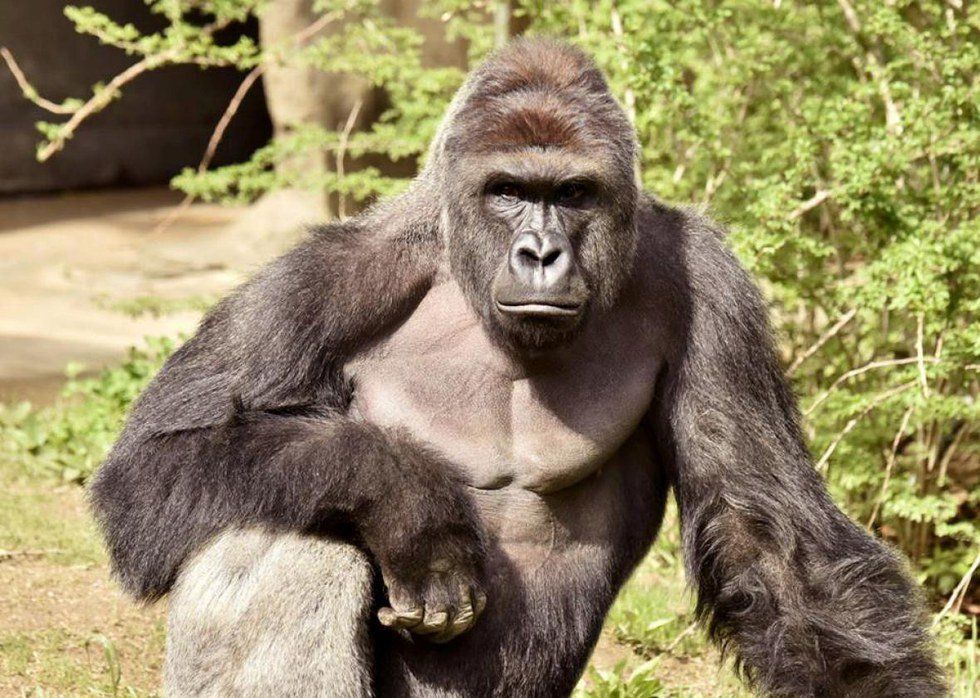
I never thought I’d see the day when a gorilla became a celebrity overnight. Harambe the gorilla was killed last week when a little boy fell into the gorilla enclosure at the Cincinnati Zoo. Officials released video of the incident as well as the 911 calls that were made by the child’s mother and other witnesses. Ultimately, zoo officials made the decision to kill Harambe because a tranquilizer would have taken too long to go into effect, and in the meantime, it could have agitated Harambe and put the child in even greater danger.
The internet has gone bananas over the events that unfolded and the decisions that were made. Were zoo officials right in foregoing a tranquilizer for a bullet? Is the mother of the child to blame? Is there really anyone at fault? Many people have jumped to conclusions about the incident, despite the fact that they weren’t actually there themselves. This is the danger of sensationalized news: the truth can be spun so many ways that it’s hard to keep up. But I believe that with careful consideration, we can learn a lot about our own nature from this unfortunate event.
Speaking up for animals like Harambe requires compassion, especially through the desire to speak out for a creature that could not speak for himself. This is noble and honorable. I admire the work of many zoologists who have dedicated their work and energy to care for these animals. However, this also requires dedication. If we are going to speak out about something, we must have a foundation to base our opinions on. We must educate ourselves on the issues at hand, become more aware, and avoid the urge to jump on a bandwagon in ignorance.
What disturbs me is that so many people have belittled the zoo officials, the trained professionals. They have spent years learning about these animals and acting on this knowledge to care for them in the zoo. Many of the loudest people in the debate are acting like they know more than the professionals, but the fact is that they don’t. Yes, we can all have an opinion. But the moment you stop respecting someone else’s expertise is the moment that your argument sinks.
This is a major problem in our society: there are too many people who would rather hear themselves talk than hear what others have to say. Instead of considering ourselves wiser than others, what would happen if there was more humility in our conversations? I believe we could learn a lot more than we realize.
Harambe’s death and the circumstances that surrounded it are tragic and unfortunate. But I think a bigger tragedy is the collective response. If we had truly humbled ourselves and sought more than our own assumptions, we could have asked: what is really behind the outrage? What does this entire situation say about our society as a whole?
I am also disturbed by a question that I’m not sure I want the answer to. In light of the bigger picture, I wonder why we are so upset about a gorilla’s death when there are thousands of people trying to survive every day. I don’t mean to trivialize the situation in any way; I too was saddened by Harambe’s death. But if we are honest with ourselves, Harambe the gorilla had a better life than many homeless people in our nation do. He had a roof over his head, comfortable surroundings, and consistent feedings. If the same people who showed such outrage at his death showed the same passion for pressing issues like homelessness or the slew of other problems in our world, what would happen? You and I probably wouldn’t have seen so many posts on Facebook had our neighbors lost their house, their job, or even their lives. But in the span of just ten minutes, a gorilla became the center of our conversations this week.
Sadly, those who criticize the zoo officials’ decision to kill Harambe aren’t placing much value on the life of the little boy who fell into the gorilla enclosure. His mother posted on her Facebook page that he sustained a concussion, but otherwise, he was doing fine. Between Harambe’s dangerous strength and the chaos that ensued with the screaming crowd, the boy could have easily been killed. What would have happened then? For all those who are verbally attacking the mother, what would they have done if it had been their own child? Sadly, the people who are petitioning to press charges against the mother probably wouldn’t have been so outraged if the toddler had died instead. There probably wouldn’t even be a petition to hold the zoo responsible.
Have we really become such a blind society? Or have we separated ourselves so much from the important issues that we deliberately choose to look away?
While I am saddened by Harambe’s death, I know that there is a lot of work to do outside of the Cincinnati Zoo. How much change could we create simply by reallocating our time and energy from complaining on Facebook to getting educated, getting involved, and pursuing justice? We can’t afford to narrow our vision to special interests. Nothing will change because we don’t recognize other issues. This is the essence of the problem. Our society as a whole has lost sight of its priorities and even gone so far as to try and rearrange them. We’ve become like lobbyists in the Capitol: pursuing what we think is best at the expense of others’ needs. We don’t value other human lives as much as we should; too many people are outraged by a decision that killed a gorilla but saved a little boy. Where does it end?
I sincerely hope to see change in our society. But until we focus on what’s really important, it’s just going to be white noise. I hope we learn from this monkey business we’ve gotten ourselves into.

















