
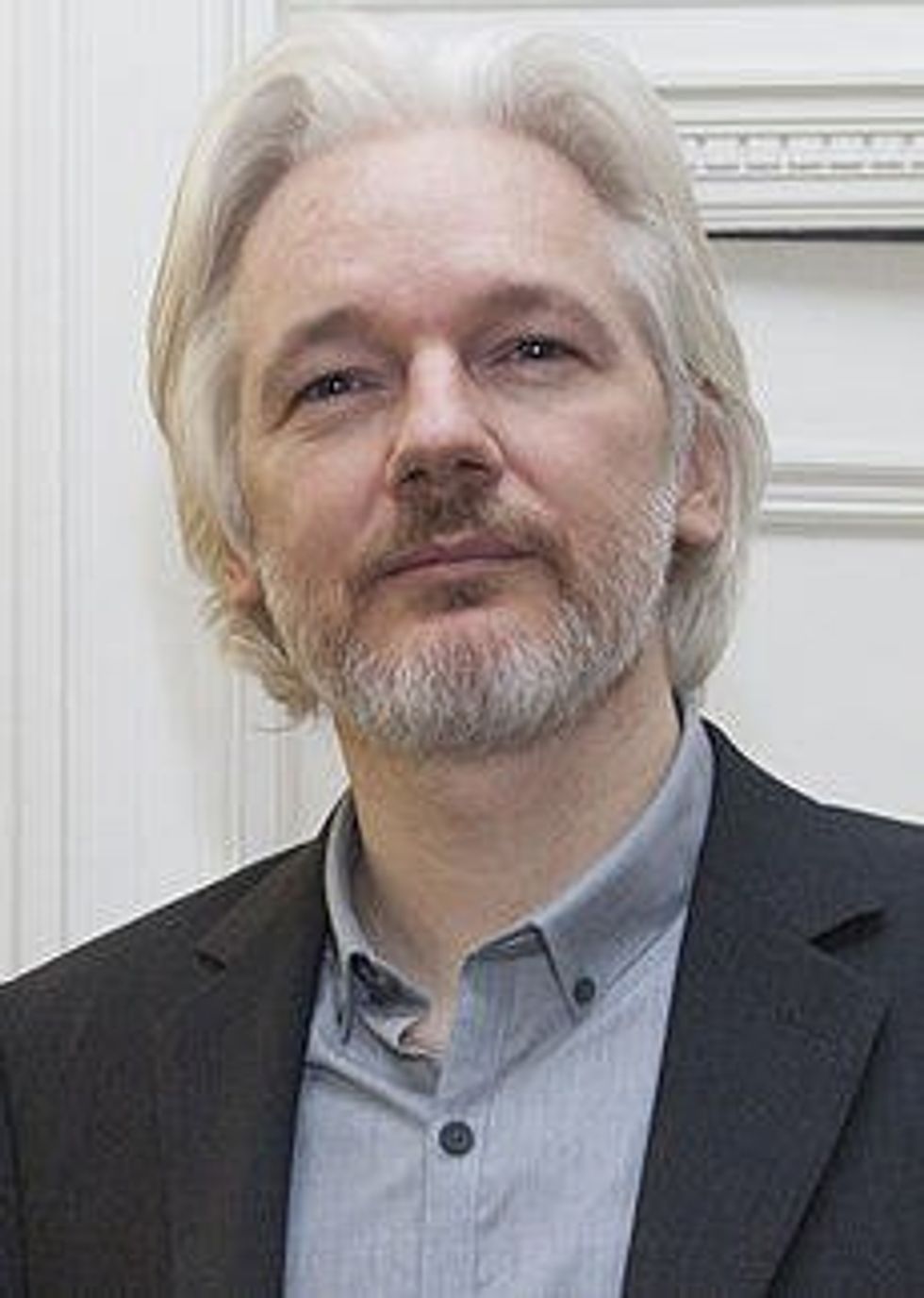
Julian Assange has, without a doubt, some notorious attributes that stigmatize him, but calling him a traitor for revealing U.S. secrets is one that is fairly debatable.
Assange, in 2010, strikes the US government with a successive avalanche of classified revelations. He publishes US military and diplomatic documents that were meant to be state secrets. Those publications represent to the United States a big blow, a shock and awe-like surprise attack.
Those files contain embarrassing information about false claims of weapons of mass destruction that led to the Iraq war, torture at Abu Ghraib prison, war atrocities and the alleged espionage activities of the United States against friendly countries, France, Germany and others.
Assange's actions put in great danger the lives of some pro-US foreign leaders and agents and their immediate family members, especially those in Afghanistan and Iraq. Pushed against the wall and on the defensive, the US government had no choice but to mend fences and apologize to those countries that were victims of its subversive activities.
The United States has been at the center of similar scenarios before. For instance, in 2013, Edward Snowden hysterically leaked a series of classified information to the Guardian, a British newspaper. In retrospect, Whistleblowers, spies and those leaking US secrets reflect a phenomenon of a familiar pattern.
But in the case of Assange, does his action against the United States have the merit of treason? Does he do instead what the journalism profession requires of him in a democratic society? Before sticking any undue label on Assange, everyone needs to realize that he is neither a friend to the United States nor an American citizen who abides by US laws. Again, his actions do not warrant treachery. Unlike Snowden and others, he is not a traitor.
“In my opinion, Assange is not a traitor," said Mario Del Cid, a retired engineer and a fellow Journalist student at Florida Atlantic University. “He is a courageous man who is fulfilling his journalistic duty. He does not deserve to be shunned."
But Assange is being hunted in Europe and in America for no probable cause. Like an animal in hiding to avoid being preyed on, he is holding deep in his burrow at the Ecuadorian embassy in London. His Wiki-Leaks journalistic activities drift him away into arenas where big dogs fight. Squaring off against big dogs, he wins every battle but loses the war.
That war is an unfinished business. It lingers passively under the watchful eye of the world until Assange gets snatched out of his burrow by force or he surrenders himself at his own discretion. Assange's ordeal is identical to the fable “The Wolf and the Lamb," where strength supersedes reason. In the case of Assange, it is evident that he bit on a bone that's too big for him to swallow. Although his cause is just, the venture is not worth the subsequent ramifications.
By revealing secrecy and the wrongdoings of our government, Assange is fulfilling his journalistic duty and a service to society. He might be dubbed a hero or a villain by some; a traitor or a former hacker or a so-called journalist by others, but the truth is that he is a Watchdog who seizes an opportunity and makes the best of it. He revolutionizes journalism to its core. His whistleblowing activities mark a turning point in journalism history. He has become a historic figure. His recent classified revelations bring him to prominence and journalism to a new dimension.
If the tenet of journalism is the truth, then, Assange has fulfilled his job, his journalistic obligation to the public. As a citizen journalist, Assange is not a traitor but a watchdog who is fascinated with unearthing classified truths.