


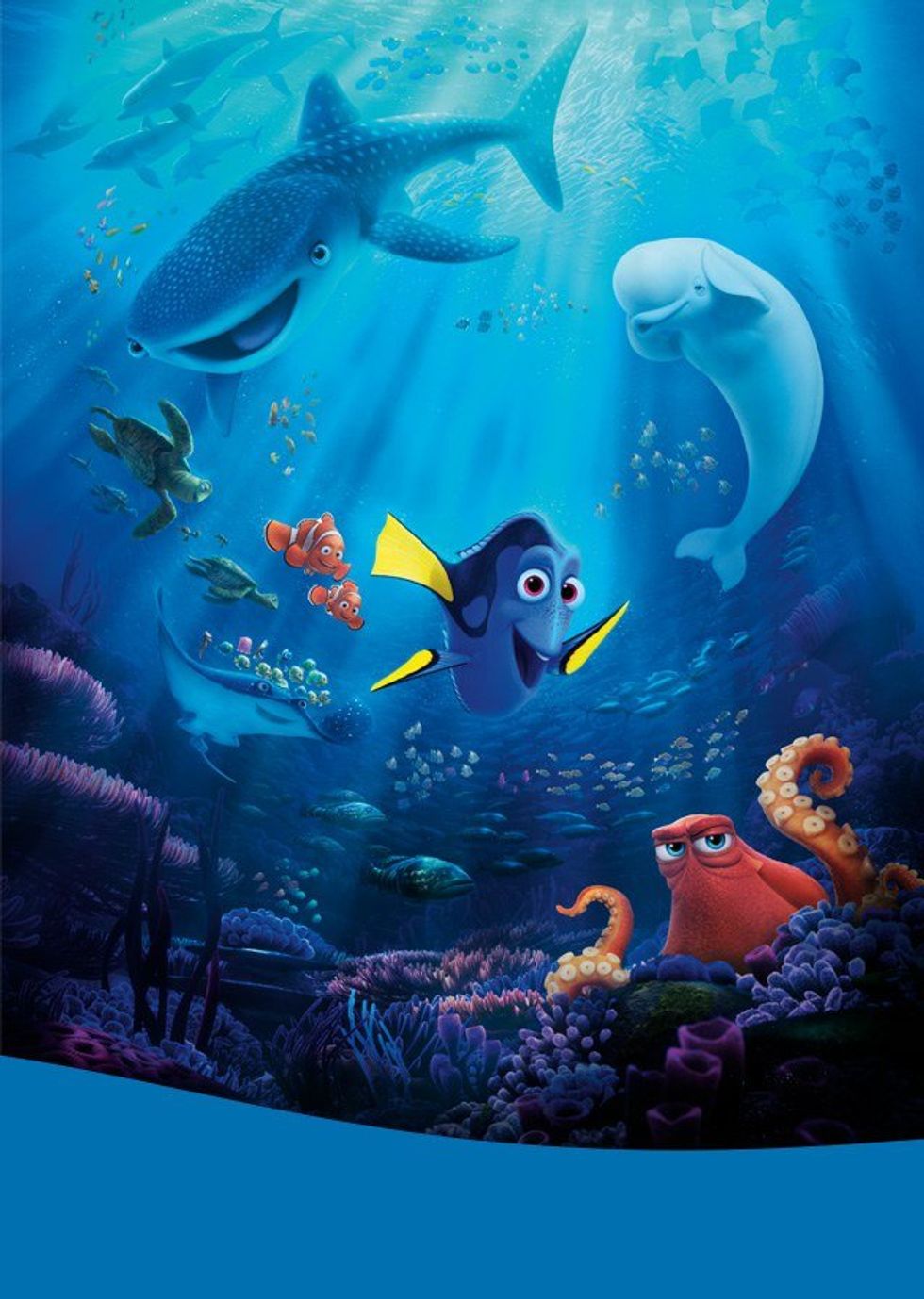
Disney’s most recent release has been dominating at the box office and is one of the hottest topics of discussion in entertainment right now. Audiences are rushing to the theater to see "Finding Dory" and nearly everybody is leaving happy. What many people don’t know, however, is that the original script was somehow different from what we saw on the big screen. Apparently, the plans for the film were revised after creators viewed the documentary "Blackfish." Before "Finding Dory," people speculated that the script was altered to give the film a more anti-SeaWorld message. But I’m not so sure about that.
The first thing you must acknowledge is that people are going to see and interpret things how they want them to be. The Dodo published an article titled, “Newest ‘Finding Dory' Trailer Has Strong Anti-SeaWorld Message,” which outlines how images in a movie trailer seem to show an anti-captivity message. However, after seeing the movie, I know confidently that the images the author points out are nothing like his assumptions. The first scene he points out is the tank of blue tangs scattering. He claims, “Animals are on the run” but in reality, these fish were not trying to swim out of their tank. They were reacting to new fish being dropped into their tank and they all swam to one side to look at the new fish.
His next false assumption is that the octopus carrying Dory is trying to help her escape. In fact, that octopus is actually helping her get in to the exhibits. The next false interpretation he makes is in regard to the beluga and whale shark at the barrier. He thinks they’re swimming at the barriers, but they are actually creating a distraction to help Dory get to another exhibit. His final error is thinking that the octopus is jumping at the door because he wants to escape. In the actual movie, though, this octopus is desperate to stay in captivity. Honestly, this writer spoke too soon and has kind of made a fool of himself. Didn’t anybody tell this person what they say about assuming?
Now, the simple errors made in interpreting that trailer don’t mean the film has nothing to do with anti-captivity. Some sources say Ellen Degeneres even hinted at some messages against SeaWorld. There were quotes from the filmmakers themselves that referenced changes inspired by "Blackfish." But exactly what those changes were isn’t entirely clear. I’d be very interested to see the original script because in the two times I’ve seen the film, I saw more affirmative messaging about this type of aquarium than negative comments on captivity.
Throughout the film, we hear about this marine center’s mission to rescue, rehabilitate, and release aquatic animals. We are even given an example of this early in the film. When we meet two sea lions, they say they were suffering from different afflictions, but were taken in by the institute, cured, and released back into their home. Later, we see a tank of fish leaving the quarantine room cheering about being healthy again. The beluga and whale shark both had conditions that might make life in the open ocean difficult for them. It’s very clear that this place is helping animals, a message very different from how "Blackfish" presented SeaWorld as a place of evil and torture.
Overall, "Finding Dory" presents a more neutral view on marine institutes. Ultimately, all of the main characters leave the aquarium, but they don’t necessarily do it to escape the pains of captivity. They leave to be with their friends and family. The fact that they leave the facility makes it seem mildly anti-captivity, but the depiction of their time in captivity doesn’t show mistreatment that makes a strong anti-SeaWorld stand. Only one scene where fish run from prodding children in a touch tank shows fish unhappy about their circumstances inside the facility. If the filmmakers were trying to make a movie that would turn people against places like SeaWorld, I would say they ultimately failed. Every character we are introduced to was either content being in the aquarium or left after being improved by being there.
As I said before, people will see what they want to see. Those searching for an anti-SeaWorld message will probably find it, and those looking for the joy and happiness of the characters and story will see that more prominently. Either way, it was a great film and definitely worth the watch.

















