

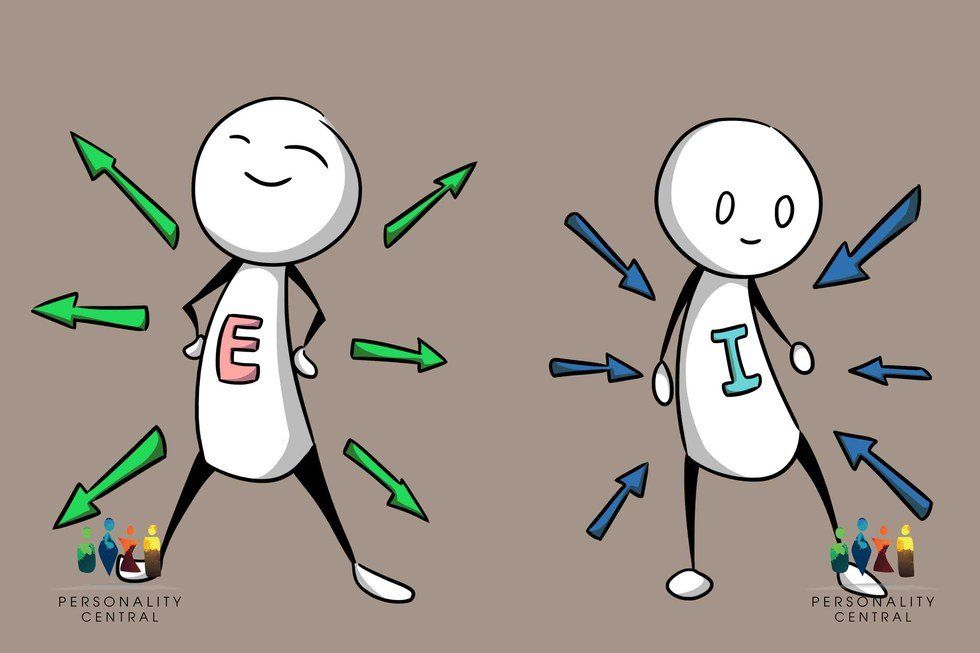
Introverts, can we learn how to be social people? In the following ways -- yes, we can.
Well, if you’re an introvert, then you know that your natural instincts don’t motivate you to go and socialize with people. However, you still love to spend some time with others when it’s appropriate, and love to have great friends in your circle. Introverts don’t like to socialize too much, but also hate to be lonely. Read on to discover three strategies that will help you be more social as an introvert.
Be aware of friendship preferences.
Different people make friends in different ways. Some people are only interested in very close friendships, while others like having both close friends and casual friends. There is also the type of person who doesn’t like to have close friends at all, they only have fun, friends, contacts, and confide in their family members.
It will take you more time to form close friendships than casual ones. Knowing this, you need to pay attention to other people, and ask yourself if they have the time and are ready for the commitment of being a close friend of yours. That said, you may meet great people, but you couldn’t make friends with them unless your friendship preferences are compatible.
How to be more social using social rituals.
Because your instincts do not influence you to go socialize, you need to be proactive about it and set a couple of conditions that will help you be more social without thinking about it too much.
A great way to do this is to set social rituals: a weekly ritual that reminds you to take an hour and follow up with people you know, and a monthly one that allows you to meet new people.
With your weekly ritual, which is nothing more than a reminder in your calendar, you take one hour to call, text, or email people with whom you have an active friendship, or people you just met and want to see again. This helps you do it all at one point, and enjoy the rest of your week knowing that you’re not ignoring people. This also helps you catch up with new people in your life.
Your monthly ritual is some kind of subscription to a club or interest group that holds monthly events, where you can meet new people. You won’t be choosing a new club every month, you just find a good one and stick with it. To make it work even better, try and join the organizing team, this will almost force you to attend every time.
With these two rituals, you’ll always stay in touch with the important friends and potential friends, and really take control of the pace of your social life.
Make your social life work by itself.
There is a shift in how you think about friendship that can radically reduce the effort it takes you to build a social circle. The shift is to go from focusing on individual friends to focusing on groups of friends. As you’re making new friends, quickly introduce them to each other, and start forming groups. It’s much easier than having to keep up with dozens of people who don’t know each other.
It seems like a small shift, but it completely boosts your social life when you try it. When you have friends that know each other, your social circle expands much faster. The people you know start to make plans with everyone in the group. They keep in touch with everyone else, so you don’t have to call everyone and manage everything.
If you have one group of two or three friends, you can keep it and concentrate on meeting new people and building other social circles. Whereas, if you have a dozen contacts who don’t know each other, you’ll have to keep reaching out and calling everyone to keep up.
To simplify your life, follow the two-step formula: explore new friendships + connect them with the existing ones.
What are good ways to become more outgoing? Introverts, here are the four ways.
1. Have a deep desire to connect with people.
Being a social person is not intrinsically better than being an non-social person. Everyone is different. See whether you truly want this for yourself, or whether you're trying to live up to the expectations of others. if it's the former, move on to step two. If it's the latter, work instead on embracing your own traits as valid and accepting yourself.
2. Take risks.
Unless you're a natural socialite (and even if you are), it can be scary to talk to new people. But in order to break through your own social limitations, you have to take risks. That means deliberately putting yourself in situations that you know make you uncomfortable. There is no magic potion (well, besides alcohol) that will make you comfortable without going through a gauntlet of situations that make you face and overcome your fear of social situations. You gotta go through it.
And start small. You don't have to start with a stand up comedy routine, just make conversation with the guy at Starbucks. Smile at someone while you're pumping gas. These little things will give you confidence and make larger social situations more accessible.
3. Observe, listen and adjust.
Pay attention to how people behave with each other, how they respond to social cues, and how they respond to things you do and say. See how the words and actions of others make you feel. Who makes you feel comfortable? Why?
Pay attention to body language, both of others and your own. Watch humans interact as you would watch the nature channel. See what makes them laugh, what makes them feel comfortable, and what does the opposite. See how people's body language affects the way you perceive them, the way others do. People are incredibly perceptive, and our social dynamics are much more complex than they might seem. It has been said that only 7 percent of human communication is in the words we speak. The rest is body language, tone of voice, etc. Pay attention to everything. Then adjust accordingly. Rinse and repeat. Enjoy the process of learning and challenge yourself to pick up on social cues through observation, emulation, and most importantly, self-awareness.
4. Don't get discouraged.
Jimi Hendrix didn't just pick up a guitar one day and play "Purple Haze." He picked up a guitar and, at first, it sounded like crap. But he worked at it for many hours until he became one of the greatest to ever play.
You're going to make mistakes. That's a given. You're going to say or do something that is socially awkward, or makes others uncomfortable, and you will be mortified. But don't give up. It will take time, and you will get better.