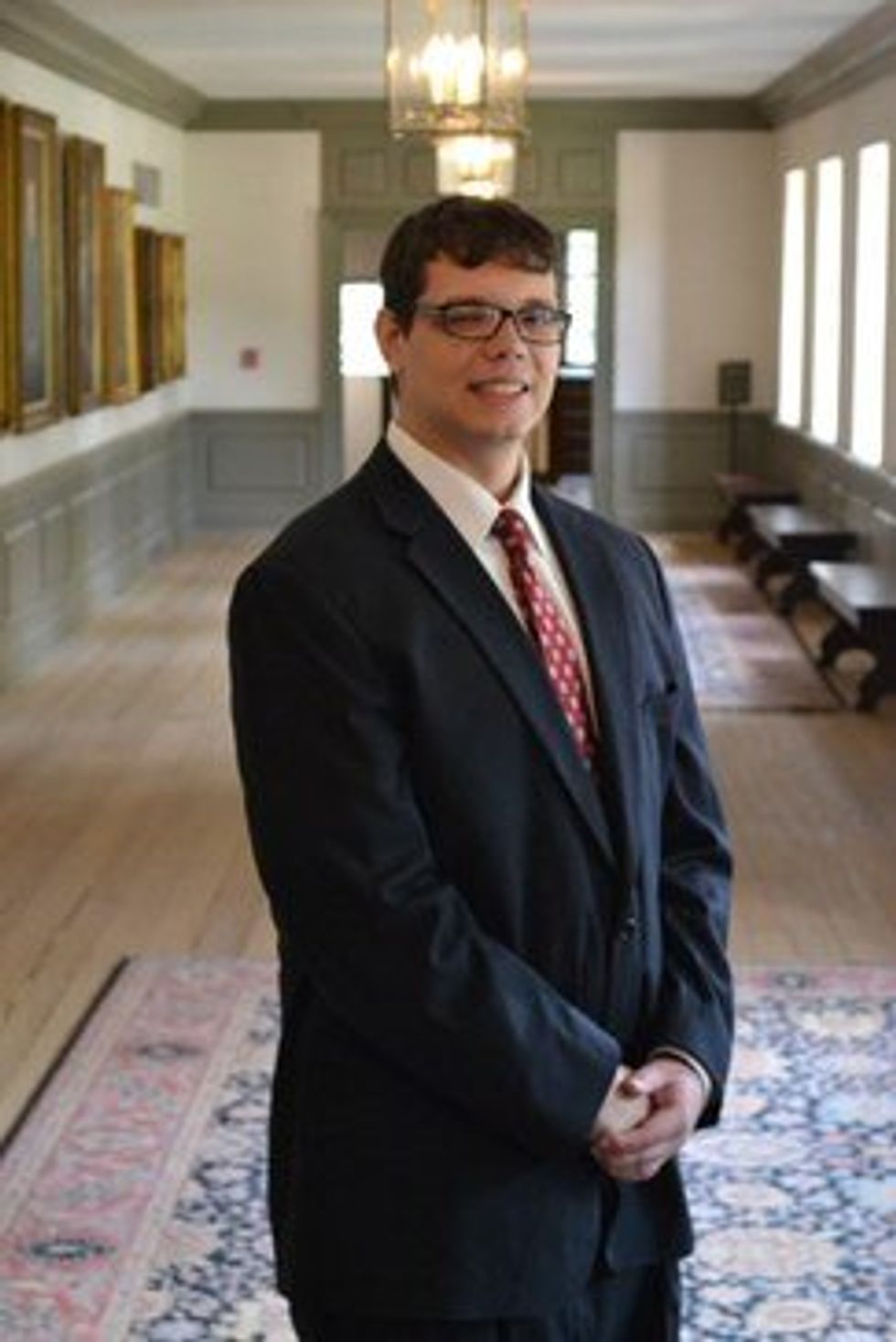
Brent Sherwood is a senior at the College of William & Mary, and the Secretary General of the college level Model United Nations Conference &MUN, sponsored by the College’s International Relations club.
Wallace: What brought you to William and Mary?
Sherwood: Same thing that brings anyone to any college. I had applied to a whole bunch of schools, visited a lot of them and felt that this place could be home. Something almost abstract about the campus spoke to me. The campus was beautiful, people were friendly and it was academically rigorous. I’m also a pre-med student, and this school has a very good medical school acceptance rate, so that influenced my decision.
Wallace: What made you interested in Model United Nations?
Sherwood: I had always been interested in IR theory in general, and how countries interact. This came out in high school. Model United Nations was something I did throughout high school. At the activities fair as a freshman, I was drawn to the IR club because it was the club that did Model UN.
Wallace: How would you describe Model United Nations to someone who is not acquainted with it?
Sherwood: I think there is a stereotype for MUN exclusively simulating the workings of the UN. There are a lot of countries where you are one in 200 people pretending to be Bahrain as part of the complex machine that is the United Nations. What MUN really is is a diverse batch of committees, like running a refugee camp or the British East India Company; there’s lots of historical simulation. It’s having the fun of pretending to be people in current and historical scenarios while getting to know different people and strengthening your knowledge of history and your interpersonal skills.
Wallace: Do you have any MUN experience that particularly stands out?
Sherwood: I had always struggled with MUN in high school. I was put into a double delegation in a massive committee and did not speak at all. Second time was in an oil committee where I and some friends joked about "There Will Be Blood" the whole committee. Where I came into my own was about the EU and the Euro. A civics teacher in high school had just taught us about monetary policy, so I was shockingly prepared. I went in there, shouted at people with my policy and was really trying to reform the EU along the lines of the American Federal Reserve to better control the EU. I did not know this was a crisis committee and found myself assassinated. They brought me back in and gave me the position of Italy. I had this simultaneous feeling of excitement and dejection that I was the guy to get killed. It was the only time I ever got an award in MUN to date, so it was a fun experience.
Wallace: What made you want to pursue the position of Secretary-General of &MUN?
Sherwood: It comes down to the first day in the William & Mary International Relations club. It was Secretary Generals of our high school and middle school conferences—the ones who are in charge of the amazing things I had been in for the past four years. Got into the middle school secretariat, then wanted something more advanced, so I applied to be on the &MUN secretariat. After that. I thought back to my freshman year and figured that I would try for the highest position, not knowing if I would get it or not. I did, I was accepted, and here I am.
Wallace: What is your ultimate vision for &MUN?
Sherwood: I think &MUN is the smallest conference we run, but with the most potential for growth, hopefully to the size of our middle and high school conferences. Hopefully, we’ll get to the size of Georgetown’s large and prestigious conference. One goal is maybe 1,000 delegates within 15 years. Williamsburg is an amazing place for a certain demographic of people, but these don’t necessarily include MUN delegates. There aren’t enough venues to hold more than a couple hundred people, so maybe a move to Virginia Beach or Richmond to give ourselves room to grow.
Wallace: What led to the selection of the particular committees at this conference?
Sherwood: What &MUN does that is unique is that the directors are the ones who come up with the committee ideas. The Undersecretary Generals at the high school and middle school conferences come up with them at their conferences, but for &MUN we got them from the directors. It is great to have that energy and the committees are as such because creative club members knew what they wanted to see ended up proposing these good ideas.
Wallace: Would you say that William & Mary and Williamsburg, are suited to host such a conference in any unique way?
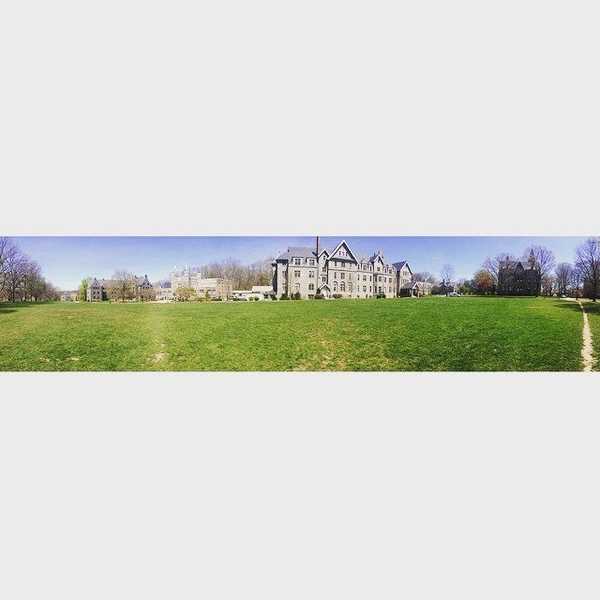
Sherwood: As the conference gets larger, we are going to have to move to an area with a capacity for more delegates. For our size now, though, Williamsburg is a good place. We have Colonial Williamsburg, which is great to experience the history that they are acting out in committee. Everything is close, so lunch and dinner excursions are convenient, and great restaurants are available. It’s a quiet town, but for this size it is nice to have everything such as food close. What really stands out, of course, is the history behind everything.
Wallace: What would you want a delegate from &MUN to take out of the experience?
Sherwood: A few things. I guess the biggest is that any MUN delegate would take from any conference: this spirit of diplomacy that the club wants to foster, the skills they develop in research and committee and the experience trying to work with other delegates with creative solutions with historical and modern committees. As a crisis conference, we want to stretch the boundaries of what MUN is. Hopefully, they will have a fun experience acting out the roles they have been given. I guess the other thing they take out is something creative in a unique crisis that &MUN provides that you can’t get anywhere else.
Wallace: Your letter to the delegates on the &MUN site refers to “more than seven years of planning” for this iteration of the conference. What happened during those seven years?
Sherwood: &MUN was originally the brainchild of a club president when I was in high school at the time. He had a controversial vision for us to do a college conference. For us to be putting that kind of energy into such a thing, he was doing the preliminary footwork to get it approved. By his junior year, he was planning the first &MUN. Since then, we have been applying what we have learned and have been trying to make it better each time. Ultimately, most of the preliminary work was during that time and made &MUN the success that it turned out to be.