


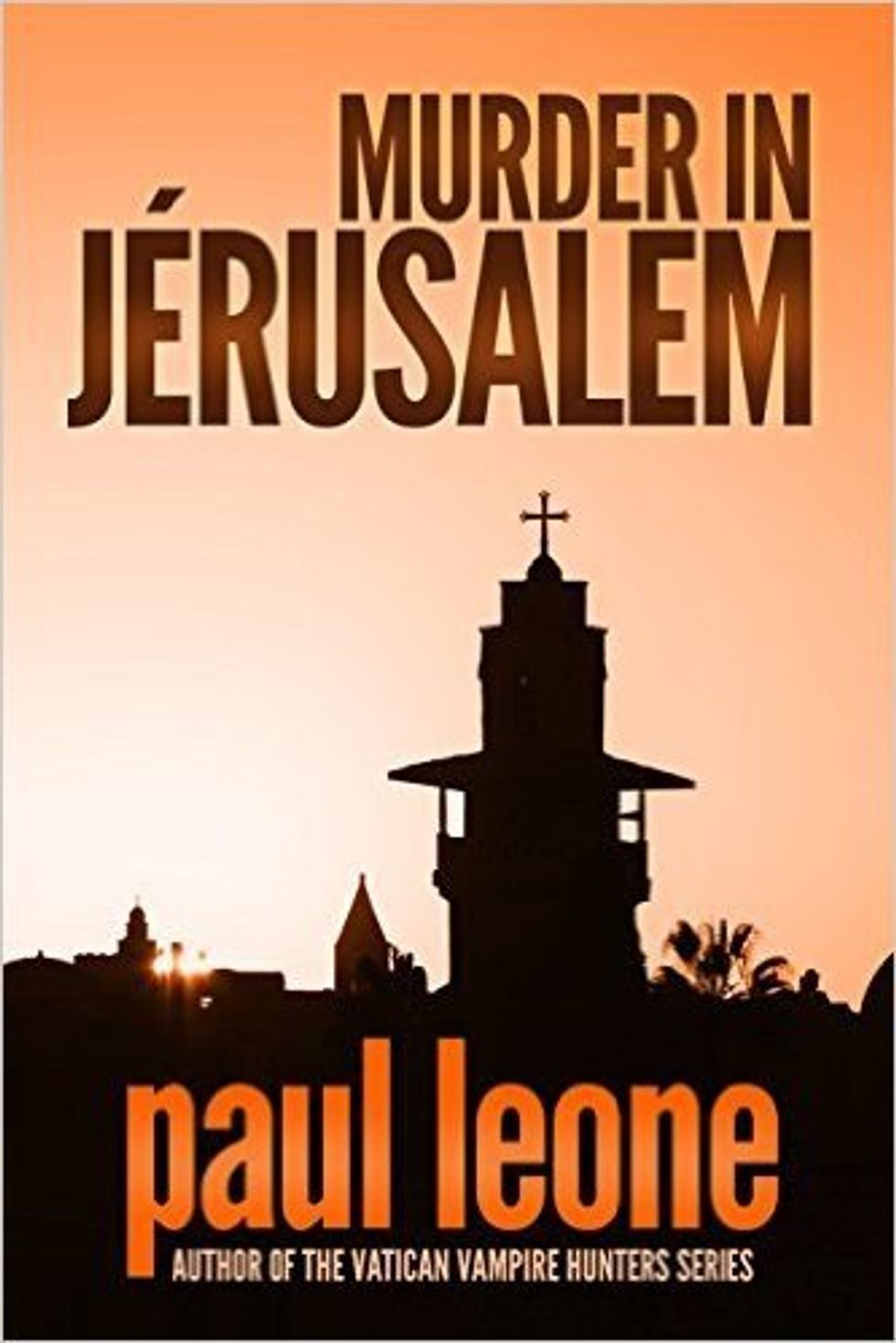
Paul Leone is the author of the "Vatican Vampire Hunters" and "The Mysteries of Zillah Harvey” series, as well as short stories like “Murder in Jerusalem," "Little Greys" and "Emma Shepard, Space Sentinel." His Amazon page can be found here.
Wallace: What got you into writing?
Leone: I've been doing it so long I can barely remember! I started out writing (or at least beginning to write, since I never finished anything) fanfic for "Quantum Leap" way back when I was in middle school. I wanted to tell more stories with the same characters and settings I knew. For a long time, that was all I did, but eventually, when I was in college, I started to write more original works.
Wallace: What made you interested in Alternate History?
Leone: I happened to come across an anthology of alternate history stories edited by Mike Resnick, "Alternate Presidents," I think, and the idea just struck me as very cool. I got my hands on some Turtledove and S.M. Stirling books, then began to dig deeper into the genre — "For Want of a Nail," "Man in the High Castle," whatever else was available back then. There was barely an internet at the time, so it was a lot harder finding what even existed, let alone getting your hands on it.
Wallace: What inspired your alternate history story "Murder in Jerusalem?"
Leone: Partly, I've always wanted to try my hand at a murder mystery. David Simon's "Homicide: A Year on the Killing Streets" is one of the most amazing books I've ever written, and I wanted to get into that world of ordinary, non-Holmes-level-genius detectives. The alternate history angle came from rereading Robert Harris' "Fatherland" around the same time.
Wallace: Jerusalem is a storied city. Did this history pose a daunting challenge?
Leone: A little! I admit, when you cut away the last nine centuries or so of real world history, it becomes easier on some levels, since you can just shape events however you like. But actually revealing how history has diverged can be tricky. Nobody really wants to have a detective story interrupted by a page or two of exposition. How often does the history of the United States (or whatever country you live in) come up in conversation in our day to day lives?
Wallace: What inspired your Vatican Vampire Hunters series?
Leone: There were three main inspirations. First was John Steakley's fantastic vampire hunting novel "Vampire$." The idea of vampire hunters working for the Catholic Church comes from that. "Dracula" came next, for obvious reasons. My vampires aren't quite the same beasts as Stoker's, but he established most of the rules for modern vampires, and mine pretty much stick to them. Third was "Buffy the Vampire Slayer," which I've been a big fan of since it first aired.
Wallace: Was it difficult balancing history and fantasy in said series?
Leone: Only a little. These vampires don't intersect with major historical events much. They didn't kill Kennedy or cause World War II. It's like White Wolf's roleplaying game "Vampire: the Masquerade" — vampires are real and cause misery, but the history of the real world and of the setting are essentially identical.
Wallace: "Vatican Vampire Hunters" is not your only foray into historical fantasy. Was there a different sort of inspiration for "The Mysteries of Zillah Harvey" series?
Leone: Zillah Harvey is intentionally the anti-Sherlock Holmes. She gets drawn into her "cases" by circumstance, instead of being hired, she accepts the supernatural as a reality on a day-to-day basis instead of being a skeptic and she resolves things mostly by instinct instead of reasoning. But Doyle's stories and the Victorian setting they take place in were the starting point. I read a lot of Victorian-era non-fiction works (travel journals by people like Isabella Bird) to try and get into the mindset and vocabulary of the times, too.
Wallace: You've experimented in several genres. What made you want to explore such different types of storytelling?
Leone: I read and watch a lot of genres, so I'll often be inspired by something (the latest Marvel Cinematic Universe, a book about the war in Iraq, etc.) and try my own sci-fi/horror/fantasy take on it.
Wallace: You're a longtime member of alternatehistory.com. Has the community there affected your writing?
Leone: Absolutely. There's a lot of quite talented writers on the forum, not to mention a huge number of people knowledgeable in different eras and aspects of history, so it's a great resource in that respect. You can learn a lot and work to improve your craft at the same time.
Wallace: What advice would you give to aspiring authors?
Leone: Read everything you can get your hands on, in as many different genres as you can, fiction and non-fiction alike. Internalize the rules of grammar, punctuation, etc., so they're second nature. Find some reference books on the craft of writing — outlines (all my successful writing is outlined — fairly simply at first and then with more and more detail as I write), establishing character and so on. Read some more. And keep going when you start your story. If you're stuck on a scene that's not working, push your way through it and get on to the next one. You can and will go back to fix it later on, but don't lose momentum.
















