
As a young college student hoping to make it in the professional world (as many of us are), I think I speak for a lot of collegiates when I say that we all feel a little bit of pressure on our shoulders to be successful. It's not an easy thing to do and it takes time to get where you want to be in life. It takes hard work, dedication, determination, a willingness to learn, and above all, a bright, positive attitude. All one has to do is be willing to reach for it.
It is so staggering to know that successful people in my desired field of journalism are out there and that it is possible. Watching news reporters, writers and editors accomplish so much and grow right before my eyes are truly inspiring. This keeps me reaching for what I want in life every single day, and recently, I had the extreme pleasure of sitting down with someone who reminds me to do just that -- Jaime Chambers.
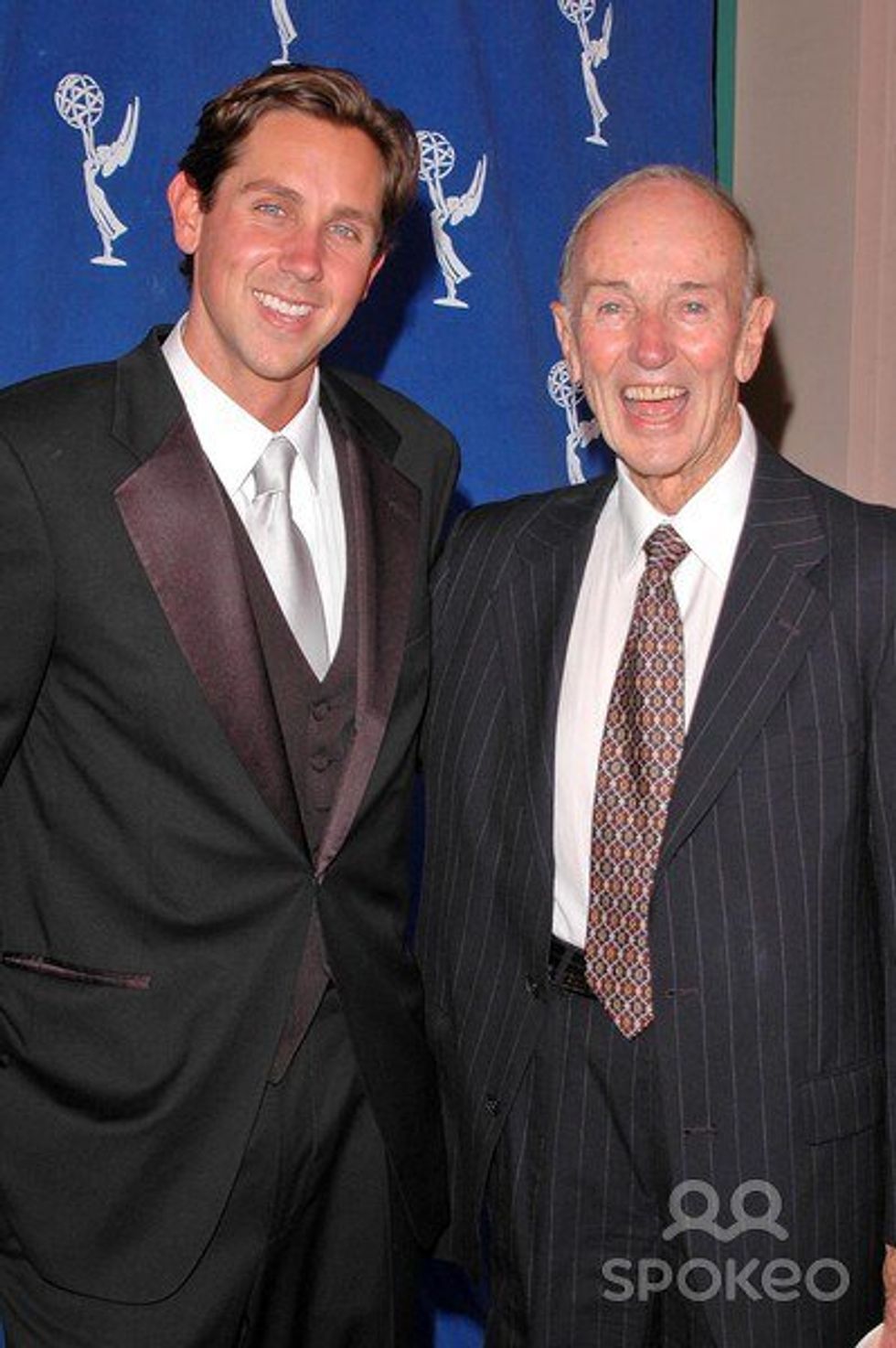
Chambers is a lead news reporter for FOX5 San Diego. He grew up learning and working alongside his grandfather, Stan Chambers, an Emmy Award-winning Journalist and KTLA veteran who worked for the station for 63 years according to the station. Jaime started out at KTLA News as a news assignment desk assistant and later joined the FOX team as a business reporter developing a segment called “On The Money.” Now, Jaime is a lead reporter who fills in as an anchor on the weekends, according to FOX5 San Diego. During our interview, I got the inside scoop of what it truly takes to be a reporter.
Q: Why did you initially decide to go into biology in college instead of studying journalism off the bat?
JC: I was an EMT and I was a medic and a lifeguard when I was a kid; I was 18-22, and I loved helping people, I just loved that immediate feeling that you could be so close to someone and they'd be in a dangerous spot. They'd be in a dangerous spot in their lives and it felt like time slowed down and at that moment, with that person, there was nothing more important on the planet than keeping this person alive, whatever it was, so biology fired me up because medicine was so critical. I was going for Karma points; it was so much fun helping other people, and you went home and you felt so great about it every night, and that's why I was really thinking I was going down the medical field. I was going to try to be a paramedic, then I was going to try to dig into maybe becoming a doctor if I had the patience and the determination.
Q: Where do you think you would be today if you didn’t go into broadcast journalism and continued into medicine as you had planned?
JC: I probably would have ended up as a firefighter-paramedic, that's where I would have been. I loved the feel, and again, it's just about helping people. The world of service fires me up. The world was never about money for me, it was never about going and getting a job that pays really well or makes a ton of money, it was always about doing extraordinarily dangerous things; exciting things that help people.
Q: As you were growing up, you had your grandfather by your side. How was it working alongside him and learning from someone of his caliber?
JC: He taught me everything. From the nuts and the bolts all the way through my whole life; he taught me so much about journalism and for that reason I feel like I'm cut from sort of an old school journalism quad, which, which really helps in some instances and probably kneecaps me in some instances. Some people really enjoy pushing the story farther than I do, because my grandfather used to hold out his hand and I'd ask him a question, I'd say, so I'm in sort of this confusing spot "What do I do when I run into this issue with journalism?" He goes, he would say, "Well, let's check the book!" He'd hold out his hand and pretend like he was air, just air reading a book, and he would kind of (it was a joke), but he was there at the very inception of making the rules of broadcast journalism. Those rules really should still be followed, a lot of those aren't followed; people push the story faster and farther than it should be done. I feel like all of us should take a knee on something that we get emotional about if we get excited about a story... and we're too excited about a story, that's a problem. But, he taught me everything from the very beginning.
So I started as an intern, a plane hit a building in the Fairfax district and I ran over to help, and I said, "Alright papa, I'm kind of here now, what do I do, what's the secret to making it?" and I asked him "should I wear a suit and tie?" and he goes, "Absolutely! Always wear a suit and tie and when it gets really hot out, you can even take the jacket off." That's probably the best advice: always wear a suit and tie and when it gets hot, you can even take the jacket off.
Q: What skills would you say are most important to have as a reporter?
JC: You have to enjoy, not cope with, but enjoy pressure. You have to be able to make decisive decisions, you have to be able to manage your clock, and you have to be able to cut things out of your story that you feel may or may not be critical, but you have to cut with decisive nature because you can't get everything in you always want to say. Every story you want to tell is about five minutes, but every story that you get is going to be one-thirty; so figure out what's the most important stuff, what leaves people with the most honest look, and that's what you gotta write to.
Q: What’s the first thing you do once you arrive at the scene of a story?
JC: Depending on the story, you're trying to get to the heart of the story immediately. If this is an active story, if it's a crime scene or if it's a fire or if it's a flood, you just get to wherever it's most dangerous. Go to where the bomb is, go to where the flood started, go to where the fire is hottest, and that's where you go first. I tend to not use; I'll always interview the cops, I'll always interview the firefighters, but tend not to lean on them as much as I can. I like the witness sound. You want the witness sound, you want the video from the witnesses (if they have cell phone video); that's the stuff. You're trying to get as close to the story as you can, so the witness sound, the witness video, the witnesses take on what they just experienced is really the heart of everything.
Q: Do you ever encounter any kind of challenges on a day-to-day basis, if any?
JC: Oh, every single day. Every single day you've got IFB challenges; like the audio shuts off and you have to make a decision of am I going to keep talking, am I not going to keep talking, am I going to step out, am I going to burn this live shot down; you're making split-second decisions. It's very much like playing any sports because there are so many moving parts: you've got your teammates, you're all trying to do it in a team with your photographer, you're trying to manage their time with your time, they're trying to manage your time as well, so you guys are always on deadlines. Deadline, deadline, deadline.
Q: Obviously with challenges, what advice would you give to aspiring journalists in this day and age?
JC: It depends. Do they want to dedicate their life to journalism, is this their main calling and they're never looking back because I would kind of say be a lone gunman. You have to be all by yourself and work your tail off because that's what it takes to really succeed. If you're trying to get to NBC network or ABC network news, you have to be flexible and you have to be ready for the pressure; you have to also understand a lot of it is the bosses just choosing. So you can be the best reporter on the planet but the bosses just don't choose you, it's a cold moment. A plus B never equals C in our business. Just breaking in, your job is to stand where lightning is most likely to strike. You have to find where lightning is most likely to strike, stand there and when it strikes, do the news. That's the hardest thing ever. There's no really front door to the news industry, it's friends, it's producers, its people willing to take a shot on you and when it works, then you have a job and a career.
Q: How important do you think social media is to journalists and do you use social media when you’re reporting?
JC: I think Twitter is really powerful; Facebook is less powerful when it comes to immediacy, it's like people pick that up later on down the road, and Facebook is so narcissistic in general that I think that, I don't know, I don't know if Facebook has the juice that Twitter has. Twitter very much feels like a tool for information, whereas Facebook feels like any day could be the next MySpace...because that's exactly what it is, it's a profile on yourself and it's en vogue right now and they're doing powerful things with their cultivation of economics in Facebook, but when it comes to, like, longevity, I fear for Facebook.
Q: What's the craziest thing that's ever happened to you in the office or while you were out reporting?
JC: This would be at KLTA, this is a crazy story; CRAZY! The story is: a plane is landing in Burbank, loses control and the plane comes down, 50/50 grinds power lines; it's a small plane. It slides down the side, get's tangled in the power lines, comes slamming down and there's a car underneath it and sticks in the power lines. The car stops, the lady jumps and rolls away and they're inverted on each other; it looks like that scene in "Top Gun" when Maverick's giving the Russian's the bird. I show up and I see a plane hanging in the bouncing power lines; all four people get out, they're fine. I'm blown away by what I'm seeing behind me and then Jay Leno pulls up in Burbank in a 1929 Phantom Rolls Royce, so I interview Jay Leno at the site of a plane crash and you can't fake this stuff, I don't even believe that it happened other than the fact that it was on TV that night, and Jay Leno told me, I said, "Jay, have you ever seen like this?" He said, "yeah, I have," and he said, "I'm pretty old, I see a lot of weird stuff." It was amazing, just bizarre.
Q: What honors and awards have you received over your time as a reporter? How did you achieve these awards?
JC: Yeah, so, I've got a couple Emmy's, but the award that I'm most proud of, it's from this company, they gave me the National Tribune Award, which is a really high honor for a company.
So, as you can see, if you reach for what you want, you can be successful.