

Apparently, there’s a common dream that people have about suddenly being naked in school. I’ve never had this dream myself, but I dream about school a lot: it’s a place I’ve generally liked to be, and since it’s where I’ve spent the majority of my life, why wouldn’t I dream about it? But sometimes those dreams became nightmares, and the rooms and halls that should have been safe became anxiety-inducing and unwelcoming, and all I wanted was to avoid it. It went against everything I’d ever known—an experience I’d eventually learn was called “cognitive dissonance”—and it usually happened when I was being bullied or pushed around: suddenly, instead of wanting to go to school every day and actually enjoying it, like the proud nerd that I am, I begged my mom to let me stay home, even asked her if we could move out of state once. When I got to university, I figured I might experience cognitive dissonance because my paradigms would be challenged, my mind would be expanded, but I never counted on feeling the same way I’d felt in grade school again—especially when those feelings came from my professors. What was I supposed to do about that? I could barely do anything about my bullies when I was going through school: how was I supposed to stand up to a professor I felt was being unfair? As I went on in my college career I heard dozens of my friends say they’d experienced similar situations, so if you’re preparing for your first class or if you’ve found yourself in this situation, read on, my friend: this article is for you.
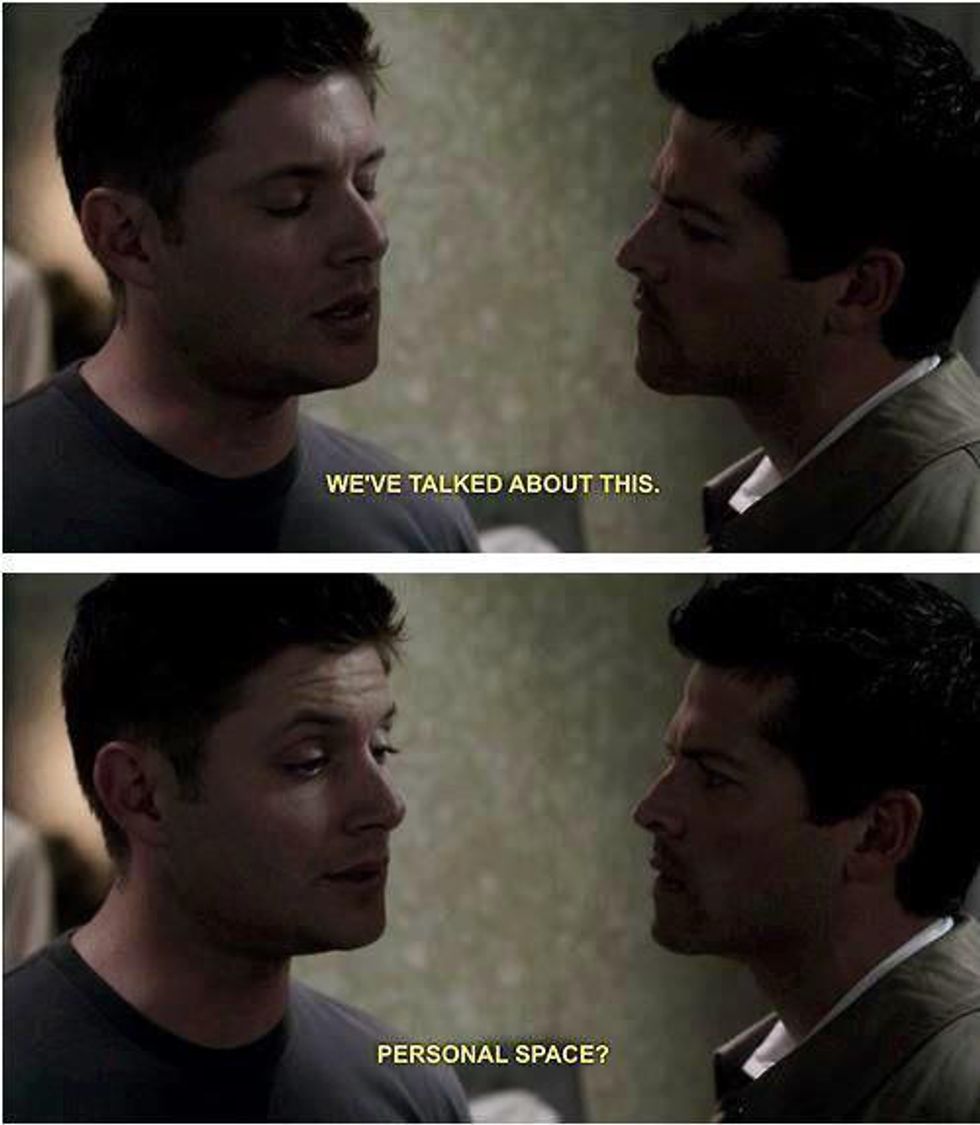
Honors classes at my university are always interesting, but not always for the reasons one might think. Sometimes it’s because of the conversation—the professors who teach these classes like to pride themselves on their classes being seminars rather than lectures, though how true that is varies by professor and class—but this one was because of the power balance in the room. For most of us, this was our final semester, and for just about all of us, it was our last Honors class: we needed to pass. On top of that, many students were intimidated by the professor teaching the course, probably because of his tendency to come face-to-face with whomever he was talking to.
My problem was not so much his manner of speaking, or that he required specific answers to vaguely-worded questions, or even that he expected us to know the answers to the questions we were asking of him, but that he was the only professor who had ever told me my writing was so confusing and wordy that he could not find my argument no matter how obvious I felt I’d made it. This had happened for three classes and I had sucked up and told him he was right because I wanted a good grade. Since then, though, I had taken several writing classes, refined my skills, and strengthened my ability to make an argument. Some of my professors even suggested I enter my writing in competitions. For money.
I knew how to write an essay.
So when my first essay for that class came back with the same comments as always—“too wordy,” “not clear,” “what is your thesis?”—I decided I was done feeding his ego. I told him, very plainly, that he was the only professor who had ever made comments like this, and for so long. His colleagues in the Honors Program all had no problems picking out my theses and felt I was a strong writer, so I didn’t think the problem was my writing. He suggested—not subtly—that I was simply not intelligent enough to understand the discipline he taught and maybe even not good enough for the Honors Program.
I had to leave before I did something that really got me in trouble, but after that, I changed: I had the grades to carry me as long as I passed the class, so I stopped sucking up for the grade… and he noticed. My next essay oozed sarcasm, overdoing everything I thought he wanted, to the point where I began it with “This essay will argue that…”
He didn’t get the joke.
He told me, “You finally gave me a thesis statement in your last paper.”
I said, “No, I apparently simplified it enough for you to finally recognize it. It’s a shame I had to do that in what’s supposed to be an Honors class.”
I guess that one hurt, because when he was saying goodbye to me for the semester, instead of shaking my hand as he usually did, he stood before me and said, “I’m teaching a class over the summer. You should take it—I’ll teach you how to write a thesis statement.”
He’d gone straight for my pride: I was an English major, and thesis statements are pretty much English 101. Since I never had to see him again after that and I figured my grade was already going to be sub-par anyway, I looked him square in the eyes—something most students were afraid to do for very long—and said, “You know, maybe I should: I’ll teach you how to read a thesis statement.”
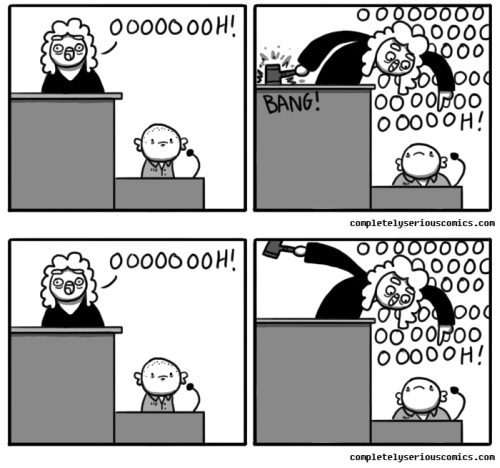
I then turned on my heel and left his office with my three friends who had also come to turn in final essays, and as such, witnessed the exchange.
I will pause here to say that I don’t condone sassing professors like that. In fact, I turned to my friends once we’d left the building and said that I’d probably just flushed my grade down the toilet, but I wasn’t going to let him push me around any longer; I knew, as did they, that I knew how to write an essay and I was done trading my integrity for a grade.
Although I worked up the courage to stand up to him myself—with the support of my friends—there are just some cases where you have to go to the higher-ups. I have one of those, too. Just a warning: this could be a trigger for some people, so you may want to skip to the end if you think it could be you.

In one of the other classes I was required to take for my degree, I came across a professor with extremely controversial opinions. Opinions he decided to share with the section I happened to be in, in part because of a report that I happened to do.
This report was on the poem "Leda and the Swan" by W.B. Yeats. I’d heard the poem before, but a lot of people in the class hadn’t. In a nutshell, it’s about when Zeus looked down from Olympus at Leda, a beautiful mortal woman, and decided “I want me some of that,” so he approached her in the form of a swan and raped her. This resulted in the birth of Helen of Troy, who was, as most people who have been through a high school English class know, all kinds of tangled up in the Trojan War. Because of the topic of the poem, however, I tried to make my report balanced: since one in six women experience sexual violence in their lifetimes, as do 3 percent of men, and I didn’t know what my classmates might have gone through, I wanted to address the issue of Leda's rape without focusing on it. I had a few friends in the class, and they told me I had done well in that aspect, focusing on the larger narrative rather than making the poem a beautification of rape, and that I painted Leda as someone who ultimately inspired a lot of beautiful things—art, stories, poems in response to Yeats’, etc.—rather than a helpless victim. I was proud of that.
My professor, however, took the discussion I’d started in a different, much less inspiring direction. He noted that some academics have suggested one of the passages in the poem implies that Leda stopped fighting Zeus at some point. Arguments for this are usually built on the notions that, among other things, although Zeus is a swan when he and Leda meet, swans can be pretty vicious birds and this isn't just any old swan. The deck is kind of stacked against Leda—that she fought at all actually proves her resolve. But my professor brought his own interpretation into it—one that has been thrown around, but is widely unpopular: that Leda wanted to be raped. He then took it one step further, saying that women who are raped, on some level, want to be raped.

Although I continued to show up to class and endure my professor’s sexist rants, I knew I needed to tell someone about what was going on. This wasn’t something I could handle alone though, even with friends brave enough to stand up to him in class; I took my concerns to the Dean of my school, and eventually met with people in Human Resources who opened a case. When they asked me what I ultimately wanted—and I suspect they were expecting an answer along the lines of “for him to be fired”—I replied with “for no other student to feel as terrible as I felt in that classroom.”
I’m not telling you all this to complain, or to brag. I’m telling you because there are a couple things I want you to know if you ever find yourself in a situation like this. First, you are not alone: chances are that someone who has had that professor before—and maybe even someone in your class—feels the same way you do, and you can work on the issue together. Sharing how you’re feeling with your friends can go a long way. Second, know that there are people at your school who can and want to help you: talk to a counselor, even an academic counselor, or a professor you do trust—you know, the one who restores your faith in school whenever you see them. Chances are they’ll be willing to listen, or they’ll know who you can talk to to resolve the problem you're having.
You never know what might happen. The professor I stood up to? He gave me an A, for the first time since I’ve known him. The one sharing opinions that didn’t belong in the classroom is no longer sharing his opinions in the classroom. You can make a difference, for yourself and your fellow students; school doesn’t have to be a nightmare.