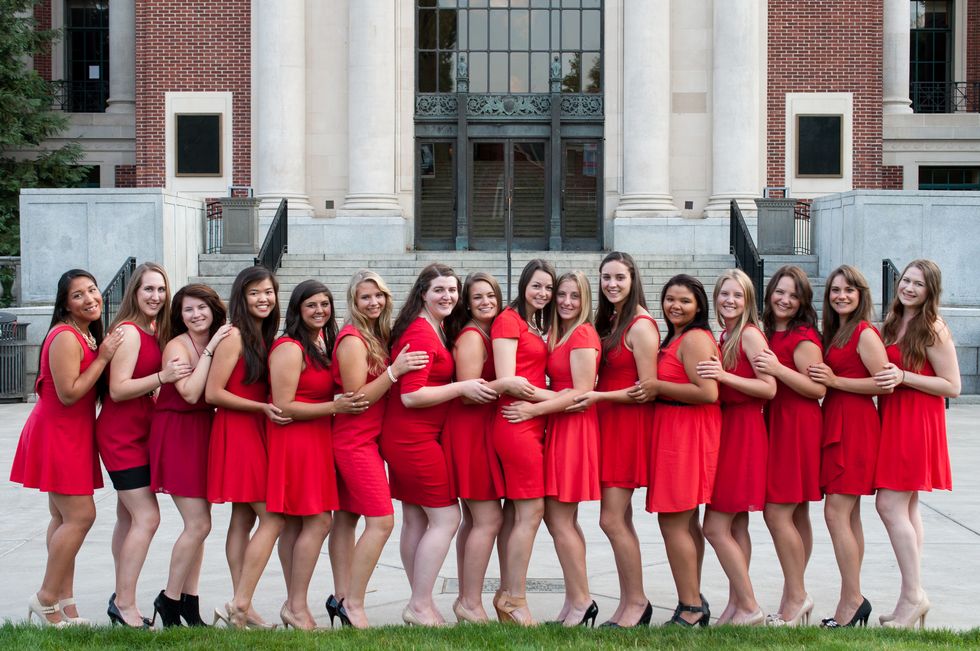
When I first transferred to my university, I was devastated to find out that I had missed formal sorority recruitment. Luckily, four out of the eleven sororities on my college campus would be participating in informal recruitment during the spring semester, and I found my Greek home. I am not the only one to find my sorority through informal; hundreds of women find themselves “rushing” during the spring semester. If you missed formal recruitment and are still interested in joining a sorority, read on to find out how informal recruitment works!
Before getting into it, here are a couple of possibly unknown terms that I’ll be using throughout this article:
“Rounds” refer to the time you spend with the sorority. “Houses” can be used interchangeably with “sororities” or “chapters.” I know not every college has Greek housing, so in the spirit of inclusivity, “houses” should not necessarily be taken literally here.
The first thing you need to know is that even though you can dress casually for this process, you should still look put-together.
You may have read several articles or watched several videos that gave you ideas on how to dress up for formal recruitment, but for informal, you can likely show up to the houses in whatever you wore to class – to an extent. If you showed up to class in pajamas, maybe don’t do that during recruitment.
Even though the process is far more casual, you still want to present the best version of yourself. The sororities who hold rounds still have uniform codes to follow and they put in the effort to look nice for you, so if you want to join a sorority, you should look somewhat nice for them. You don’t need to wear a dress and heels for informal recruitment; jeans and a nice t-shirt will do. If you make it to a preference round, that might be a good time to break out the dress. Some sororities might ask you to wear a skirt or dress as you keep getting invited back to rounds.
The informal recruitment process is different for every sorority and every college.
Since there is no structure that requires all potential new members to see every house, each chapter decides how – and when – they will structure their own rounds. This means that you might have to leave rounds early or skip some rounds to see as many sororities as you can. This may differ from school to school, so be sure to look into how your university decides to run informal recruitment. Some colleges might not even have informal recruitment.
Even though the process is “informal,” etiquette rules still apply as if the process were formal.
This means that anything you wouldn’t have said during formal recruitment should still not be said during rounds. Don’t talk about how you get drunk every other weekend. You can mention that you have a partner, but don’t talk too much about them; when you’re in recruitment, you should be talking about yourself.
The sorority wants to get to know you. Talk about community service you’ve done, how your college experience has been so far, what you’re interested in, what you do in your free time, and so on. The term “informal” recruitment is only in relation to the dress code and the lack of unified structure between every house’s rounds. Etiquette rules still apply.
Not every house on campus will be a part of informal recruitment.
Most sororities will have a limit on how many women they can accept into their chapter every year. If they hit this limit during formal recruitment, they will likely not be participating in informal recruitment. If you feel that you’d rather see all of the houses on campus, then waiting until the fall semester and registering for formal recruitment might be the best option. However, if you go into informal recruitment with an open heart and mind, you will still find the house for you even if you don’t get to see all of them.
Informal recruitment is a less time-consuming alternative to formal recruitment. It’s a great option for spring transfers, those who might have dropped out of formal recruitment, and those who prefer a more relaxed environment to talk with sorority women. Hopefully, this breakdown of informal recruitment can help you decide if this option is right for you.