Every American knows that July 4 is Independence Day. I hope every American knows that the 4th commemorates the day Congress signed the Declaration of Independence, liberating themselves from England, back in 1776—a whopping 240 years ago. We know the names of some of the major characters: Benjamin Franklin, John Adams, Thomas Jefferson, etc. But do you know anything else about such a pivotal moment in American history? Arguably the first moment in American history? Before you meet up with family and friends to enjoy delicious barbecued goods wearing pieces of clothing with the pattern of our flag, read up on some fun facts so you can wow everyone! (Here’s a fun fact about me: I love fun facts—you may have noticed.)
1. We have John Adams to thank.
,_2nd_president_of_the_United_States,_by_Asher_B._Durand_(1767-1845)-crop.jpg) Adams supported independence from the get-go, to the point where “he was obnoxious and disliked” ("But, Mr. Adams," 1776). When King George III declared the colonies to be in rebellion and refused the Olive Branch Petition (drafted on July 5, 1775, it was a letter from the Second Continental Congress and was the last attempt to prevent a war with Britain), Congress created the Continental Army. Adams formally nominated who he thought was the best candidate: George Washington. Dear Mr. Adams was also a member of the committee to draft the Declaration of Independence, alongside Ben Franklin and Thomas Jefferson.
Adams supported independence from the get-go, to the point where “he was obnoxious and disliked” ("But, Mr. Adams," 1776). When King George III declared the colonies to be in rebellion and refused the Olive Branch Petition (drafted on July 5, 1775, it was a letter from the Second Continental Congress and was the last attempt to prevent a war with Britain), Congress created the Continental Army. Adams formally nominated who he thought was the best candidate: George Washington. Dear Mr. Adams was also a member of the committee to draft the Declaration of Independence, alongside Ben Franklin and Thomas Jefferson.
2. We should actually be celebrating July 2.
 In a letter to his wife, Abigail, John Adams wrote that “the Second Day of July 1776 will be the most memorable Epocha, in the History of America” (MA Historical Society). On that day, in Philadelphia, Pennsylvania, Congress had voted to approve a resolution of independence from Britain, written by Thomas Jefferson. However, two days later, Congress adopted the declaration. This is what we celebrate.
3. It wasn’t signed all at once.
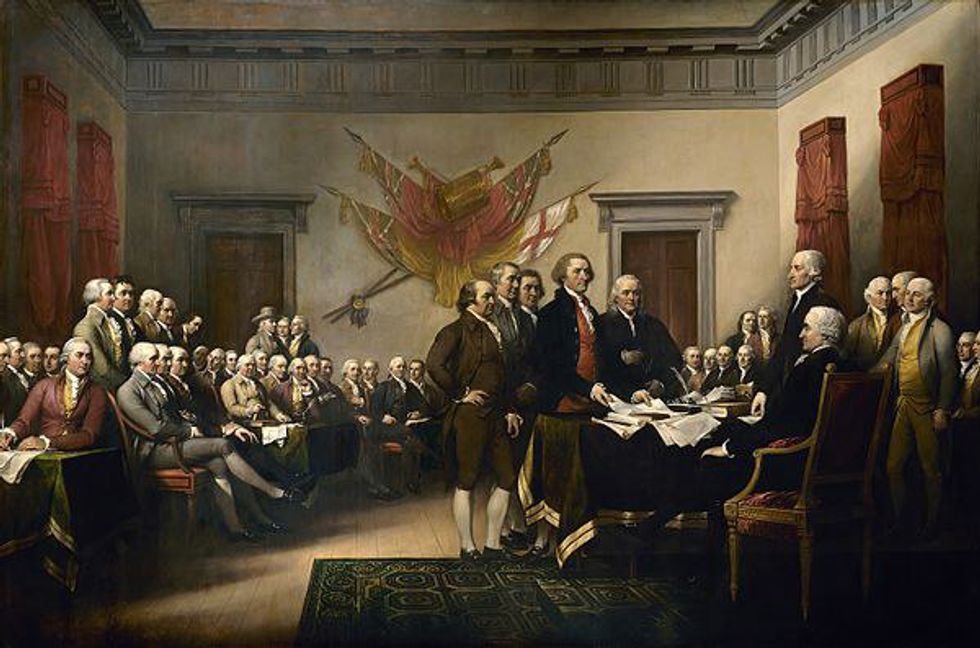
We like to imagine the painting by John Trumbull, depicting all the delegates signing the document, is what July 4 looked like, but in reality, “No such scene, with all the delegates present, ever occurred at Philadelphia” ("John Adams" by David McCullough). Indeed, it wasn’t until August 2 that Timothy Matlack, the assistant to the secretary of Congress, produced a clean copy of the declaration, and historians believed most delegates signed then. John Hancock was first, who put his John Hancock right in the middle of the signature-area. The last man to sign, Thomas McKean, put pen to paper sometime in 1777.
4. The original draft of the Declaration of Independence has been lost.
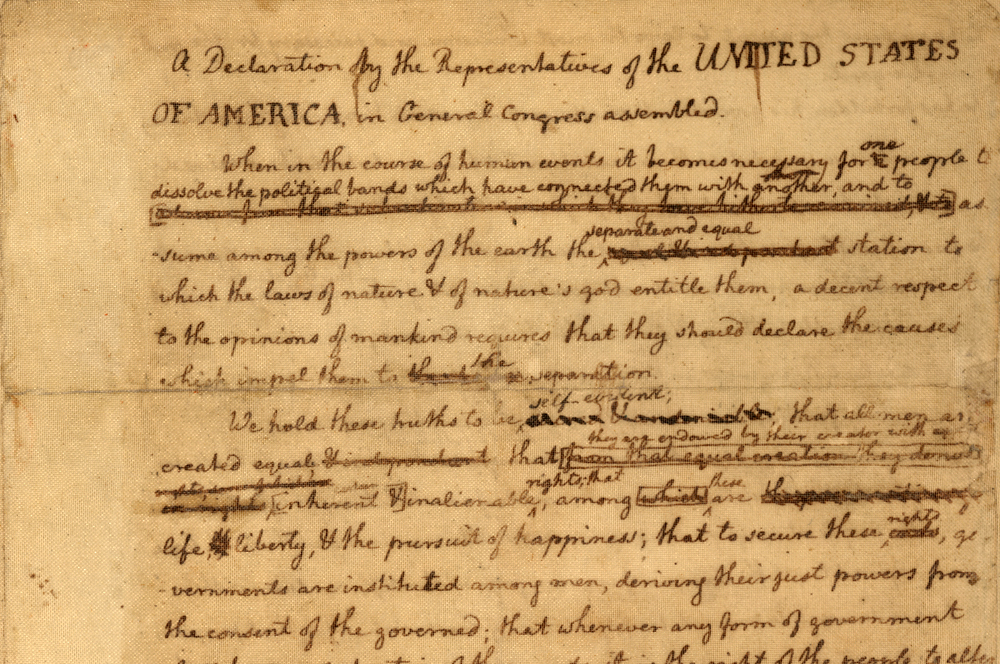
Yep. It makes the history geek inside me cry, but Jefferson’s original draft has been lost. The copy that was eventually signed is called the engrossed document. On July 19, 1776, Congress resolved that the original document should be written on parchment by Timothy Matlack, titled “The unanimous declaration of the thirteen United States of America," and signed by all 56 members of Congress. The engrossed copy, though dated at July 4, 1776, as we all know, was mostly signed on August 2.
5. The Declaration of Independence paved the way for many subsequent revolutions.

Thomas Jefferson served as the Minister to France between 1785 and 1789, leaving just as “France is following us to revolution” (Daveed Diggs as Thomas Jefferson in Hamilton). Other countries inspired by America’s example included Greece, Poland, Russia and many in South America.
6. 174 broadsides of the Declaration have also been lost.
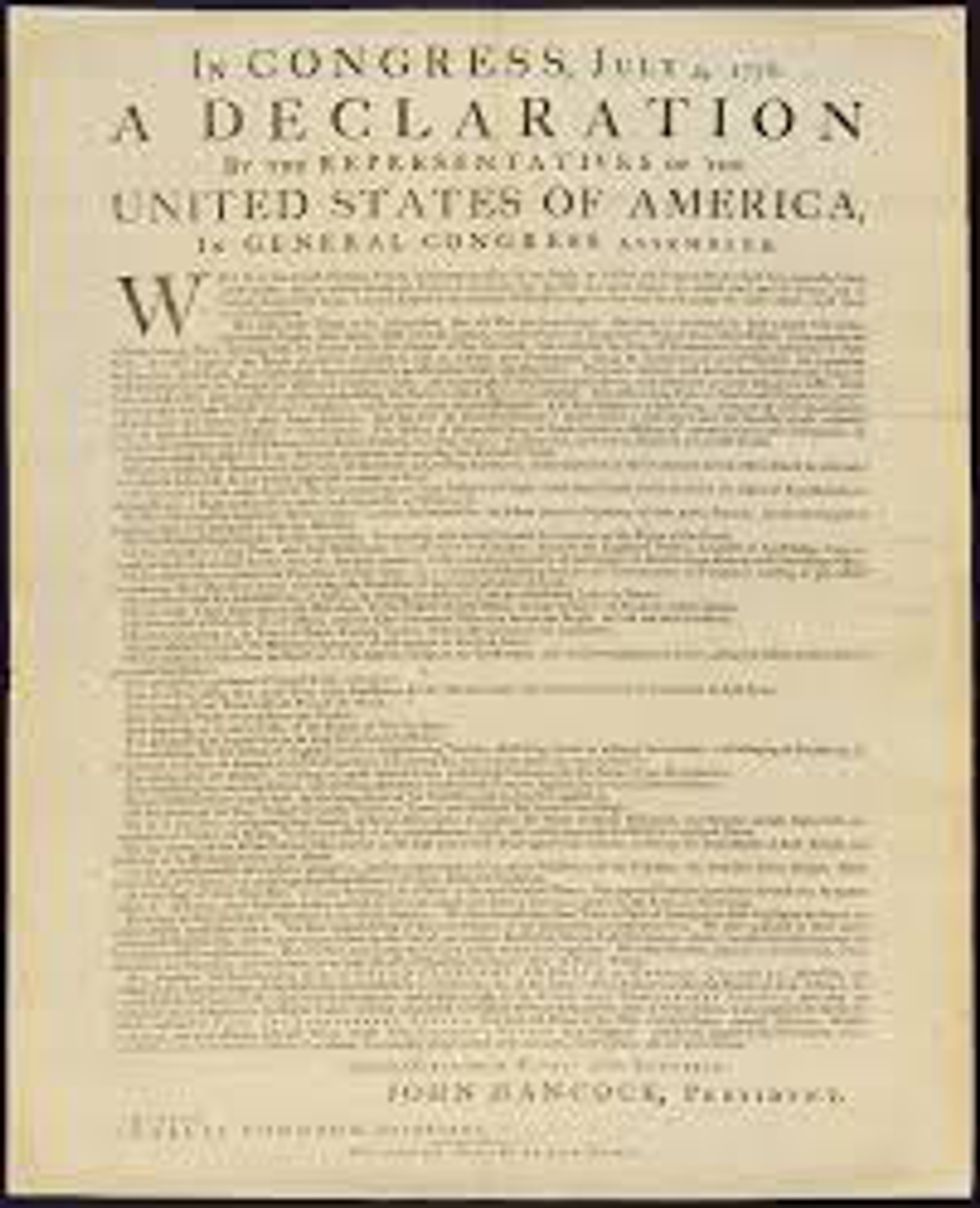
A broadside is a large piece of paper with print on only one side, typically used for posters and the like, and was the most common form of printed material between the 16th and 19th centuries. Historians estimate that approximately 200 were made of the Declaration of Independence, the first published copies of the document. In case you’re wondering if you’ve ever seen one, they’re identifiable because John Hancock’s is the only name at the bottom, in large print instead of his traditional signature. An Irish immigrant named Dunlap was charged with supervising the printing—a rushed job in which he spent the night of July 4, 1776 correcting and setting type. John Adams later said, “We were all in haste” (Looking For Liberty, Ted Williams), evidenced by the fact that “watermarks are reversed, some copies look as if they were folded before the ink could dry and bits of punctuation move around from one copy to another” (Ark of the Liberties, Ted Widmer). Today, only 26 remain, with several in New York, Massachusetts, Pennsylvania, Washington DC and England.
7. Rhode Island—doing it right for 231 years.
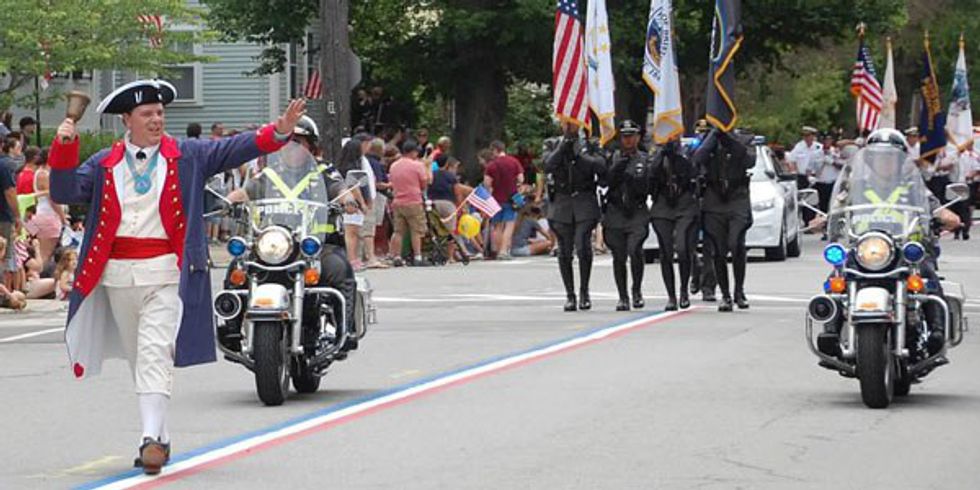
The oldest annual Independence Day celebration in the United States is the parade on July 4 in Bristol, Rhode Island, which first marched in 1785.
8. John Adams and Thomas Jefferson—friends, enemies, competitors, to the end.

If you read my article about the history of Memorial Day, this fun fact will be familiar, but indulge me. Both Adams and Jefferson—who, in their own way, helped the Declaration of Independence come to fruition—died on July 4, 1826, the 50th anniversary of the document’s adoption. If you want to believe they died at the exact same moment, a symbol of their friendship and collaboration (despite being political rivals) skip ahead. Technically, Jefferson died first, at Monticello. Adams, in Massachusetts, didn’t know, and so just before he died a few hours later, he uttered his last words: “Jefferson still lives." People took it to mean that his words still live in the declaration, because that sounds better than that Adams didn’t know Jefferson had actually already died.
Well, there ya have it, further proof that you can learn something new every day! I hope you wow people with your impressive knowledge of why we celebrate July 4. If you want to learn even more about how the Declaration of Independence came to be, and if you like learning in song and dance (really, who doesn’t?), I highly recommend 1776, a musical first performed in 1969 by Sherman Edwards and filmed in 1972, about the events surrounding the signing of the Declaration. Fair warning if you’ve seen/know a lot about Hamilton: the Jefferson of Hamilton and the Jefferson of 1776 are very different, but both are accurate depictions of the same man. Have fun trying to sort that one out!
Happy 4th!