
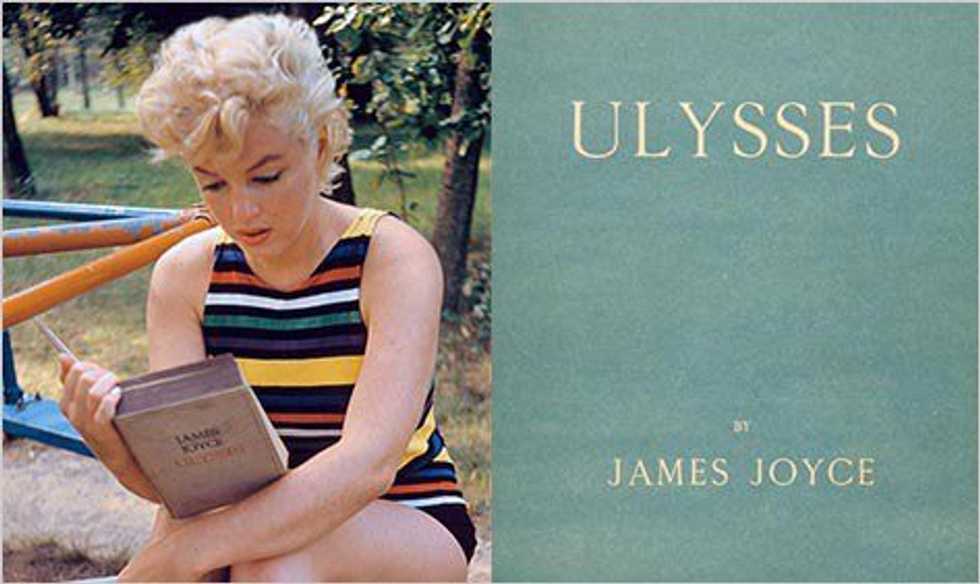
This quarter, I’m taking a class on "Ulysses," and it brightens my day every time I sit down to listen to my teacher lecture. He unearths the various meanings of the book line by line, extracting references to Aquinas and poetry and Catholic theology. It’s lovely.
When I tell people about this class, the reaction is usually a head tilt and the question, “Why would you take a class on that?” I tend to forget that not everyone around me is a Joycean.
While I understand why people would wonder why I would want to read such a difficult text—they have no idea how funny and engaging it is, though!— the implication of the question bothers me: they suggest it’s a waste of time because it doesn’t have an immediate “use.” I’m surrounded by Econ majors who are slaves to efficiency, who see their education as a treadmill preparing for the marathon that is investment banking. This isn’t to say they don’t have diverse interests or aren’t themselves interesting, but they just follow philosophies that are entirely foreign to me.
No, reading "Ulysses" won’t help me get a lucrative job (unless a potential employer is impressed by my ability to get through it). The class won’t directly teach me how to do anything. But though I would argue that literature classes do have immense value in teaching you critical thinking and whatnot, my bigger question is: why does something have to be obviously “useful” to be worthwhile? Are we in that much of a rush to accomplish our goals that we can’t even take a breather to learn about something just because it might vaguely interest us?
My friend, a corporate corpse in the making, recently told me knowledge is power—unless it’s trivia, in which case it’s useless. So, say, taking a film history class, if film is not my main ambition, will provide me nothing but some fun facts to fling out at a party. But to me that’s no reason not to take that kind of class, which might introduce you to topics you never knew interested you. The same goes for the visual arts, theatre, philosophy. All of these fields might be tangential to your main quest of being a lawyer or an analyst, but they’re still enriching and, dare I say it, fun. What happened to doing things just because they’re fun? Not everything has to be geared toward making money or scientific revolutions. I see so many of my friends intensify their studies and activities to the point where they are no longer enjoyable, where they don’t even know why they’re doing what they do in the first place.
In the meantime, I’m going to go read "Ulysses."