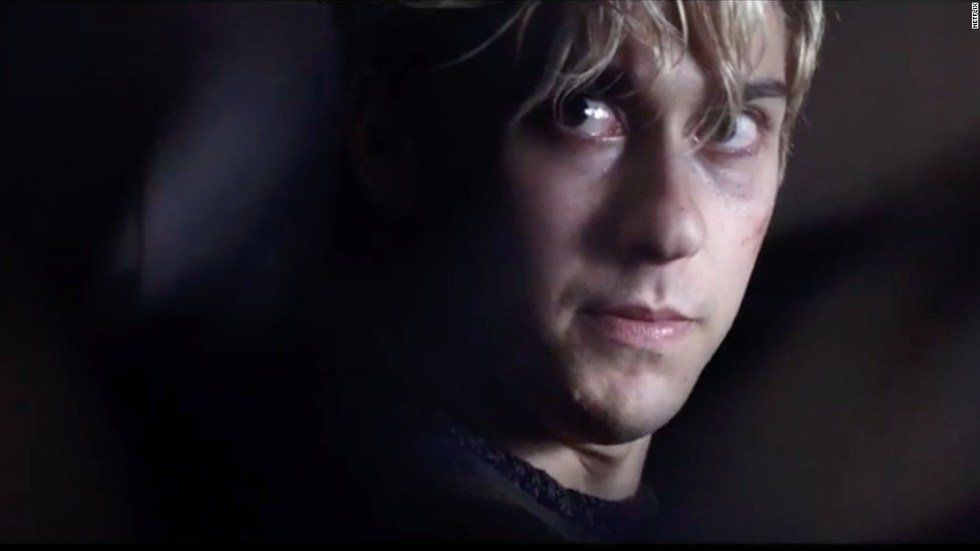
Both the anime and the Netflix community alike have been buzzing about the upcoming live action Death Note movie, directed by Adam Wingard. The trailer for the Netflix original movie has sparked a diverse range of reactions, many of them negative. Why are people so frustrated about this particular adaptation and why are they so doubtful of its success if the Death Note series was so successful?
Part of the reason many are predicting its downfall is because of its success as an anime and manga. The series began in 2003 as a Japanese graphic novel and ever since it was picked up, the series had an extremely large fanbase. Death Note is about a highschool boy who finds a notebook owned by a god of death, and upon writing someone’s name in the book, the person will die. The series deals with dark psychological themes and play on the concept of morality. Because of this, it is easy to see why fans would be drawn to the manga and anime. Even now, Death Note serves as a great transition anime for viewers trying to peek into the anime industry. Therefore, since it is one of the first animes or mangas that most people are exposed to, it holds a special place in most of our hearts and we would hate to see the franchise defiled and turned into something it isn’t.
Wingard’s adaptation is not the first Death Note movie to hit the big screen. There have been two other adaptations, but those were only shown in Japan. These two movies catered to the anime and manga fans, staying true to what the franchise offered. Because the story was written by a Japanese citizen with a Japanese cultural background, these were easy adaptations to make since the directors did not have to take into account the movie being shown in other countries. The directors did not have to make the story more culturally relatable to other cultures (certainly this explains why L is black).
Because of this, Wingard faced his first dilemma: he needed to direct the plot with an American audience in mind, not a Japanese one. This dilemma is often found in translated and localized versions of films, shows, and video games. Diehard fans of a certain series will settle for fan-translated, literal translations of their favorite international film, show, or game, and when the official translated version comes out, they may not like what they see. The fan-translated version caters to an audience who knows the cultural background the media was written in while the official version caters to an audience that doesn’t. The official version was made so that the characters would be more relatable to the audience in both attitude and words so the audience would like and understand the characters more, as well as make the plot more accessible. Because of this, official translations aren’t just translating words and phrases, they are translating an entire culture, which as you can imagine is a much harder thing to do right. But for an audience who is not familiar with the original cultural background, translating a culture is absolutely necessary.
Which brings Wingard to his next dilemma: most of the fans that like Death Note are already familiar with Japanese culture and are not comfortable seeing this culture translated. Most of us have seen Death Note for what it is and liked what we saw. It is this version, the original version with the original culture, that we fell in love with, and now we see what it is like to have that taken away and changed into something we don’t love. Changes in character, changes in looks and attitudes, all are inevitable in a proper official translation. The diehard fans don’t want anything to change. This doesn’t mean the fans are wrong or that the translation is wrong, this just means the movie is starting off on a bad foot.
This takes Wingard to his third dilemma: half of the people who would watch the movie are the diehard fans who don’t want those translation changes, and the other half are completely new to the franchise and are noncommittal. Wingard has chosen to cater to the later audience. In his interview, he has stated that he did not want to cater to the original fans of the series, but rather he wanted something that was Oscar-worthy and could be shared with the rest of America. He was looking more for prestige, not for a fanbase. Whether or not this could be his downfall has yet to be known, but his motives are clear. In order to have his movie more accessible and likeable to the people of America, he would need to use a localized translation with American culture in mind, not a literal translation.
I have always said not to knock a movie before you watch it. I firmly hold my opinion towards this movie in that one should experience it before it is written off as a bad movie. It will definitely be different than what the diehard fans are used to, but to those who have never watched anime before in their lives (AKA lots of Netflix viewers) the movie may be amazing, full of relatable characters and an understandable plot. It all depends on how well he translates the plot and how well he pulls off Death Note’s characteristically dark themes that determines if it is an Oscar-worthy film. Because one thing is for sure: the diehard fans will not be pleased. We should accept this and move on to see the movie as it really is: a movie appealing to the American people. And this, simply put, is not a bad thing for a movie to do.