


September 23 is the annual Bi Visibility day in which we take the time to observe and respect the sometimes overlooked bisexual community. There are a lot of misconceptions that come with bisexuality, and we need to take this day to educate ourselves on a group that does not get as much attention. As an LGBTQ ally, I recognize the importance of such a day, but I cannot speak so much from personal experience as to what it is like to be bisexual. I did some research and learned a little about a few amazing and important historical figures who are associated with bisexuality. Here are 5 to read up on.
1. Michael Page - Creator of the Bisexual Pride Flag.

Michael Page is credited with creating the Bisexuality Flag in 1998. His idea was to create an easily recognizable icon for the bisexual community, similar to how the rainbow flag was being used for the gay and lesbian community. Page uses the color pink to signify homosexuality, blue to represent heterosexuality, and purple, or a combination of the two other colors, to represent bisexuality. Page describes the flag as a way to explain bisexuality, saying that "The key to understanding the symbolism of the Bisexual pride flag is to know that the purple pixels of color blend unnoticeably into both the pink and the blue, just as in the 'real world,' where bi people blend unnoticeably into both the gay/lesbian and straight communities."
2. Fred "Fritz" Klein - Creator of the Klein Sexual Orientation Grid and Founder of The American Institute of Bisexuality
Dr. Fritz Klein (1932-2006) was a psychologist and sexologist who was instrumental in pushing forward bisexual visibility. Dr. Klein spent his early years working on the concept of sexuality as a spectrum, and in 1978, he published his book 'The Bisexual Option: A Concept of One Hundred Percent Intimacy', the first major psychological study of bisexuality. In it, he explains his concept of the Klein Sexual orientation grid, which helps break down sexual identity by using a series of vectors to help identify a person's ideal past, present, and future. In 1998, Dr. Fritz opened the American Institute of Bisexuality in San Diego, California. The Institute's mission is to further bi visibility and help encourage bi culture and representation.
3. Lani Ka'ahumanu - Writer and Activist, Author of 'Bi Any Other Name: Bisexual People Speak Out'
Lani Ka'ahumanu is so incredibly instrumental to bi visibility that one little paragraph cannot begin to do her justice. Ka'ahumanu is a feminist and bisexual activist who has spent countless years advocating for the equal rights and representation of the bisexual community. In her most notable work, 'Bi Any Other Name: Bisexual People Speak Out', she tells the stories of various bisexuals who struggle with identity and coming out. This work is so seminal because it is the first of its kind to portray bisexuality as a human condition. She talks about the lives and daily struggles these people suffer, and forces audiences to see bisexuality as a part of a person's being. Previously, published works focused purely on the psychology behind bisexuality, or the study and statistics to make claims about it.
4. Kate Brown - Lawyer and Current Governor of Oregon, First Openly Bisexual Governor in the United States
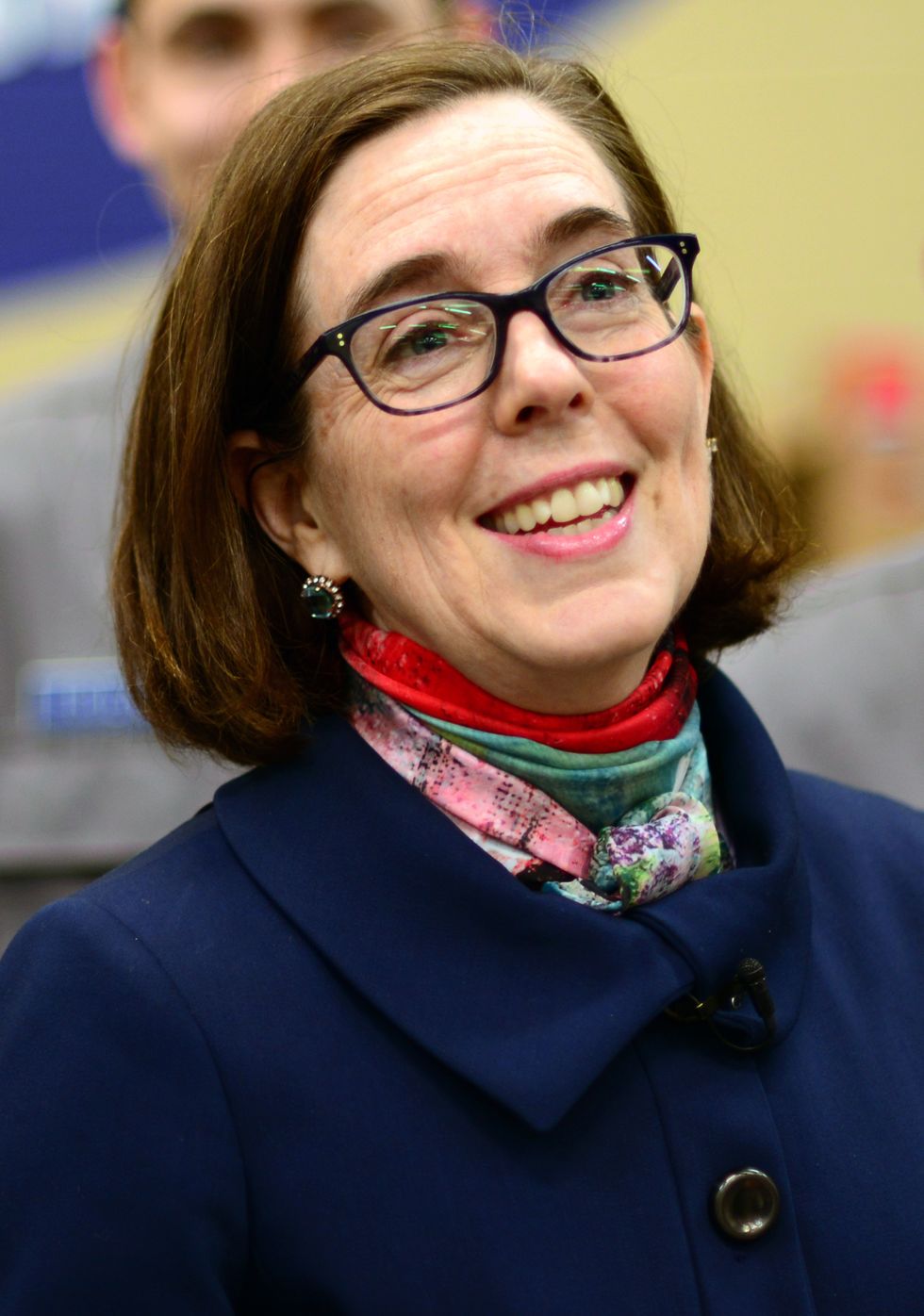
Kate Brown was first elected to local office in 1991, where she served in the Oregon House of Representatives. She worked her way up through public office to become the first openly bisexual governor in the country. During her time with the statewide Oregon government, Brown worked to modernize the local office by implementing new technologies, such as online voter registration. She has won a number of awards in her career for outstanding achievement, including Woman of Achievement Award from the Oregon Commission for Women, National Public and Community Service Award from the American Mental Health Counselors Association, and being named to the inaugural NBC Out #Pride30 list.
5. Kyrsten Sinema - First Openly Bisexual Member of Congress
Kyrsten Sinema is another example of a bisexual pioneer in the United States government. Originally starting out her career working for the independent Green Party, Sinema joined the Democratic party in 2004, and in 2018, become the first openly bisexual member of congress. Sinema has pushed for LGBTQ rights and representation since starting her career, focusing on rejecting bans on same-sex marriages as well as adding gender identity to anti-discrimination laws.
I hope that you take the time this Bi Visibility Day to think about the importance of bi visibility and bi culture. Below are some resources where you can learn more about bi visibility, bi erasure, and bi representation:
http://www.bivisibilityday.com/
https://www.glaad.org/bisexual/bierasure
https://www.pride.com/bisexual/2019/9/16/22-things-you-should-read-bisexual-awareness-week
https://www.pinknews.co.uk/2018/09/22/what-is-bi-visibility-day-and-why-is-it-important/