Sleeves up. Heart open. All in. - American Red Cross
Two Boston police officers are alive today thanks to access to blood donations from the Red Cross. People everywhere are being urged to donate blood after a shooting in East Boston left the officers in critical condition.
Chaos bellowed through the city as bullets ripped through the uniforms of veteran officers Richard Cintolo and Matt Morris. The two were wounded when a man identified by Boston Police Commissioner William B. Evans, as 33-year-old Kirk Figueroa, opened fire following a domestic dispute. Figueroa fired his assault rifle multiple times before being gunned down by Boston Police.
Sirens from ambulances roared as the officers were rushed to Mass General Hospital where they underwent life-saving surgery involving numerous blood transfusions. Evans urged the drastic necessity for blood donations during a press conference following the shooting as he believes that both officers would not have survived without them.
“I think we realize more than ever the need of stepping forward to the American Red Cross,” Evans told CBS.
The Red Cross works with volunteers, donors, and employees to relieving suffering. The most major aspect of work they are known for is their blood donation services. People volunteer to donate lifesaving blood every day. That is gallons upon gallons of blood being collected by one massive organization.
Studies show that approximately every two seconds, someone in the United States needs a blood transfusion. From car accidents to cancer, these transfusions can decide if someone lives or dies in a matter of seconds. Just one single victim of a car accident could need 100 pints of blood. Just to put that into perspective, each donor gives approximately 1 pint of blood in a single donation. Healthcare professional Blain Allat sees patients every day who would not survive without these blood transfusions.
“I have watched patients bleeding profusely after a horrible trauma, and I've seen a bag of blood being hung on an IV pole to bring these patients back to life,” Allat stated.
However, blood cannot be manufactured nor can it be easily given out as any blood the hospital has handy. The blood being transfused into one’s body must match the blood type they have. Luckily, there is one type, that anyone can receive; O negative. However those who have the blood type O negative, can only receive O negative. Donations from people with this blood type are in high demand, but short supply. The universal receivers, people with AB positive blood, are also in short supply. In short, there is no way to get the blood needed without donations.
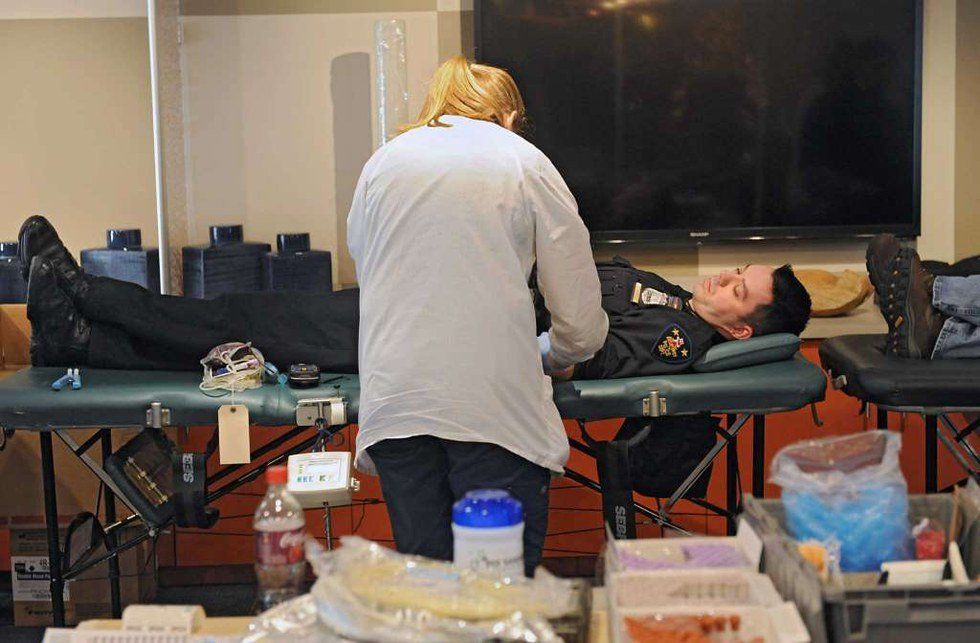
Unfortunately, there is not always enough of this blood readily available and it is not uncommon for doctors to have to decide which patient needs it more. When large scale events such as the shooting in East Boston occur, people often rush to donate. In this case, police officers came pouring in to give their blood in hopes to help, but this increased supply only lasts so long. The demand outweighs the supply.
Brandeis University police officer Dana King has seen a number of bad accidents in his 15 years of service from fellow officers being shot to car accidents to an event as extreme at the Boston marathon bombing.
“As a first responder, I can only do so much to someone who is losing blood at a quick pace. Transfusions can save lives be they civilians, soldiers and/or police officers” stated King.
Blood donations saved the lives of officers Cintolo and Morris in this particular case, but they save the lives of millions every year. It is up to civilians to work with the Red Cross and play a part in this life saving procedure.