I’ve said it more times than I can count, and each time the looks get stranger and stranger.
“But you have, like, an iPod Touch, right? No? How do you live?”
I’ve never owned a smartphone. I didn’t even have a cell phone until my sophomore year of high school, and once I got it, I rarely brought it with me. Even now I tend to only keep it near me to check the time or write down a date. There have only been a few times that I've felt the need to get online immediately for a class or a job, but those incidents have been getting more and more frequent.
Now, this is in no way a slight against smartphone technology. I do not believe that smartphones are “ruining our lives” or “making our children stupider” as most baby boomer journalists claim (technology is certainly not the only culprit). Smartphones have helped make strides in emergency communication, accountability in the justice system and access to news and information. Technology moves ever forward, and there is no reason to try and stop that.
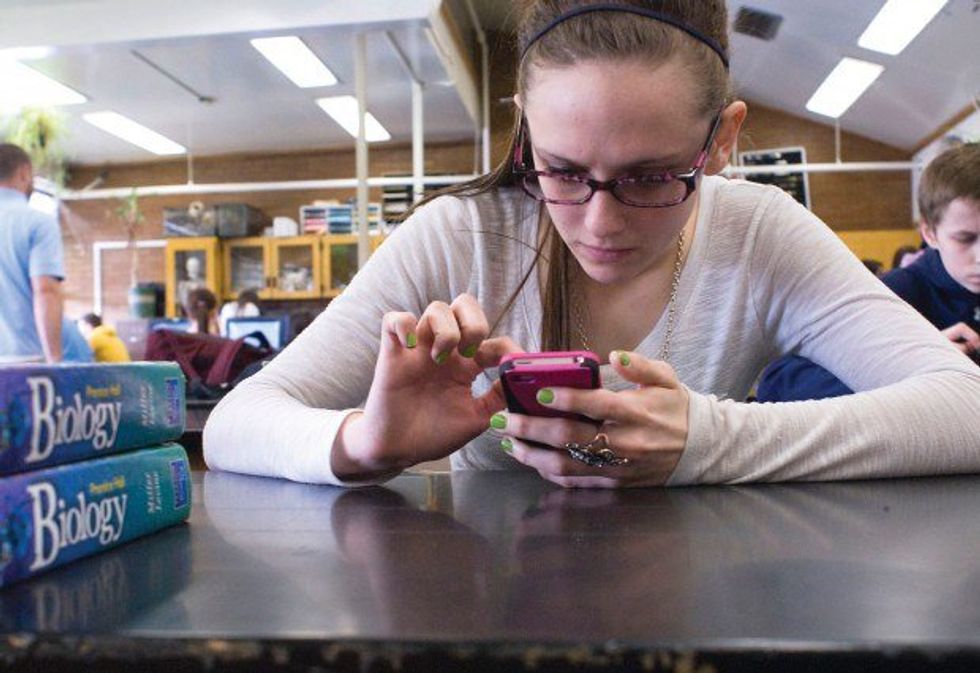
Increasingly, however, immediate access to the internet is being framed as a necessity instead of a luxury. I’ve been in multiple classes in which teachers ask students to look something up on their phone as part of an in-class worksheet. Mind you, I went to public schools for my whole K-12 education with students from differing economic backgrounds and families. The expectation that students would own a smartphone shows a complete lack of empathy for those less fortunate students in the classroom who are unable to afford the cost of such a device.
I’m lucky enough to have a laptop and access to WiFi, but there are many rural and impoverished parts of the U.S. today that still don’t have access to wireless internet, much less a smartphone. Children in these areas now have to work twice as hard as their wealthier peers who have access to a constant stream of information and news. In an education system in which students are pitted against each other in a whirl of standardized tests and honor societies, access to smartphone technology puts the rich in an even better position than before.
Education shouldn’t be a luxury. When teachers and schools make access to technology a requirement, it only gives takes away opportunities from the poor and silences impoverished voices. This is not a plea to give up your iPhone, just a plea to listen to those who don’t have one.