


of my favorite things about going to NYU is the abundance of clubs and resources available to me. Every student can join any number of clubs, create any number of clubs, and collaborate with bigger organizations to throw together events for the whole student body. Oh, NYU.
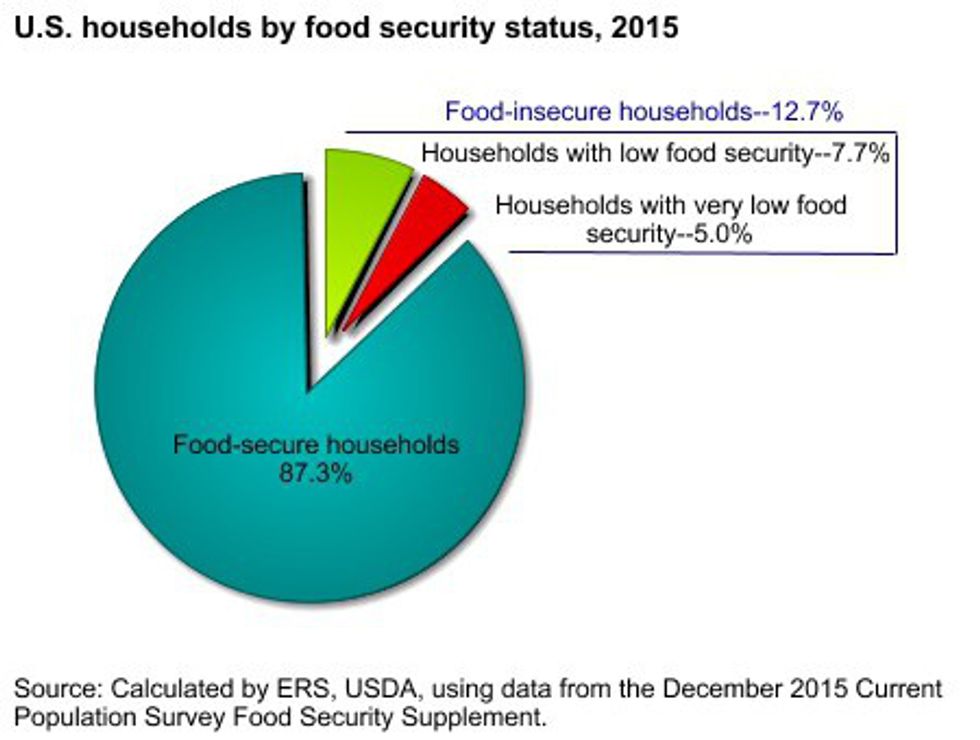
I was lucky enough to attend such an event, the Oxfam Hunger Banquet. A collaboration between TEDxNYU (whose mission is to spread powerful ideas to communities around the world) and Oxfam America at NYU (an NYU “student-run club that focuses on the intersection of human rights, social justice and the environment and climate change”), the Hunger Banquet is hosted every year to draw attention to the problem of hunger in the world. Did you know that 1 out of every 9 people are hungry? I didn’t either, but the Oxfam Hunger Banquet alerted me to shocking statistics. I knew there were millions of hungry people in the world, but when the number was revealed to me, I was shocked. How did we get here?
I don’t know, but the Hunger Banquet helped shed light on the subject. All who attended were given a piece of paper that placed them in one of three income categories (Low-income, Middle-income, or High-income) and summarized the identity of a person who may or may not be affected by hunger. For example, I was placed in the middle-income category, and my paper identified me as Teresa, a young woman from Mozambique who was able to own her first plot of land thanks to help from Oxfam America.
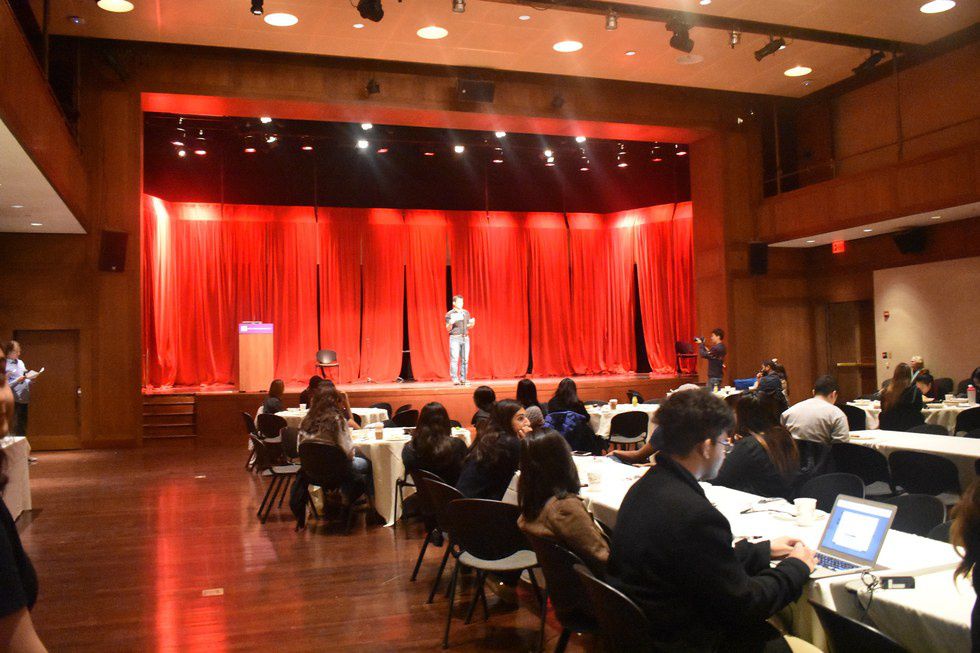
The slips of paper were not simply used to educate us about those who are hungry, though. They acted as seat assignments, too, and enabled the attendees to feel the weight of hunger themselves. Those part of the high-income category were directed to round tables near the front of the room, with white tablecloths neatly laid over the top. They could clearly see and hear the live band play a sweet, soft tune on the stage, and someone quipped that they “felt so fancy,” as if they were at a nice restaurant. At each place sat a fresh salad, the lettuce crisp and green, with various toppings available. Waiters came by the high-income tables and served water to every glass, all the while ensuring everyone was having a good time.
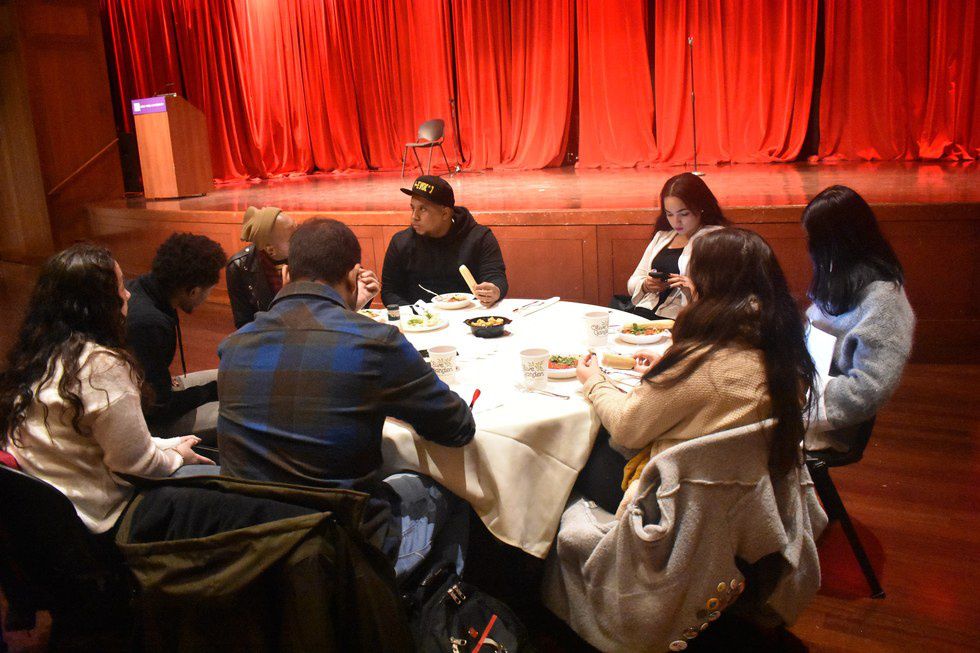
Further back sat the Middle-income people, who were placed at long, white tables, the top of which were lacking the glass of water and salad I saw at the High-income tables. Ah, I thought. How clever. However, this slight difference was nothing compared to those who were directed to the low-Income seating.
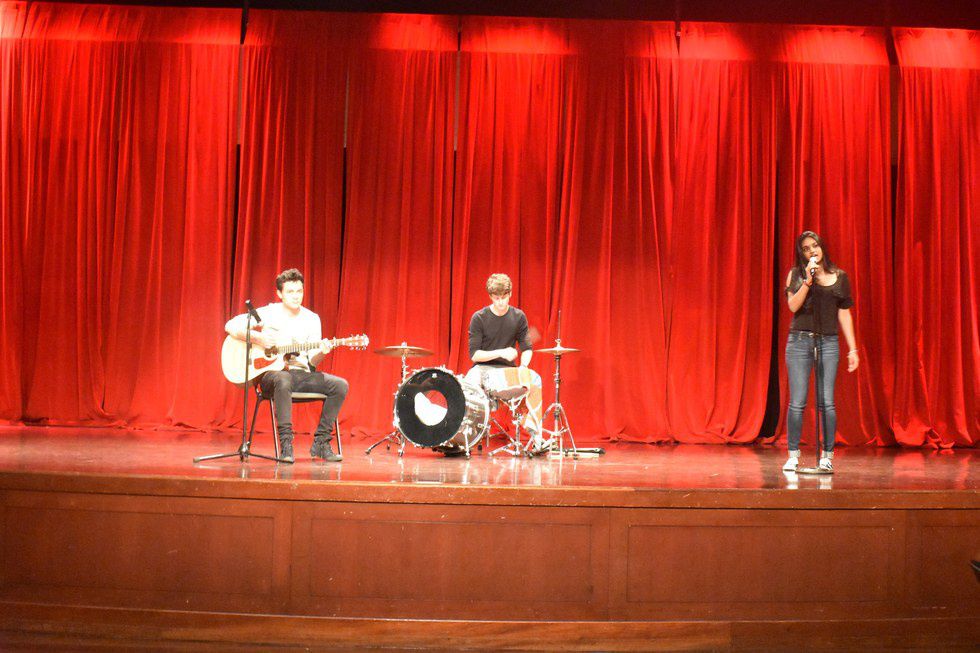
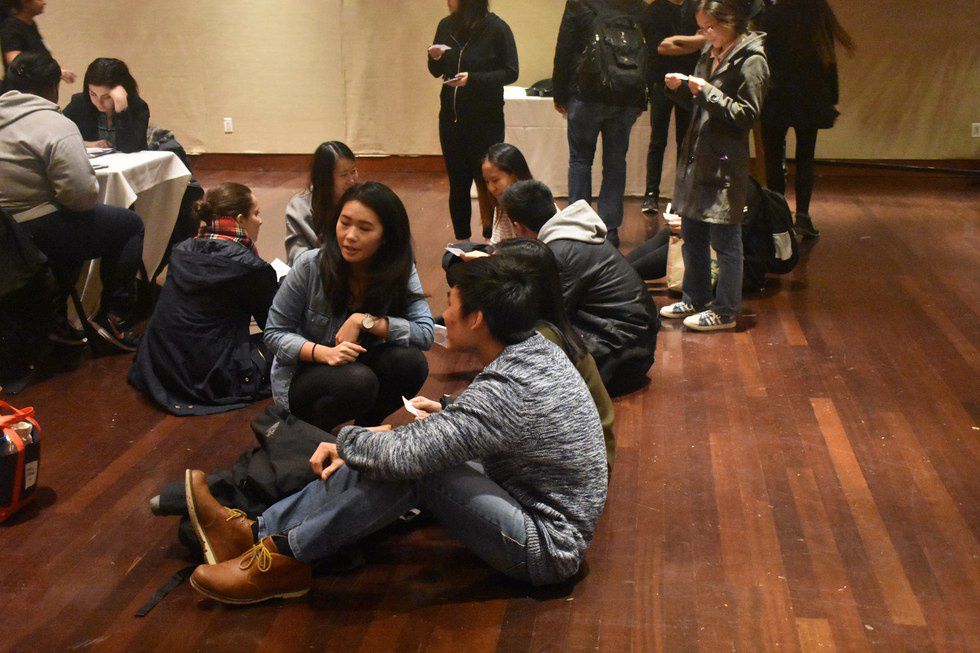
n the floor, far at the back of the room, sat the low-income guests, some straining their necks to see the live band on the stage but failing, for the rows of tables and people blocked their view. They were given nothing, either, but also had to endure waiting on the not-so-clean floor for the entirety of the event. The three groups stayed within their categories, no one venturing to other parts of the room to talk up those who sat there. Instead, each group kept to themselves.
The whole banquet stressed this type of audience participation and interaction within the event. We were encouraged to discuss our identities with one another and look around, which helped everyone understand the gravity of the situation. Statistics are shocking when you do not know much about a subject, but by identifying those who are struggling and giving them a voice, the organizers of the Hunger Banquet ensured everyone’s attention was on the people who struggled every day to find food for their families.
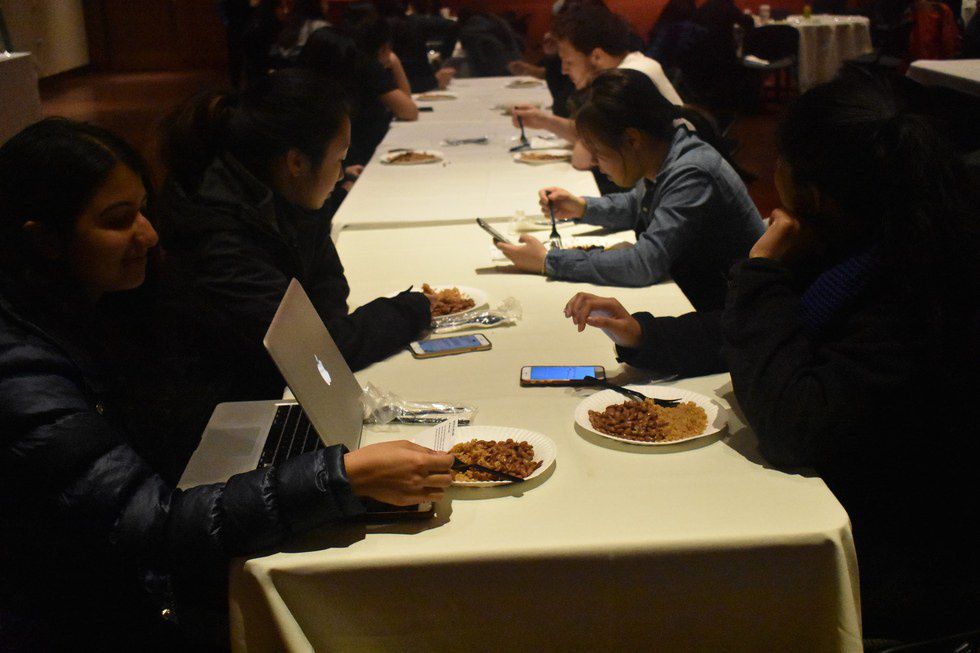
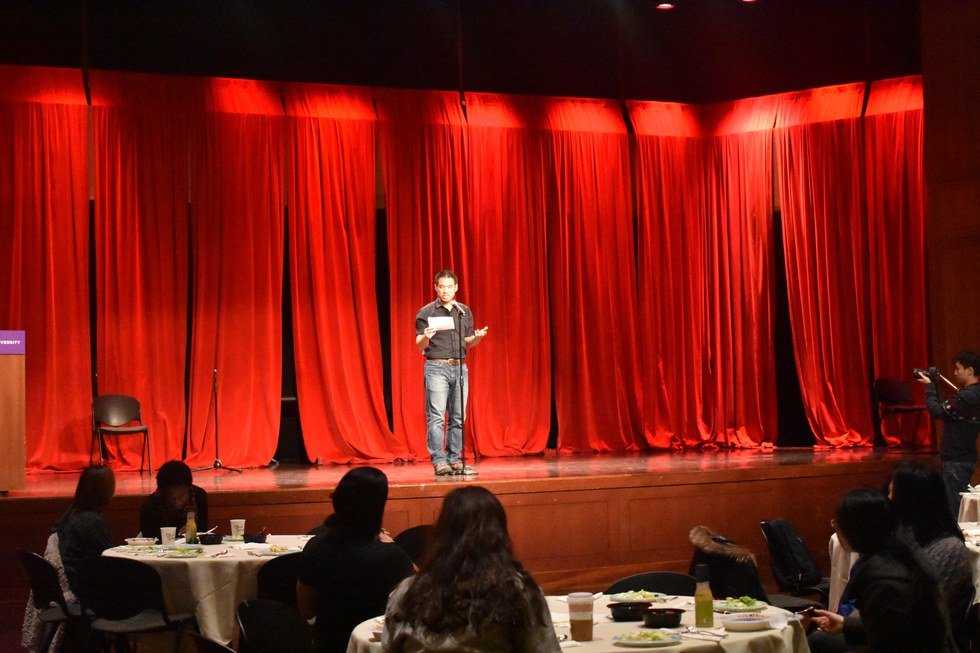
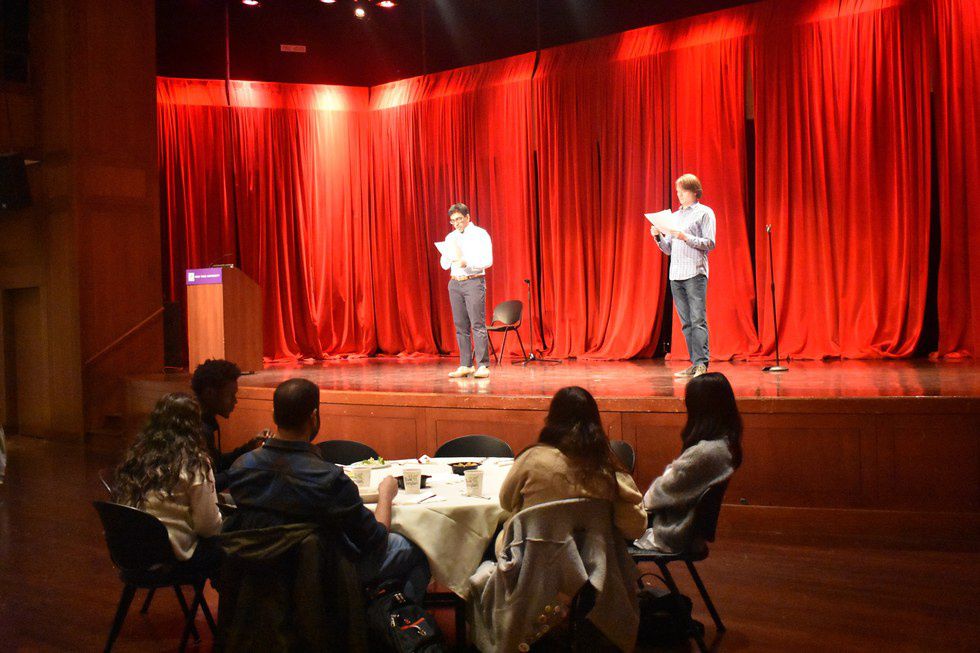
Shortly after sitting down and engaging in light conversation with those around me, the MCs (Master of Ceremonies), both students at NYU, came onstage to introduce the event and those who would be speaking to us, as this was a TEDx event, after all. Those who identified as high-income represent anyone in the world who makes over $7000 annually and would be served spaghetti and garlic bread by a waitstaff. Middle-income attendees made between $1000-$7000 and would be served rice, beans, and water, with the men being served before the women. Finally, those who sat in the Low-income section would be given water and a small plate of rice, with the men being served before the women, as well. As everyone settled into their place, ready to be informed about hunger in the world, the MCs defined the event with a simple phrase: “hunger is about power.” There is enough food on this planet to feed. Every. Single. Person. Hunger isn’t because of the lack of land or money to produce good crops; it’s about those who lack power not being able to help themselves because those with power only help themselves.
 he first speaker was Barbara Turk, who is the Director of Food Policy for New York City. She opened up by stating that 1.4 million people are food insecure in New York City.
Food insecurity is the limited or uncertain availability of nutritionally adequate and safe foods or limited or uncertain ability to acquire acceptable foods in socially acceptable ways.
These people are the homeless men and women we see on the street, the teachers who educate our children, and the colleagues who ask about our children. They are struggling, in secret mostly, and do not know how they can keep surviving on the little they have. Ms. Turk is hoping to change this reality with several programs she hopes to introduce soon, such as making grocery stores more affordable and enabling those who need expensive fruits and vegetables are able to afford them with vouchers. We need to care about these people, she stressed throughout her speech, and she could use the help to spread the word about helping our fellow New Yorkers. If you’re interested in working with Barbara Turk or just want to learn more about her food initiatives for the city, you can visit her website here.here.here..
As Barbara spoke, her passion inciting me to underline her name three times in my notebook. The waitstaff brought over plates of rice and beans and paper cups filled with water to our table. I took a few bites before deciding I wasn’t all that hungry, pushing away the last few bites of rice and beans.
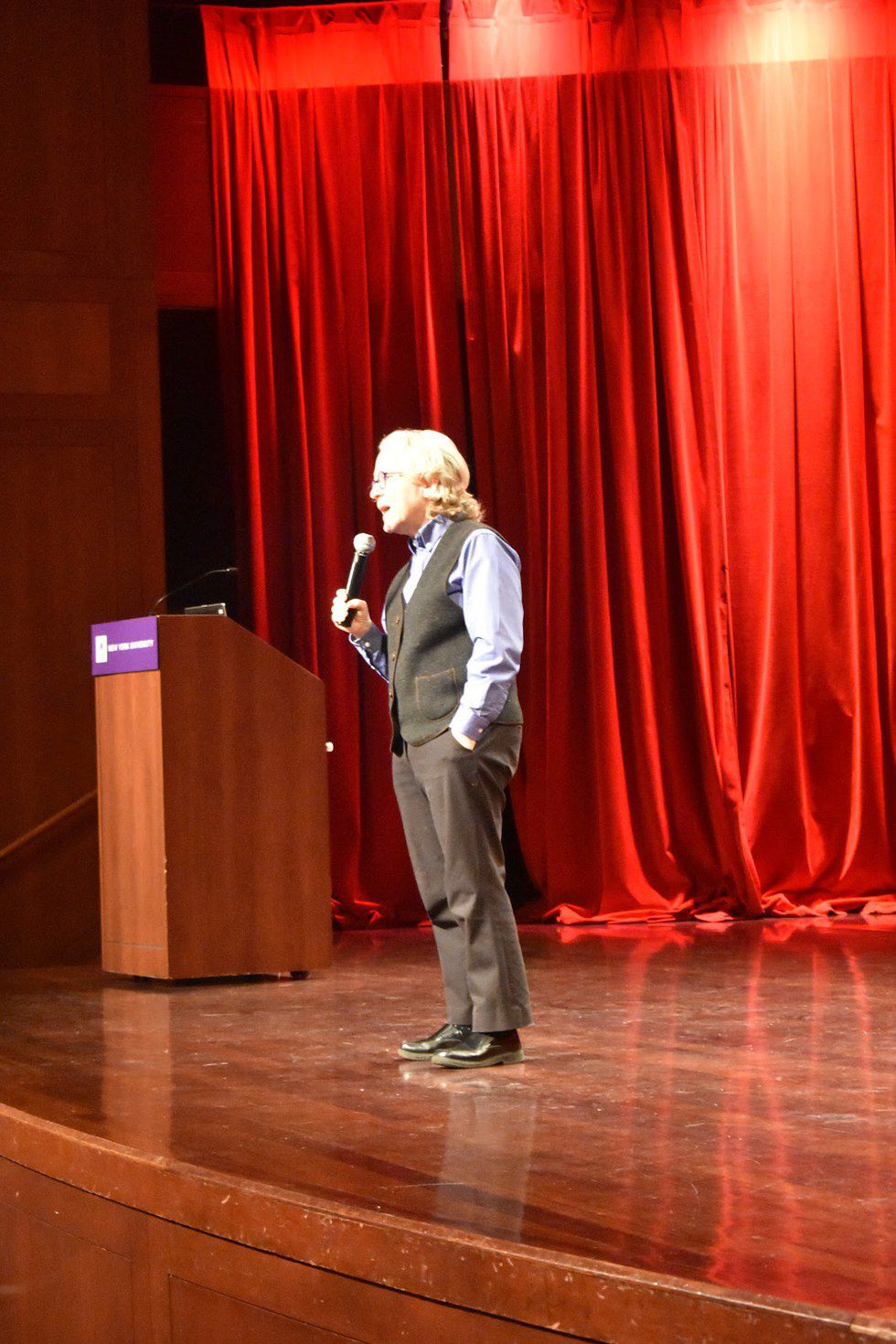
The other speaker, Jonathan Chin, jumped on stage right as Mr. Turk stepped down, taking a few moments to gather his notes. He started by introducing the app he created for NYU students, Share Meals, which matches students who have abundant meal swipes available with those who do not have enough to eat. In 2013, an NYU student shared that they only had $25 to buy food for two weeks in New York City, a city notorious for its expensive, though trendy, restaurants. After dozens of other students offered to share their extra meal swipes with the anonymous person, Jonathan Chin designed the Share Meals app and has never looked back. He shared that he is often questioned as to why his app focuses on college campuses when there are so many hungry people in the world. While it would be difficult for his app to help everyone combat hungry, he shared, a college campus is a place where kids are dealing with social isolation and meeting other students who have a different income situation at home. He is able to focus on making sure students stop worrying about their next meal and worry more about their classes. Plus, “college is really the last time that [people] are asked to think critically,” he shared. “If we teach them now, theyll take that compassion with them into the world.”
Jonathan Chin’s last words before ending the speaking portion of the Hunger Banquet answered the question I had been asking myself since entering the room and reading Teresa’s story. “Every act,” he said, “no matter how small, is valuable.” We are each but one person, a little blip in the cosmos, but our actions have a ripple effect. It is evident every time I step outside my dorm room onto the New York City streets, greeted by the chilly air and the friendly conversation that is carried on the wind. Whether we spend an extra $5 buying coffee for a stranger, thus starting a rippling “Pay it Forward” chain, or inspire those around us to pay more attention by telling a homeless man “good morning,” we are inciting change.
The tiniest change in habits can affect the world around us, too. For example, watch your consumption of food. When you shop, don’t overspend and purchase fruit that is just going to go bad in your fridge. Only buy the amount of food you need so that someone who can eat those strawberries, that avocado, is able to get it for themselves. When you go out, bring home the leftovers of your meal instead of letting the food go to waste. Don’t throw out perfectly good food because you don’t feel like eating at home. Basically, just start small and do what you can. When we practice compassion, we beget compassion.
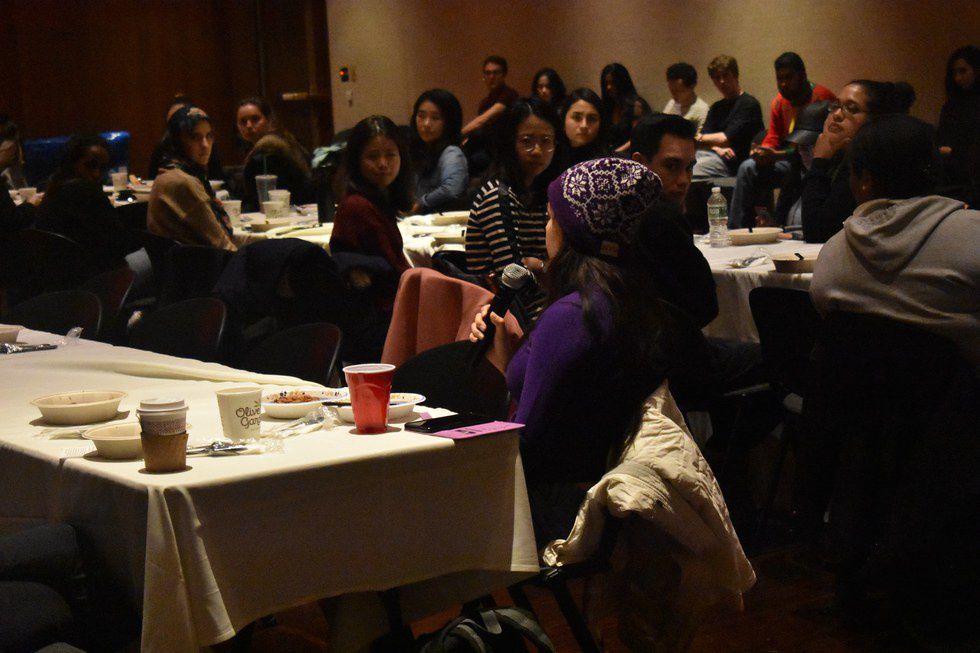
The reality of the problem seemed to hit everyone. It feels weird to write that because we all knew hunger was a problem for the world going into the event. I mean, you don’t attend an event known as the Hunger Banquet: Combating World Hunger without knowing something about the issue. Still, attaching stories and faces to numbers, stressing the gravity of the situation, opens one’s mind a bit more to let the truth sink in. We have a serious problem with world hunger, and it isn’t good enough to just say that. Some of the responses to the event show that I wasn’t the only one to think this. NYU graduate student, Mona Benhani, said she thought that it didn’t matter she was just going to eat rice and beans for dinner, as a middle-Income placement, because she could just get a real dinner after the banquet. She immediately felt ashamed once she realized how privileged she was to think such a thing, especially when people around the world are thankful to have “just rice and beans” and because her own family has struggled economically. I cringed, remembering how I had pushed away my own plate of rice and beans after only a few bites.
The night ended happily, with people speaking to those from the other income groups as they chowed down on a strange combination of spaghetti, garlic bread, rice, and beans. Barbara Turk spoke to students who wanted to help her in the mayor’s office, and Jonathan Chin set up tables to provide more information on what his app did for college students.
As I walked down University Place that night, amongst the other students returning to the dorms, I passed by the man I saw almost every day on my way to class. He always says, loud enough for the whole sidewalk to hear, “One penny’s all we ask. No one should be hungry. One penny ma’am? One penny, sir?” It rings in my ears long after I’ve passed him, and I think about it so often that I’ve perfected his intonation in my head, the softness of his voice at the beginning of each phrase before he raises the volume. That night, though, I didn’t walk past him, shuffling my feet and avoiding eye contact. I walked up to him and put whatever I could in his big water jug. He nodded at me before turning away, once again saying, “One penny’s all we ask. No one should be hungry.”

















