Our interactions with others are constantly shaped by the judgment of character traits. It is rarely one trait that defines a person, but instead a constant flux of many traits that act on one another to form a whole being. An underlying perception based in subjective thought formed by an individual often become objective when considering a person of power. The personality of the figurehead in question being constantly evaluated by the masses to ensure he or she is well above the status quo. By evaluating personality, a society is able to infer a person’s decision-making process and ultimately deem them worthy of responsibility.
What personality traits are most important to a society? To answer this question we can look to great leaders of the past. Dr. Martin Luther King Jr., Muhammad, Jesus, Abraham Lincoln, Mother Teresa, Elizabeth Stanton; All upstanding citizens who displayed kindness, wit, charisma, fortitude in the face of opposition, empathy, humility, problem-solving skills and a sense of right and wrong rooted in objective reasoning. In a good leader, these traits outweigh their antonyms marginally, but the leader's history remembers the leaders who spur the movement of masses, change the status quo, or restore efficacy to the layman. The type of leader we need in America concretizes these traits into their being.
So what is the keystone trait that allows all others to flourish? Humility. Let's take a more in-depth look, considering it has received a lot of press coverage as of late with the presidential election heating up. The polarity of the two parties is a stark reminder of how the inability to rationalize cooperation can be degrading to a society. How can this rationalization come about? By being willing to admit fault. During mass at Santa Marta earlier this month, Pope Francis recalled the story of King David, a noble leader who strayed from the path of righteousness only to later admit fault and flee his city. Through the acknowledgement of fault, King David is humiliated, but without this degradation of image, David would have continued down a path of corruption and greed. When a leader is unable to humble themselves, it is a show of nearsightedness that in the end leads to a stalemate between the righteous and the noble.
With the current state of money in politics, it has become clear how far removed from the everyday Joe our presidential candidates really are. Their oftentimes staggering amounts of wealth are not the fundamental problem that invades our daily lives. In fact, the problem is that it does the opposite of that: money allows the candidates to live in an ivory tower, seemingly unreachable to the rest of us. How can a benevolent ruler stand for the people if they refuse to walk a mile in their shoes? The Kalif Omar ibn Al Khattab, for example, marched on Damascus with his men. The Company stopped at a watering hole to let the camels drink and to let the men bathe. Omar dismounted first and led his camel into the water. His confidant questioned the mighty ruler, saying, “O Commander of the Believers! How can you be so humble in front of all your men?” In refutation, the mighty Kalif replied, “…Thoughts like this will cause the downfall of the Muslims. Don't you see we were indeed a very lowly people? God raised us to a position of honour and greatness through Islam…”
While the current presidential candidates were not raised to pomp and circumstance by a god, they were raised to power by a silver spoon earned by the sweat of themselves and others. Who are they to deny their humble origins and claim superiority to their fellow Americans? To quote Islam: “Wealth does not decrease because of charity, and God increases His slave in honour when he forgives others. And no one humbles himself before God, but God will raise him (in status).” We the people are God to politicians, and it is through us that they achieve status. We would be wise to remember the power that is held in our votes.
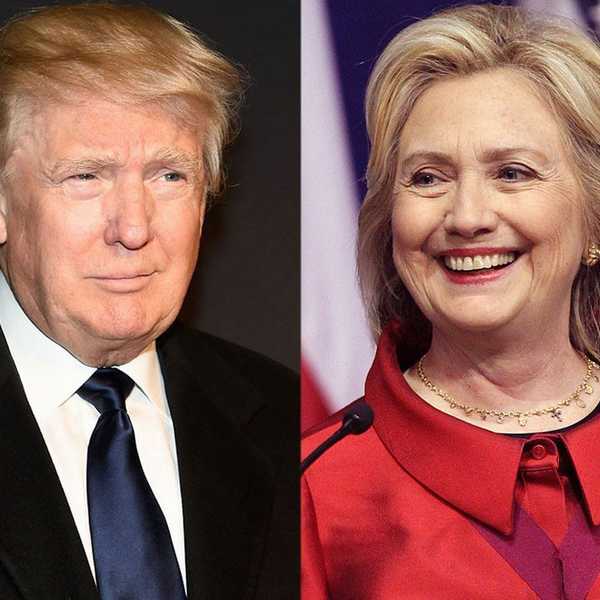
Donald Trump was recently quoted, saying, “I do have much more humility than a lot of people would think." However, this is the antithesis of humility; One cannot acknowledge humility in their own life. The power of humility is that it is recognized by those around us. Look to presidential candidate Bernie Sanders: his grassroots, progressive campaign has drawn a lot of support through public recognition of his humility. Notice the emphasis in this article by RT on the supporters of Sanders acknowledging “the humility that seems ingrained in Sanders.” To be humble is a way of life. It is unconscious to the person in question, yet obvious to all those around them. Taoism offers insight into this strange predicament in a way only Taoism can: “Knowing honor, but clinging to disgrace, you become the valley of the world.”
Humility allows a leader to see the flip side of an argument. The only thing a humble leader cannot tolerate is someone else’s intolerance. By avoiding hyperboles and be-all, end-all statements, a humble leader allows for a healthy conversation about real, solvable issues to be had, and is also inclusive to those whose ideas are positive and pertinent to the issue at hand. Senator Ted Cruz is one of the most intolerant people running for president; his use of both hyperboles and be-all, end-all statements is common. Referring to one speech, America is heading "off the cliff to oblivion." Use of this kind of language is meant to invoke fear in a voter, driving them to ballot boxes only to keep the opposition out for fear of what could be. Instead of making a rational decision based on the grounds of factual evidence, the American public is voting with their emotions.
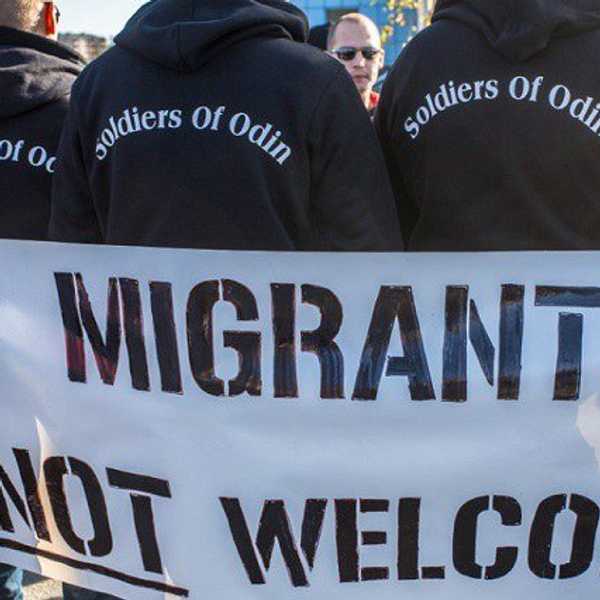
As the crisis in Syria continues to rage, it is important for America and the rest of the world to not be shrouded by a veil of intolerance. Earlier in the month, at the annual National Prayer Breakfast, President Obama warned against “fierce certainty” that leads to religious intolerance. Unfortunately, religion is not the only arena we hear talk of “fierce certainty.” As alluded to earlier, “fierce certainty” continues to divide our nation’s political system. As a nation, our fear of immigrants from around the world has been rising, mostly out of Islamophobia. A faction of society is denying a group of well-intentioned, hardworking people entry into our country out of fear of their religion. Later in his address at the prayer breakfast, Obama called for religious tolerance, speaking to the ability of any religion to “pervert and distort” faith in a sinful way. This intrinsic flaw in faith is what makes claims of value so polarizing. As voters, we invest faith in one side or the other. Unwilling to be moved in our faith, we become gridlocked in issues such as refugees, gun control, abortion and many others. Though, without the catalyst of faith, we find it hard to take a side. We must not be afraid to invest faith. Rather, we should be afraid of being blinded by our faith. If we cannot see reason in a solution because the solution does not satisfy our every demand, faith has won. It is our duty as voters to choose reason over faith, and our duty as human beings to realize that the two are not intertwined. Toward the end of his address, President Obama calls on humility to enforce the idea of acceptance through faith: “The starting point of faith is some doubt — not being so full of yourself and so confident that you are right and that God speaks only to us and doesn’t speak to others.” First comes humility, then tolerance, then being able to recognize logic by the opposition, and then acceptance.
There is an old saying about a turtle on a fence post. It implies one cannot reach the top without help. But why would a turtle want to be on a fence post? There is no food or water for the turtle up there, and it is certainly more visible to circling hawks. But the turtle’s elevated position gives it the advantage of seeing possible danger from far off; it can see what its turtle friends below cannot see, and is therefore responsible for keeping the turtles below him safe. If the turtle is vigilant, constantly searching for attackers in all directions, it will have time to warn its fellow turtles of the coming danger in time so they can make ready their camp for an invasion. Yet, if the turtle becomes infatuated with the backs of the turtles below, gloating of how those below him will never see the beauty of the turtle’s shell, it will falter in its mission. When danger comes to this turtle’s camp, it will be too late for the turtle's companions below. The threat will have taken them off guard. The turtle on the fence post is responsible for the bloodshed, but he will not be knocked down for the fence post is made of wood, not turtles.
Are politicians standing on the shoulders of super PACs and bankers, or being held up by the people?