
The other day, I was browsing the internet when I happened across an article about a suicide bombing at a soccer game in Baghdad that killed 41 people. After seeing the global response to attacks like the bombings in Brussels, Paris, and Boston, I found myself wondering why not a single person on my news feed was sharing links to fundraising websites for the victims’ families, or putting a filter of the Iraqi flag over their profile pictures, or even posting a picture of a burning candle with a mournful rant about what a tragedy it was and how the world needs to turn to God for peace. There was nothing. I texted my roommate and asked why it made any sense that these victims weren’t being remembered by the whole world and that no one seemed to care.
After reading this article, I quickly and without much thought proceeded to take a quiz to find out how well I see the color orange (I have average orange sight, for those of you wondering).
This is the way in which we consume news; we spend a good deal of our time following fluff news like celebrity gossip, become outraged when we learn about an injustice, get confused when people aren’t talking about it, and then continue to read fluff.

I’ve theorized about this phenomenon quite a bit, and while I’m sure it happens with adults, it seems to be more common among young people. And let’s be honest; in a world in crisis like never before, it’s hardly surprising that we get discouraged reading about it and move on to easier content. I think this is why so many young people use sources like BuzzFeed for their news; we are given information about global events, but are then able to forget about the depressing article we just read by taking a quiz to learn which "Golden Girl" we are (I still think I’m more Dorothy than Blanche).
It is no secret that we expect to be entertained by the media we consume rather than informed. Hell, sometimes it seems like the only reason the election has such a huge following this year is that it’s more like reality TV than politics. Maybe the drama serves a valid purpose in getting young people more involved in campaigns, but the fact remains that we need the amusement of adults insulting the size of each other’s hands for politics to become interesting enough to pay attention to. And where does this leave us in terms of important global events that can’t be turned into a circus? There’s no way to make dying refugees entertaining to read about.
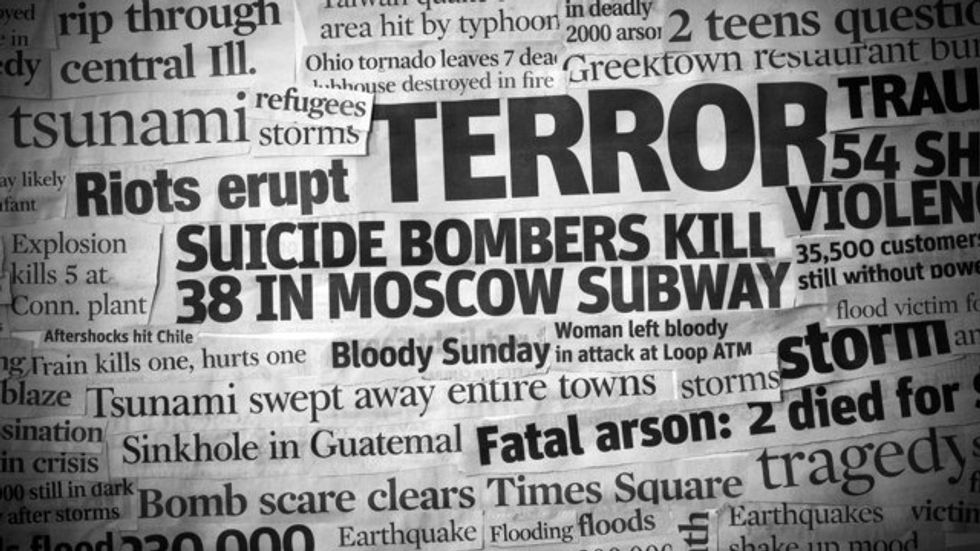
It is a universal experience that watching the news reminds us of how vulnerable and helpless we are, and we all, young people especially, work so hard to avoid feeling like this. We like to think that we are indestructible; whether it because we fear our world and ourselves, because we are entitled and believe we deserve to outlive everyone else, or because our privilege makes us forget that we, too, can be victims to the cruelty of the world.
Reading tabloids and fashion magazines and taking silly quizzes are ways we shield ourselves from the real issues the world faces, and from our helplessness in stopping them. We don’t feel an obligation to fix celebrity couples getting divorced or our zodiac signs because this month will bring bad luck, but we do want to fix the injustice in the world. Reports about police brutality and terrorist attacks and school shootings will strike an emotional chord, sure, but they also leave our sense of justice hanging, which is frustrating and unsatisfying. At the end of the day, there is little we can do as individuals to change the chaos in the world. This is where social media activism comes from; we know that posting a picture or status won’t change the world, but it makes us feel like we’re doing something.

None of this is to say that it's wrong to want to be entertained. I absolutely love movies, I've watched all ten seasons of Friends at least six times, and I take far more BuzzFeed quizzes than is healthy. There's something to be said for media that makes people smile. It's important to have an outlet through which to escape for a little while and to just enjoy ourselves from time to time. The problem is when we live in that escape and expect to be emotionally coddled by the media we consume.
Older generations can complain that we don’t care enough, but I think they’re wrong. I think we care more than even we realize; we just don’t know what to do about it. It’s all good and well to “educate ourselves” and “raise awareness” about violence and injustice, but I think we all want to do something more than that. We’re more aware of how scary the world is than we are given credit for; and being aware of it is exactly the reason we care so much about seemingly silly things. Between a sense of impending doom and conflicting messages about what our role in fixing the world is, sometimes we can get so confused and overwhelmed that the only thing we can do is distract ourselves with fluff. And all of this can be made worse by guilt over the knowledge that there are people who don’t have the luxury of a distraction, because these are their actual lives, not just stories on the news.

As an age group still trying to find our place in the world, sometimes being reminded of how awful the world can be makes us not want a place in it at all. It’s easier to just detach ourselves from the ugliness and chaos and hope that someone else will figure out a way to solve the world’s problems. We know that the world’s problems are our problems, too, but we’re just students and employees trying to figure things out; what can we do?
I wish I knew.
I would love to turn this around into something positive, but I think that would defeat the purpose of talking about it at all. Not all media is meant to be entertaining. Putting a positive spin on a negative story might make us all feel warm and fuzzy, but what purpose would that serve? Sometimes the best thing we can do it recognize the ugly without trying to make it beautiful.