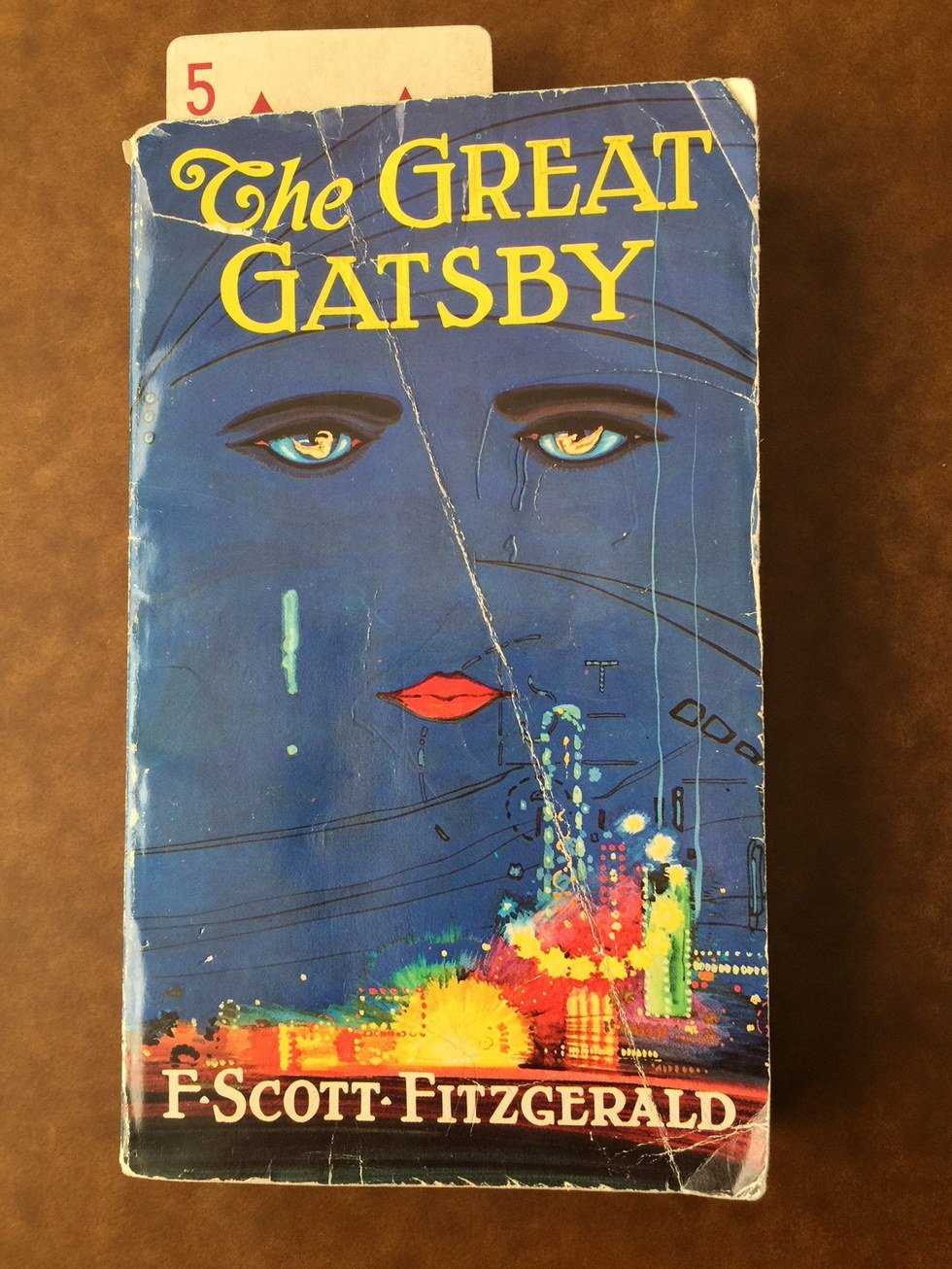
"The Great Gatsby" by F. Scott Fitzgerald is the single greatest work of American literature. It will forever claim the title of a timeless masterpiece that reveals a great deal about human consciousness and the reverberations of the past. I can't adequately articulate how brilliant this work of art is or what it means to me. I've felt this way ever since I first cracked it open not in a schoolroom setting but as I read my checked out library copy in my bed while a summer breeze came in through the window. Then I actually read it in tenth grade English class and fell in love with multiple things that year. In addition to "Fahrenheit 451," "Gatsby" was the first novel that really changed my way of thinking about the world and about the power of literature.
The reason why I felt so compelled to write this article, in addition to the novel being a sort of muse to me every day, was because I recently discovered Lana Del Rey's song "Old Money," which definitely should have been included in the film adaptation soundtrack.
Consider the lyric: "Blue hydrangea, cold cash, divine / Cashmere, cologne and hot sunshine. / Red racing cars, Sunset and Vine, / And we were young and pretty." It embodies a lot of what the novel is about, a lot of what the disillusionment of the 1920s was about. We're young and pretty, we value money and shiny cars, we'd do anything for the one we love, ever-reaching for the green light, even if it means transcending the past.
Now, do I even need to reference quotations from Fitzgerald's work? If you've read Gatsby, it surely left an impact on you in some way. If you haven't, especially if you're an adult and you've completed your formal schooling, you absolutely need to pick up a copy right now. Instead of compiling a list of my favorites, I'll take us through an analysis of this book through the lens of four major quotes:
1. “I was within and without, simultaneously enchanted and repelled by the inexhaustible variety of life.”
Also known as the meaning of life and how I, and I think so many others, feel every day. Really take the time to focus on this quote. Are you in tune with yourself? Are you there physically, but at the same time, not really mentally present? Nick Carraway is in shock at the eccentricity he is witnessing around him, the excitement that's blossoming. I see a lot of myself in Nick; this quote makes me aware of the fact that it's okay to be both overwhelmed and fascinated by life and all it offers. It's okay to dislike the world around you, and it's okay to admire it deeply; that's what the balance is.
2. “He smiled understandingly- much more than understandingly. It was one of those rare smiles with a quality of eternal reassurance in it, that you may come across four or five times in life. It faced--or seemed to face--the whole eternal world for an instant, and then concentrated on you with an irresistible prejudice in your favor. It understood you just as far as you wanted to be understood, believed in you as you would like to believe in yourself, and assured you that it had precisely the impression of you that, at your best, you hoped to convey.”
This quote sets goals for the kind of person I aspire to be in life. One who reserves judgments and always strives to understand other people. To have an infinite capacity for hope and optimism. To believe in the good in the world. This quote establishes Jay Gatsby as someone you really only come across once in your lifetime: someone who puts his faith in you to accomplish great things and who you know will be by your side through it.
3. "So he waited, listening for a moment longer to the tuning fork that had been struck upon a star. Then he kissed her."
Does a more beautiful description of a kiss exist in literature? If so, please let me know. It's a parallel between the cosmic and the earthly to create something magical.
4. "And as I sat there brooding on the old, unknown world, I thought of Gatsby’s wonder when he first picked out the green light at the end of Daisy’s dock. He had come a long way to this blue lawn, and his dream must have seemed so close that he could hardly fail to grasp it. He did not know that it was already behind him, somewhere back in that vast obscurity beyond the city, where the dark fields of the republic rolled on under the night.
Gatsby believed in the green light, the orgastic future that year by year recedes before us. It eluded us then, but that's no matter—to-morrow we will run faster, stretch out our arms farther. . . . And one fine morning——
So we beat on, boats against the current, borne back ceaselessly into the past."
One fine morning, what? What's in front of us? Nothing? Everything? We're driven so much by the past, incessantly obsessed with it, at least Gatsby was. He kept looking back and focusing so much on what might have been that he fails to set a solid foundation for actual ambitions. What he has is blind ambition, infinite hope for a future that very well might never exist. His pursuit of Daisy was futile and doomed from the start simply because of the cruel force of the transience of time. In a way, he already passed his golden age; his greatness had already faded away, but he didn't really want to come to terms with it. And in a sense, that's precisely what makes him so memorable yet tragic: he so desperately refuses to let go of what he values the most.
In the end, "The Great Gatsby" is a tale for the ages. It was the first piece of literature that really enchanted me and showed me that a historical context of America can be transformed into a profound and intimate story. It will never fade in its message and meaning. It exists as a relic of a defining moment in American history, a testament to the power of feelings, a symbol of blind American ambition, a meditation on the superficiality of an entire social class, and a revelation about the truths of coming to terms with the past and present. It questions and challenges love. It reminds us what good art really is.
Finally, in writing this article, I stumbled upon a wonderful list of other readers' experiences reading Gatsby for the first time. It begs the question: how did it make you feel? How did it change your life?