Every four years, the Presidential election cycle returns to the forefront of American news, politics, and culture. Election season is especially fraught with excitement, controversy, a fair amount of mudslinging, and sometimes even scandal. The sweeping campaign of businessman Donald J. Trump has been quite the addition to the modern political landscape. However, when you separate the individual from all of the multi-million dollar superPACs, campaigns, and mainstream media coverage, all that matters is the decision that you make when you step behind the curtain and cast your ballot.
Many of today’s voters, however, seem to face the same disturbing question: "Does my vote really count?" This sentiment has only increased in the past 20 or so years, especially with the gap in the popular vote versus the election results.
Why does that happen? Isn’t the United States a democracy? Shouldn’t the Presidential candidate with the most votes win? Isn’t that what’s fair?
Welcome to the Electoral College. It's not a place to learn or earn a degree, but rather a system created by the founding fathers to facilitate the election of the United States President.
If you understand the basics of the Electoral College, why it exists and how it works, then congratulations! You likely paid attention during your middle school American history class.
For those who didn’t, or who maybe just forgot the logistics, here’s the rundown.
According to the National Archives and Records Administration, “The founding fathers established it in the Constitution as a compromise between election of the President by a vote in Congress and election of the President by a popular vote of qualified citizens.”
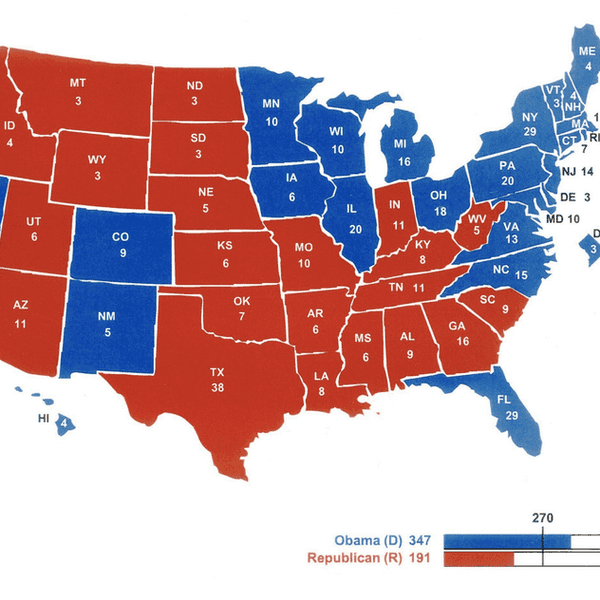
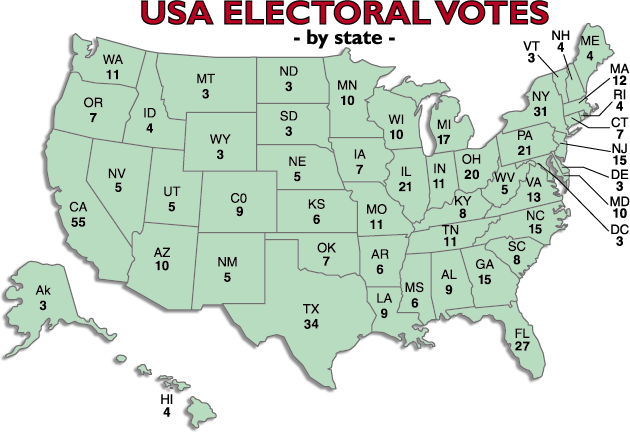
When you vote in the presidential election, you are actually casting a vote in favor of an elector that supports the same candidate. There are 538 electors, and a majority of 270 is needed to be elected President. Electors are often state government or party-affiliated officials who are appointed at the party’s state convention or through committee. The role of these electors is to represent their constituents based on the popular vote. Electors are delegated to states proportionally based on the most recent census.
States with large populations like California and New York have 55 and 29 electors respectively while states with small populations like Delaware and North Dakota have just 3. It would seem that this method should represent the popular vote fairly accurately. More populated states have more electoral votes and small states have less. It has worked, except in four cases when the candidate who won the popular vote did not win the electoral vote. The most recent case was in 2000 when Al Gore lost the presidential election to George W Bush. Gore won the popular vote by more than 500,000 votes, but lost the electoral count 266 to Bush’s 271. This election remains one of the most controversial in history.
So, did our democracy fail us in November 2001 and in each of those other elections where the popular vote did not elect the president?
Well, first you have to understand that the United States Federal Government is not a democracy. It is a Federal Republic. Individuals do not directly vote on laws. Rather, they elect local and state representatives who represent their constituencies. These elected officials then help to write and pass laws that are effective at the federal or national level. The Electoral College uses those same principles to elect the President of the United States, a federal official for the Executive Branch of government.
The ultimate goal of a representative republic is to distribute power and influence. While the Founders wrote the Constitution with an inherent system of checks and balances to keep the power of influence with the people. However, they also understood the fatal flaw facing rising Western democracies: mob rule.
It’s the reason why the Constitution is considered one of the greatest political documents ever written and the reason why the American Revolution didn’t destroy itself from inside out as the French Revolution did. Democracy is a tricky thing.
How the electoral college protects your vote.
So, it is actually through the system of representative voting that your vote actually matters more than through a directly democratic process (also known as the popular vote). As more and more people move to metropolitan centers along the coast, coastal states continue to grow in population. These regions tend to be politically homogeneous, as more and more people live closer together and share similar political beliefs.
In the case of the popular vote, these metropolitan centers would be the only spheres of political influence impacting the direction of federal government policy. It doesn’t take into consideration the cultural, economic and social differences facing different regions throughout the United States.
It can be hard as a member of the majority to not feel cheated when you are greater in numbers, but not given as much power. However, in the case of the minority, it is inherently important that we protect the individual freedoms and political voice of every American, not just those who agree with the majority.
It’s another system of checks and balances that protects our Constitutional system from the swaying trends of popular public opinion.
In most cases, electors are bound by state laws that they follow in agreement with the popular vote. In your state, the role of federalism says that you vote within your state, as your state representatives are the ones who are working on policy in D.C. What that system does is actually protect you in the case that you are ever part of the minority. So, the Electoral College exists to protect the Republic, not obstruct the will of the American democratic system.
What lesson can you learn from this?
Your vote does count because of the Electoral College. Whether it's in local and state elections, party primaries, or the general election in November, your vote counts in every single one. People died to give you the right to chose representatives who will fight for you and your communities. Play a role in selecting who those people are.