

I bet you've heard the saying, "you are what you eat." Well, what you're eating is about to be dominated by a larger company than ever before: Bayer. In September the largest all-cash transaction was made when Bayer offered to buy out Monsanto for $66 billion and Monsanto accepted.
If the deal goes through and is approved by EU and US regulators, the Bayer-Monsanto merger would own 29% of the entire world's seeds and 24% of its pesticides. In the US Monsanto alone already controls 80 percent of the GM corn market and 93 percent of the GM soy market. With the merge the entity would also be responsible for 58% of the United State's cottonseed sales.
Bayer-Monsanto would be the biggest agribusiness company on planet Earth.
So why is this important to the every day person? For starters, you will have infinitely less options at the grocery store. Although there is already a problem in the US concerning illusion of choice in our food markets, the merge would exacerbate this problem. In a study of 100 types of groceries, it was shown that four manufacturers owned 63.3% of what was sold. If you're familiar with the topic you may have already seen the illusion of choice map. It's also important to note that eight out of ten of the giants on the map are customers of Monsanto, meaning that the majority of what you eat is already supplied by Monsanto. Adding Bayer to Monsanto will only increase the portion of what you put in your cart that comes from and is affected by a single source. That's a lot of power for one entity to have over a lot of shoppers.
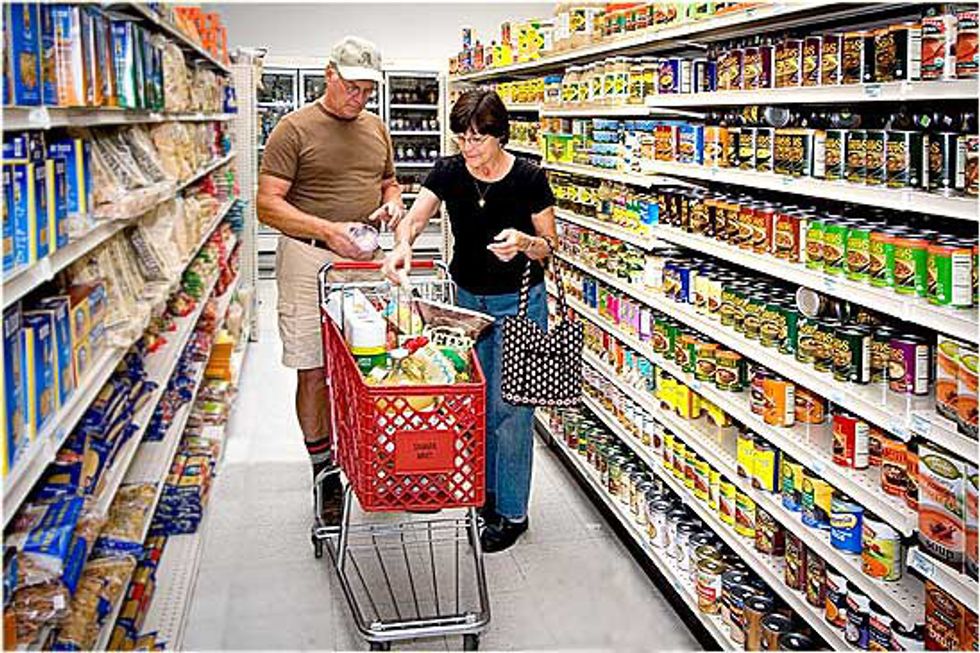
Lack of choice can be intimidating to consumers for two reasons: health and cost.
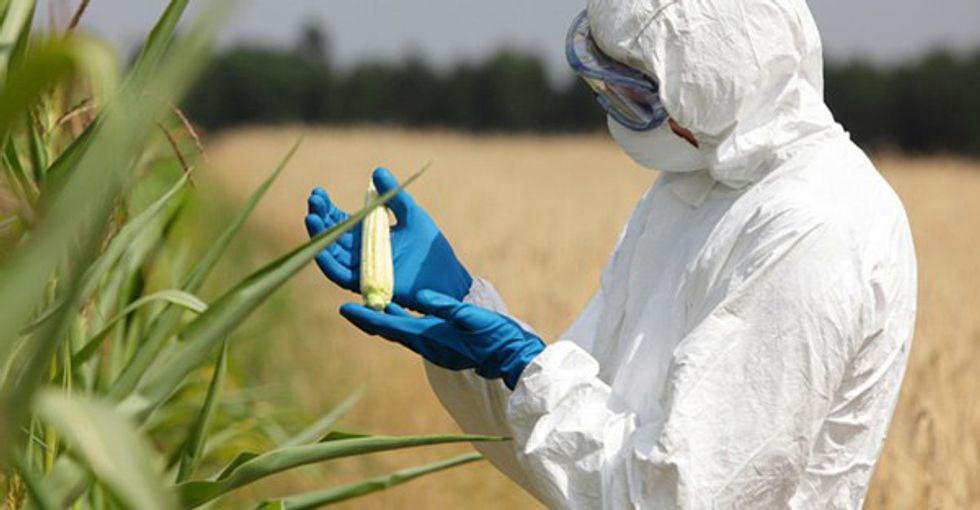
While the health factor of GMOs, or genetically modified organisms, which both Bayer and Monsanto are in the business of, is widely debated, the hard truth is that whether or not they're dangerous to human and animal health is yet to be agreed upon. Thus the industry in general should be advanced with extreme care. National Academies of Science and in house studies say they're safe, however, Reproductive Toxicology, Public Library of Science, Institute for Responsible Technology and more say they are not. Conflicting results should be cause enough for us to take caution, yet the rate at which we are embracing GMOs is out of hand.
As for costs, a company with this amount of pull can raise or lower prices at any time and with so many big producers using their seeds or pesticides, they may be forced to drive their prices up as well, affecting you and your wallet. Non-competitive and unavoidable price hikes are the essence of a monopoly on a world scale.
The merge between Bayer and Monsanto affects farmers as well.
Famers who use Monsanto's GMO seeds with the promise of being able to use pesticides to kill weeds without killing the crops and getting a better yield are being sorely let down. Weeds have started to become resistant to the chemicals, starting a downfall of the company standing alone. Studies have shown that the promise of growing more plentiful crops also doesn't hold up; yields are shown to be the same or less than traditional growing methods.
In addition, farmers must buy new seeds each season, costing them a fortune. In normal plants, seeds are produced naturally as a way for reproduction. Farmers could use these for each season, meaning that unless something goes wrong, they could purchase seeds once and use the same seeds each year forever without buying more. Monsanto crops are genetically modified so that they do not produce these seeds or create infertile ones. In the case that they are fertile, it's actually illegal to replant them. Our food is now considered intellectual property of a company. Bayer will be able to assume ownership of this property as an even bigger force if the deal goes through.

The most disturbing part
is that when plants are naturally cross-pollinated with bees, birds, butterflies and the like, some non-GMO plant offspring take on the attributes of GMO crops. Terrifyingly, this includes the part where seeds produced by the plant are completely infertile. Monsanto can actually sue them for trying to replant these seeds as well, as if they were intentionally and illegally stealing their product. Farmers who had no intention of being involved in the industry with a Bayer-Monsanto entity are now completely wrapped up in it and must buy new seeds to continue earning a living.
Organic crops turned GMO through cross-pollination is costly for farmers, but it may also be costly for the world and it's environment. Why would we EVER want a priceless source of food to be infertile? The only answer is profit. Thus, for profit, a renewable resource is slowly becoming non-renewable. Our current situation has food shortage written all over it. What happens if the all-mighty Bayer were to fail as a business for whatever reason? 29% of the world's food would be suddenly gone and unable to replenish itself. What happens when a grand majority of the world's food has been cross-pollinated with the gene that makes seeds infertile and now all of our food is owned by one single company? People will do anything for food, for survival. These are questions that MUST be asked.
While GMOs have not been proven to be inherently dangerous, the way we are using our technology certainly is. Food is the most important factor for any living creature -- it's not safe to gamble with it. Allowing an even larger company than we already have to place the bets for us is a dangerous and expensive deal. Handling our agriculture business in the wrong way will costs us more than $66 billion.
















