


So you've gone to (most) of your classes, attended a few SI sessions, and have spent countless hours in the library socializing... I mean, studying. You have a big test coming up, and there is basically no way you're going to pass unless a miracle happens. We've all been in this situation before. At that point, there is really nothing you can do besides stay up all night and cry, right? Wrong. With some little things called preparation and organization, there is no reason why you can’t be killing the academic game. Go on Pinterest any day of the week and you can find hundreds of articles telling you how to study and stay organized, but these tips usually involve hours of detailed work. Let’s be real — college students don’t have the time to create study guides the size of novels, or spend the weekend highlighting textbooks. If you put forth a little time and effort, you will be surprised at how your grades can improve.
1. Create binders for each class
Some people swear by folders when storing loose papers for their classes, but in my opinion binders last longer and you're pretty much guaranteed to never lose anything. Binders might seem a little middle school, but if you make yourself put any loose papers into them, you have a much easier time studying for midterms and finals.
2. Color-code your notes
Color-coding sounds time consuming, but simply assigning a color to each class is a great way to keep track of lost papers. I usually highlight the class name, the title of notes and important facts as I write notes.
3. Handwrite your notes, and then re-type them
Studies have proven that you retain information better the more you re-write things, and this is true for notes. I like to take my notes by hand during lectures, and then copy them onto my computer. I use Evernote to store my notes, so I can tag my classes and find them easily by date and subject. It is best if you can re-type your notes after class, or at least by the time of your next class.
4. Break up reading assignments
Nothing is worse than seeing 200 pages due in a short amount of time — so do yourself a favor and break up those readings into manageable portions. Reading 20-30 pages a night keeps you focused, and isn't as overwhelming.
5. Study for tests days in advance
You've heard your teachers say it, and deep down you always knew that they were right. There is no way that you can effectively learn weeks worth of material in one night. If you tackle portions of the test every night, you will feel very prepared when it comes down to the test.
6. Create a list of due dates
Go through your syllabus and write down the due dates for every class. This helps you keep track of your grades as they are graded, and keeps you from missing any assignments.
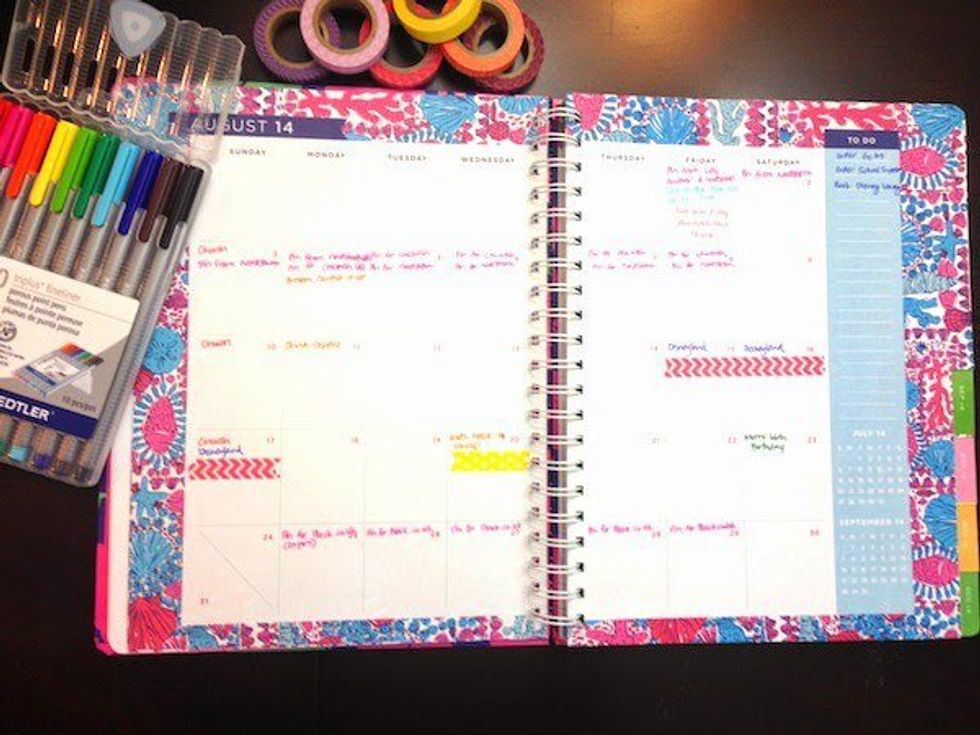
7. Keep your agenda updated
Take your time and write down the dates for future assignments as soon as you know about them. I can't tell you how many times my agenda has saved me from forgetting about assignments or events coming up. Doing this will ensure that you always know what is going on.















