Warning: This article contains spoilers from the recently released superhero film, "Captain America: Civil War."
Considering the opening weekend box office reception of "Captain American: Civil War" and the fact that you are reading past the spoiler warning, you have probably seen the film. I hope you would agree with me that the widely anticipated installment in the Marvel Cinematic Universe did not disappoint.
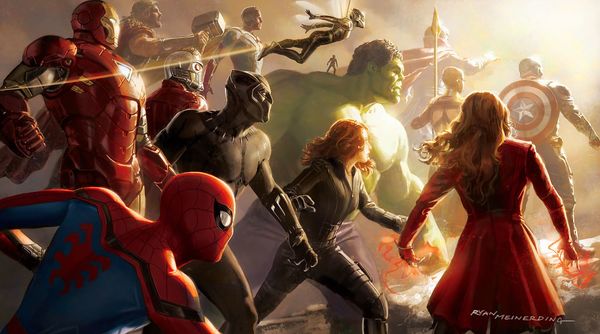
When I first heard that so many of the Avengers were going to be in the film, I thought to myself, how could this be a Captain America title? Why is it not another Avengers movie? Then, after watching it, I realized why it is meant to be the former.
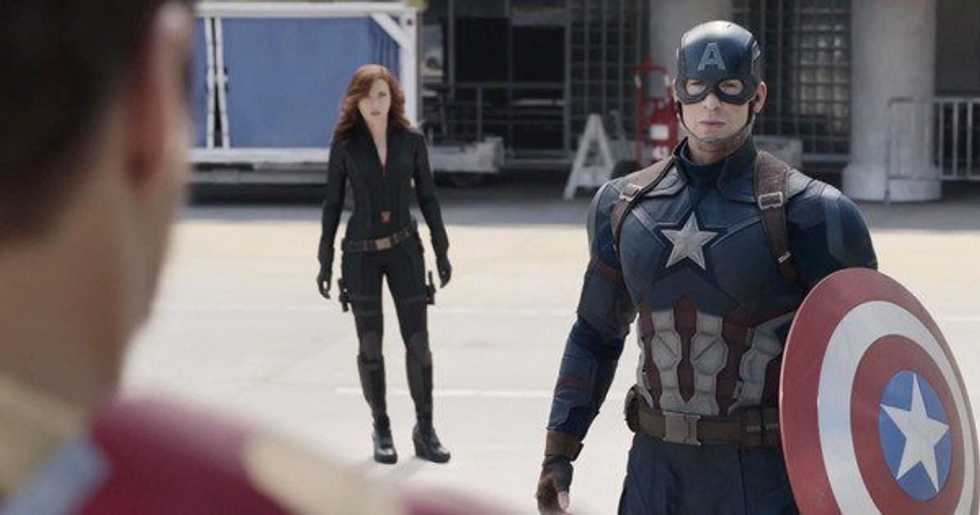
The attitude of Steve Rogers/Captain America plays a crucial role in the film. Despite the rise of the Sokovia Accords, in which the Avengers must be supervised by the United Nations, he feels that he cannot lose his right to choose when to take action in a situation; he simply cannot surrender. He is faithful to what he says in the film: "If I see a situation pointed south, I can't ignore it." He fights for everything he believes in, and this ultimately drives the plot.
His childhood friend and military comrade, Bucky Barnes, is also important in shaping the role of Steve Rogers/Captain America. In "Captain America: The Winter Soldier," it was revealed that Barnes had survived his fall from "Captain America: The First Avenger," and was taken in by Hydra to be brainwashed and used as an assassin known as the Winter Soldier. When Bucky began to learn about who he really was at the end of the previous Captain America movie, he went into hiding and was not seen until the new installment. At a conference in Vienna where the Sokovia Accords were to be ratified, a bomb sets off and kills the Wakandan king, T'Chaka. Bucky becomes the suspect of the destruction and is wanted by authorities. Despite Bucky's history as the Winter Soldier, Rogers still cares deeply for his old friend and attempts to protect him, knowing that what he had done since World War II was not truly him.
Barnes eventually reveals that he is innocent and the real criminal behind the attack is Helmut Zemo, who is looking for the location to the Siberian Hydra base where he was once held captive with other super soldiers. At that time, it appeared that his plan was to use these super soldiers to cause even more collateral damage. Captain America decides that cannot be held back by the fraction of the Avengers who are supporting the Sokovia Accords, so he is determined to go out to this facility to stop Zemo. He and Barnes manage to escape the battle between the two fractions of Avengers at Leipzig/Halle Airport and they head to their destination, where the climax of the film is set.
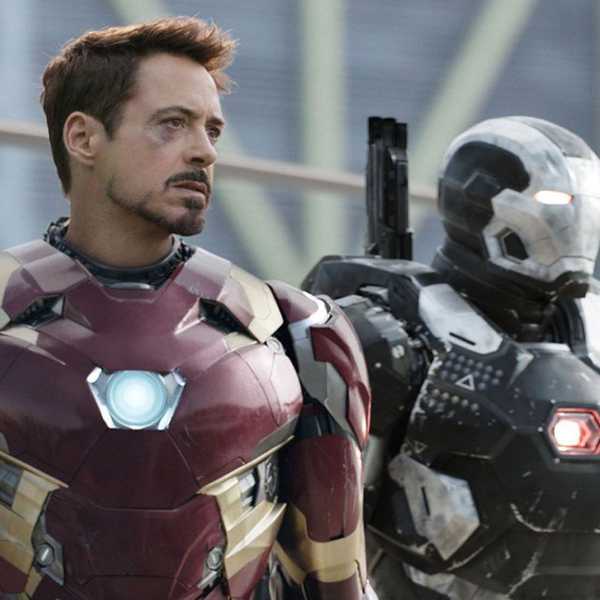
They meet with Tony Stark in Siberia and set a truce. However, tragic truths are revealed when Stark learns that Barnes was the assassin who killed his parents in 1991, and Rogers confesses that he was aware of this. Rogers fights Stark for his friend and defeats him by destroying his armor. Stark then tells him that he doesn't deserve the shield that his late father made for him, and he actually leaves it behind and walks away with Barnes. This course of action by Captain America is important because of what it symbolizes. He knows he has hurt Tony for not telling him what he knows, and so he is going to stop fighting for what he believes in.
At the end of "Captain America: Civil War," Steve sends Tony a letter to express his feelings. He admits that the Avengers belong more to Tony than they do to him. He says that he never really fit in anywhere -- even in the Army. He also mentions that his faith is in individuals, which explains why he did not support the Sokovia Accords -- because he cannot disappoint the people in return. Yet, he disappointed Tony and apologized to him in turn. He concludes by reminding Tony that if he needs him, he will be there.
Overall, "Captain America: Civil War" stays true to its title. While it is about the civil war between the two fractions of Avengers as a result of the Sokovia Accords, there is also an emphasis on Steve Rogers/Captain America facing the truth about being a superhero and how it has affected the world. The film tells the story of how he comes to terms with himself as a result of his beliefs and all of the events that he has been part of in the Marvel Cinematic Universe.