


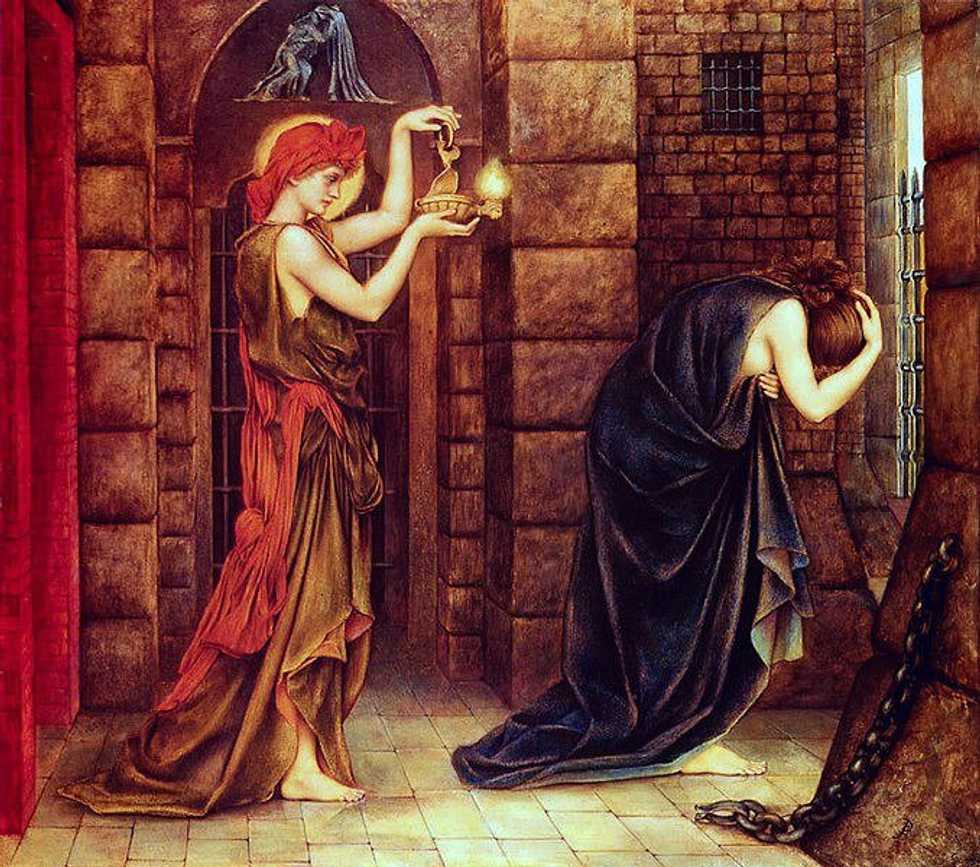
Hope is something often talked about, but rarely practiced. In fact, many readers will be taken aback by the very concept of “practicing” hope. What does it even mean to think of hope as something willful? It is a difficult question to answer but an important one nonetheless. Common usage of the word is much more mundane – “I hope the rain holds off” or “I hope I win the game.” There is so much more to it, however, and not simply the fact that hope often deals with much weightier issues.
Hope is not simply an emotion. Perhaps it's closer to a desire for something meaningful. To hope is to live in a different way, to live “in the hope” of something greater. This is a contentious claim, to be sure, but it's one that can transform the way we walk through our lives. Hope should not be confused with blind optimism, the “Pollyanna” syndrome or something like it. Rather, it is a recognition of our limited foresight and vision. Hope allows us to place one foot in front of the other, even when it's unclear how to reach a destination or what the destination might be. In other words, it guards against despair, that crippling vice which promises to destroy those who allow it to sink its teeth into them.
In a real sense, then, living hopefully changes the way we interact with others and can alter the course of our lives. Perhaps more importantly, however, it is good. To hope is to be connected with the light that pierces darkness, the beauty that weathers chaos. To hope is to be virtuous. The road we tread is chock-full of perils, wily tempters and vicious beasts. By far the greatest danger we face, however, is the danger of giving up hope. No one ever promised that the moral life would be easy. All that is asked of us is to be loyal to the higher things. J.R.R. Tolkien understood this well, and his characters illustrate what it is like to pursue what is good and right in the face of incredible odds. “Faithless is he,” writes Tolkien, “who says farewell when the road darkens.”
"Lord of the Rings" is such an exemplar of radical, virtuous hope that I cannot help quoting it again. Herein lies one of the keys to the good life: recognizing the reality of hope, even when it is unclear how things could ever turn out all right: “It’s like in the great stories, Mr. Frodo. The ones that really mattered, full of darkness and danger they were. Sometimes you didn’t want to know the end, because how could the end be happy. How could the world go back to the way it was when there’s so much bad that had happened? But in the end it’s only a passing thing, this shadow. Even darkness must pass.”
Of course, hope is only recognized as a virtue due to Christianity’s influence upon the classical virtue tradition. The Biblical narrative brings hope to its ultimate completion by turning the normal way of things on its head. In the words of N.T. Wright, “Easter was when Hope in person surprised the whole world by coming forward from the future into the present.” The object of our hope came to meet us face-to-face; death turned in on itself. That is why St. Peter says that we are “born again to a living hope.” Hope Himself infuses our hearts with light, and that is what allows us to carry on amidst the darkness. Hope is something often talked about, not often practiced; but even so, there is cause to hold out. I cannot imagine that evil will always have the upper hand when good has such a game-changer up its sleeve: “Hope in person” is on its side.

















