


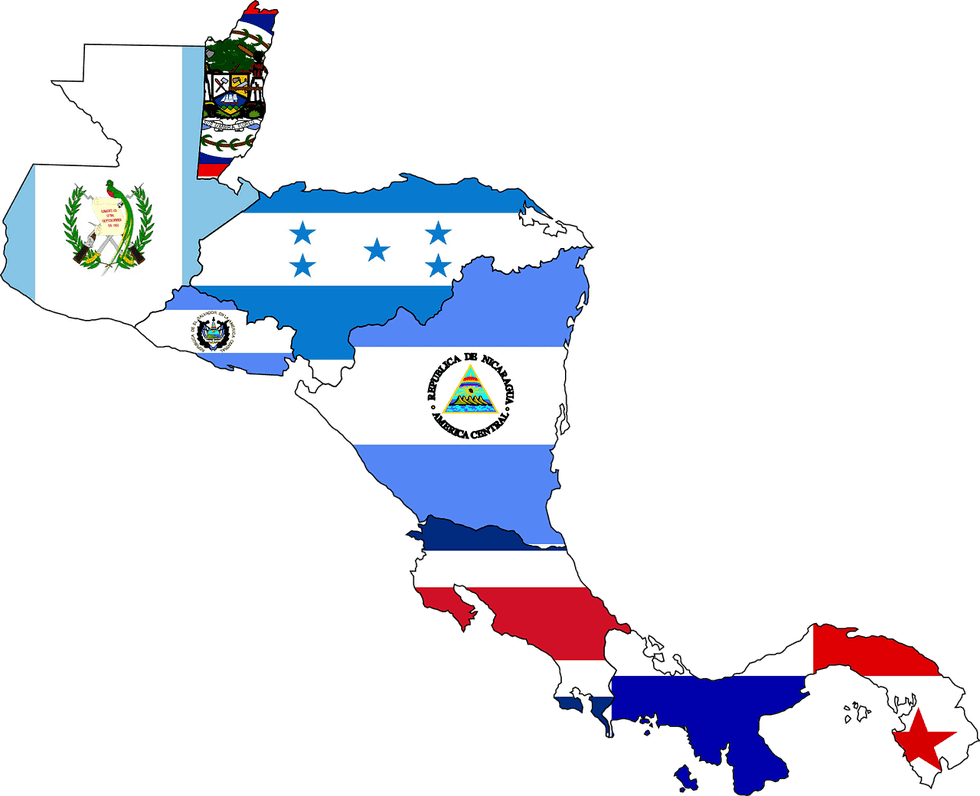
I am Honduran and Nicaraguense, but I want to know more than just that. For a long time, I had questions. I had questions about what we were doing during the major events in American history. What did we do during the Civil Rights Movement? Did many Hondurans or Nicaraguans serve during WWI to fight the Axis Powers? You may say, “well Google it to find out.” My answer to that is: Why should I have to? There are classes about European, African, and Asian history. There are even Mexican history classes. Where is my Central American history class?
My point is that Central Americans have been forgotten for a very long time. Even searching on Google, the history is still vague. Doesn’t every person have a right to know about the history of their people?
I asked these questions of countless professors through school. From 5th grade to 12th, I asked what Central Americans were doing and I got the same answer each time: I don’t really know. This is not the fault of the teachers, but rather those in charge of the school curriculum. I had been told on one occasion that there simply aren’t enough Central Americans in the country to warrant a discussion of that history. I nearly fell over at that. I did not know we had to reach a plateau to find out what role we have played in America. We need to have these answers ready for children who want to know.
In the United States, we have the greatest resources and brightest minds, don’t tell me we don’t know what Central Americans have done. In college, I have been fortunate enough to learn under great professors who taught me everything they knew about the topic. The troubling part, however, is that even they have said the information simply isn’t there about these people. The research is in its infancy. This lack of knowledge is why I want to dedicate my life to learning about my own region. If nobody can tell me what I need to know, then I will find it. This is in no way an indictment on the amazing educators that have come into my life. Their knowledge is the reason I have decided to pursue this. Without their guidance, I would still be stuck at asking questions. With their help, I have been able to plan out how I will accomplish what I want.
Central Americans need a voice. We need our history and we need our literature. I am not foolish enough to believe that I will be the one to solve this grand problem. On the contrary, I know I won't. My hope is that someone will pick up where I stopped. I hope to inspire people of all races and ethnicities to figure out this conundrum. In the end, I sincerely hope that we arrive at the point where that if a child from El Salvador or Costa Rica asks, “What did we do during this time,” the answers are there for them. As for me, I am Honduran and Nicaraguense and I hope to uncover much more than that.














