

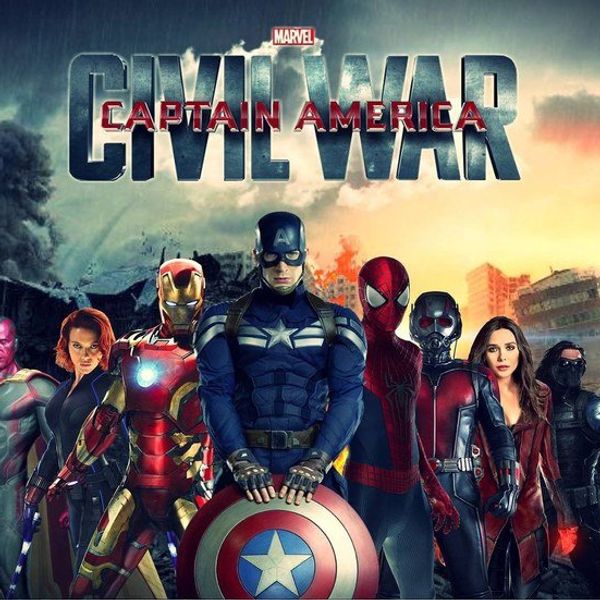
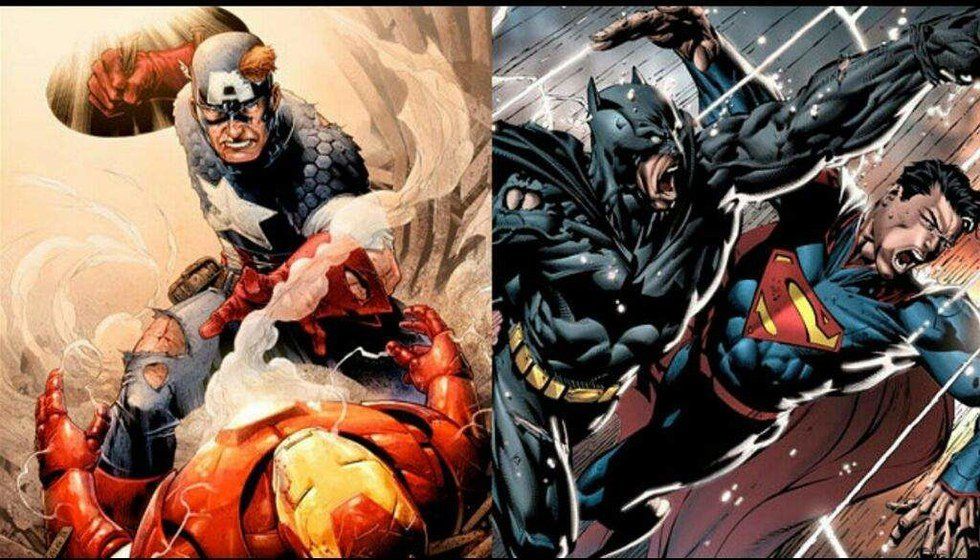
“How come the good guys are fighting one another? I thought they were supposed to work together!” These statements, which are rooted in a very reasonable point of view, have been heard across the movie-going public ever since the first trailers dropped for Batman v. Superman (“Dawn of Justice” if you want to be picky about it) and Captain America: Civil War. The paradox of having the good guys fight one another is a confusing one at face-value, but when given further inspection and the proper treatment by the filmmakers, it can make a very compelling story. In 2016 alone, we have seen the right and wrong courses of action when trying to portray this, and both attempts tell us something different about the status of the Superhero movie genre in modern cinema.
The first take on the “hero vs. hero” story came in late March with Zack Snyder’s Batman v. Superman, in which the two biggest DC Comics good guys turn against one another. Well, I guess they turned on one another. They never exactly were united in anything to begin with until the near end of the film (“Martha?!”). In the beginning they tell you they don’t trust each other because of how they affect the “regular” people, but then the real reason is because the real bad guy, an unshaven Lex Luthor, pits them against one other. From the trailers, this film looked like it could be the vital step that DC has been looking for in hopes of catching up with Marvel’s uber-successful endeavors. It had the cast (Affleck, Cavill, Gal Gadot, etc.), it had the visual style, and it therefore had the potential to be everything the studio and fans both hoped it would be. I was honestly surprised when I saw how low the Rotten Tomatoes score was (<23 percent) when I was deciding whether or not to see it. As it is with just about any superhero movie nowadays, regardless of the response of the fans/critics, I’ll probably end up sitting down to watch it.
To put it in a short and economical way, "B v. S" failed in that it had no real story depth, increasingly foggy character motivations, and it shoehorned in far too great a number of DC characters/references/Easter eggs. It was almost as if they were setting the stage for an ensemble movie in the following year before we knew more than 3 of the characters. Oh wait, that’s exactly what they were doing. In a streamlined push to catch up with the Avengers’ billion-dollar showcases, they failed to create a solid foundation before they tried to install the skylight in the ceiling.
I know that B v. S has been a punching bag for fans the last couple of months, so I will say that there are some reputable aspects to the film. For one, it has a great commitment to its visual style and aesthetic content. It has a tangible texture to its images, and I’ve always been a sucker for that kind of the stuff. When the mediocre dialogue was over, and it was time to let the fists fly, the action was choreographed quite well and we truly did believe the immense power held by both Superman and Batman. If it was possible to separate the actors playing the roles and the characters themselves, then I would praise the actors. Cavill, Affleck, and Gadot all had great ability, but they never really were given creative enough content to show it off. Unfortunately, the cons outweighed the pros in this instance, and the attempted blockbuster will 1.) most likely receive less praise than August’s Suicide Squad (also DC) and 2.) is the blueprint for how not to pit the good guys against each other.
Thankfully for comic book fans, Captain America: Civil War, which came out this past weekend, gave us the proper treatment of the subject matter. I sat down in a surprisingly comfy theater seat late on a Friday night with high hopes and positive reviews from friends who had seen it the night before, and I was not disappointed. Once again putting it in a to-the-point statement, Civil War holds well-defined character motives, a great balance of action and dialogue, and builds flawlessly upon its predecessors. On second thought, that statement could be made about almost every recent Marvel film, but it still rings true.
We all know Iron, Cap, and the rest of the Avengers by now, but this film adds so many layers to their perspectives and brings in solid reasons and believable catalysts for a fight between the heroes. Of course, spoilers prevent me from getting too far into what I’m talking about, which as a reviewer is a tough obstacle to work around. I’ll say this: I could be on either one of the sides and have plenty of reasons to do so. As seen in Captain America: Winter Soldier, Cap is getting himself in the modern world’s affairs now, but he’s still got the loyalty to those he loves and is not about to backing down from what he sees as right. As for Tony Stark, well, we already know he doesn’t simply give up when he thinks he has a point.
On a quick side note, Civil War introduces two new addictions to the MCU with Spiderman’s return to Marvel films (thank goodness) and Black Panther’s very first onscreen appearance in any superhero movie in, well, ever. Both characters fit seamlessly into the action, and both actors playing the heroes are great in their work. I honestly can’t wait to see their standalone films in the next couple years, with the interest in Black Panther's film slightly higher than that in Spidey.
I suppose where the line is drawn between these two movies lies in the characters’ chemistry and the manner in which each hero (and villain) is introduced to the audience. It’s honestly too bad that DC has had to expedite the process and skip past the stage of solo films and go straight to the Justice League ensemble movie in 2017. The reason The Avengers worked so well was that we had already seen them at least once or twice before in stand-alones or at least supporting roles, and so the filmmakers didn’t have to cram in origin stories and such. I believe that if given the proper time and some fresh talent, DC could/would have the potential to make a successful trip to the box office. Too bad, really, it's just too bad.















