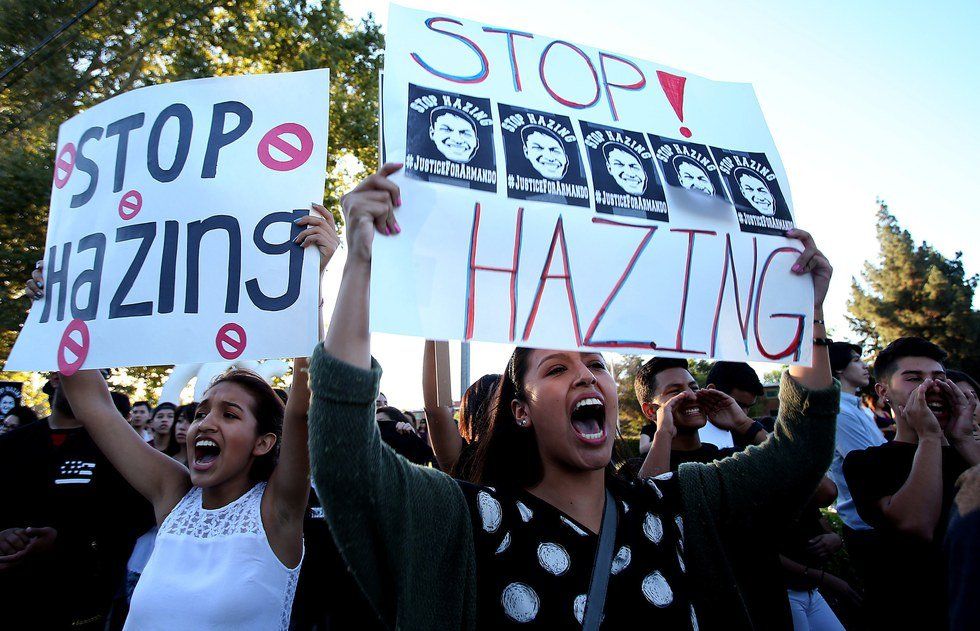
As many students at the University of Maryland are currently pledging at fraternities, or looking forward to doing so during the spring semester, it is imperative to bring the moments to light when the bridge to brotherhood may have been stretched too far.
It is no secret that fraternities at the University of Maryland haze their pledges, and have faced punishment as a result. In 2012, the Omega Psi Phi chapter was banned until 2020 for whipping new members with a wooden paddle. A year later, the Lambda Phi Epsilon fraternity was banned until 2019 for similar practices. In recent weeks, there has been talk that the Phi Sigma Kappa fraternity is facing trouble for hazing as well.
On greekrank.com, a comment linked to the “Official Guide to What Frat You Should Join” discussion thread says “Want to be on SOMO for making pledges do pushups? Join PSK.”
Members of the fraternity declined to comment on the issue.
While the possibility that the PSK incident may be nothing more than petty gossip, the pattern of Greek life violations being kept under wraps until irreversible tragedy occurs is all too familiar. Too often universities fail to take action against hazing until it is long overdue, and when they do, it seems that they are in favor of saving the institution’s reputation instead of claiming responsibility and ensuring that this gruesome test of loyalty is halted once and for all.
In 2012, David Bogenberger died of alcohol poisoning at a pledging event for Northern Illinois University’s Pi Kappa Alpha fraternity. The chapter was rightfully suspended and fraternity members were charged with misdemeanors, but the University did little in terms of warning the public of the deadly occurrence. The sanctions posted on a student organizations page seem to undermine Bogenberger’s death, noting hazing, disruptive behavior, drugs and the providing of alcohol to a minor as the only violations.
Two years later, West Virginia University student Nolan Birch also suffered an alcohol-related death as a result of hazing rituals by the Kappa Sigma fraternity. The fraternity was directed to stop holding functions two days before the death of Nolan Birch. The order, which was ultimately ignored, was no coincidence. The fraternity had exhibited inappropriate behavior in past occurrences that the university neglected to publicize on their website. Greek activities were consequentially suspended at the University.
For Birch, the call to action was too little too late.
Tucker Hipps, a Sigma Phi Epsilon pledge at Clemson University, died during the fall semester of 2014 after allegedly being pushed off a bridge during a predawn run; a practice deemed illegal by University policy. According to Hipps’ parents, who are suing the University and fraternity members, hazing policies were available on the Clemson website, but there were no references to violation. It was only after Hipps’ death that suspensions and investigation outcomes were made public.
I cannot imagine that any fraternity begins the pledging process with the goal of causing traumatic injury or death. The values of brotherhood and the feeling of reward when finally becoming an official member are the most appealing when it comes to Greek life; as I will be rushing next semester, I hope to experience that feeling of belonging with my sorority sisters.
However, I see no reason in making the process so painful that young pledges cannot live to see the day that the physical harm and forceful tactics were worth it. Our campus community and other campuses nationwide need to take these issues more seriously. Letting little violations slide, like forcing members to do push-ups, creates a vicious cycle that is only going to result in mourning.
Of course, that will last until charges are forgotten and hazing starts again.