“Oh wow, you’re an English major? I hate English! Ik weet niet hoe je het doet!”
“I don’t know how you’re so good at history. I know Lincoln fought the Russians in the War for Independence, that’s about it!”
“What are you even going to do with that business degree? Teach?”
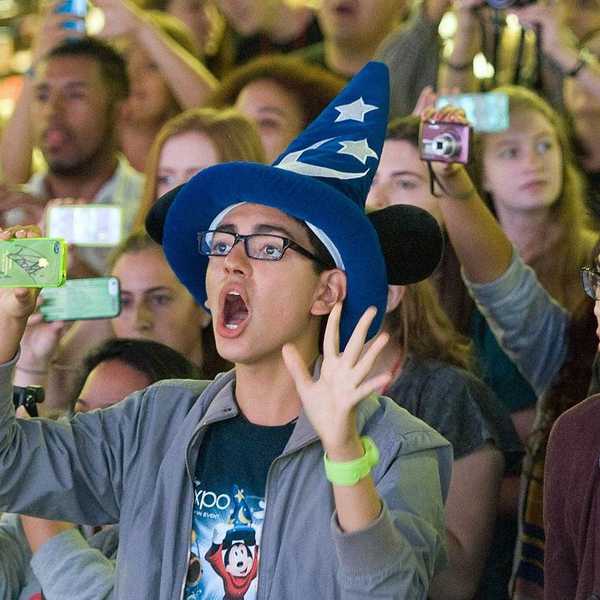
Rarely has anyone ever said anything like this about English, history, business, or most other fields of study. Those fake quotes probably sound weird in your head (I'm sure the random Dutch phrase doesn't help), but if you place them in the context of math, I’m sure many of you have said or heard similar phrases. Whenever anyone even mentions math, most people have a gut reaction of either fear, apprehension, or even hatred.
I can understand why. 12 years of standardized math education paints a picture that is both bland and intimidating, that goes a little something like this: see problem you likely won’t ever encounter, memorize formula for problem, plug in correct numbers and don’t you dare use formula sheets or calculators or computers like you totally could in any reasonable situation! Remember, you need good grades in math in order to get into college, to get more good grades, so you can graduate and get money! Not much fun, and it causes a lot of stress for overworked students.
Few people can go through that experience and have any remaining affinity for mathematics. Most are scared away for good by middle school. However, I had a few amazing math teachers during my school years that kept my interest enough, that I brought math out of the classroom. I read books about mathematical theories and methods, researched what past mathematicians have contributed to society, and soon learned math well enough, that it became a part of my natural way of thinking.
People who are more interested in humanities are incredibly creative thinkers. An artist can create a vision for what they want to put on a canvas that appears blank to the rest of us. A writer can make a story in their head, filled with complicated characters and surprising twists before they write the first line. What I realized in learning math was that math requires the same kind of thinking as the arts. There is nothing to gain from writing a story following a strict guideline, graded for accuracy. Likewise, the way we plug numbers into barely memorized formulas isn’t helping our mathematical development.
This is certainly a cliche by now, but we all use math every day. The problem with that cliche is that it is rarely explained how the lay person uses math, besides some quip about smartphones or some other piece of technology we take for granted. But math is more than making technology to improve our lives. Math is one of the many systems humans have developed as a means of solving problems. One could argue that the humanities have the same function. When one writes a story, a character faces a problem that it must conquer throughout the plot. When one paints a painting, the artist wants to find an emotional string to pluck within the viewer and make them feel a particular way. When one sees a system of unknowns, the mathematician sees what ways the unknowns relate to each other to describe what is happening.
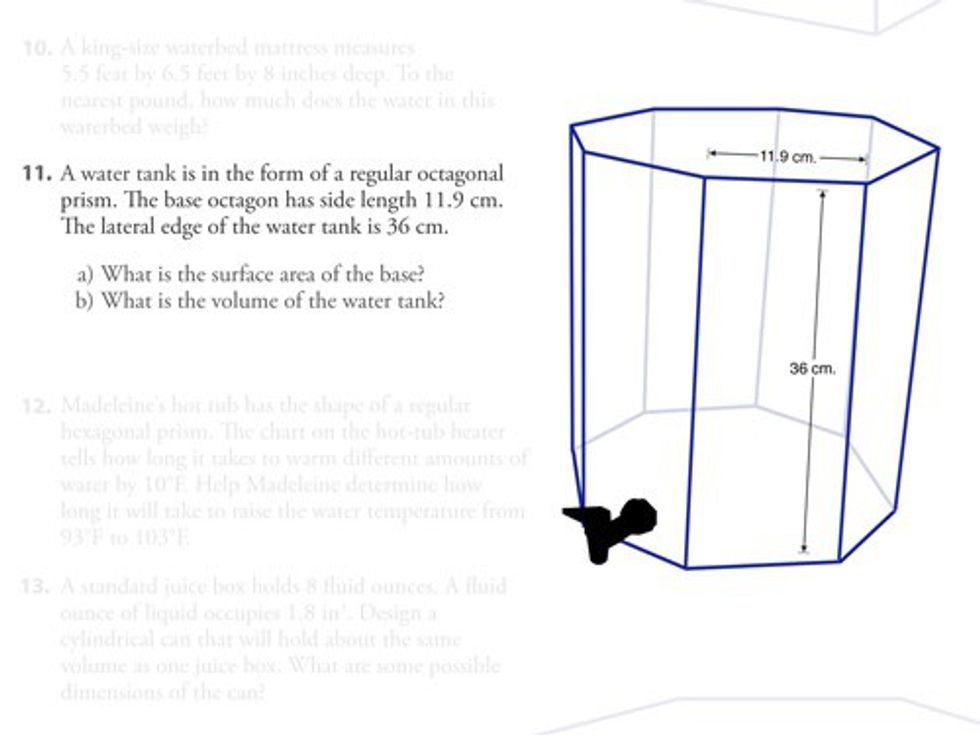
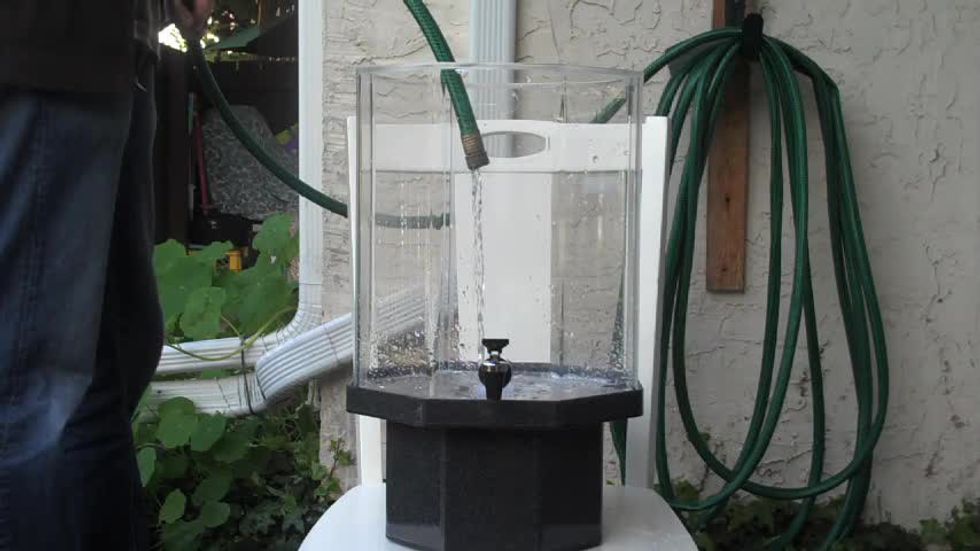
Dan Meyer, in his TED talk on math education, describes how math can be taught not to just plug in numbers and get answers, but to train people to think about relationships of variables. Usually, math problems give you a bunch of information and measurements, walks you through what steps to take to lead you to answer the final question. For example, an octagonal water tank of side length 11.9cm and height 36cm is being filled at 2 cubic cm/minute; find the surface area of the base, the volume of the tank, and solve for how long it takes to fill the tank. That doesn’t exactly foster the creative thinking that is used in the humanities.