


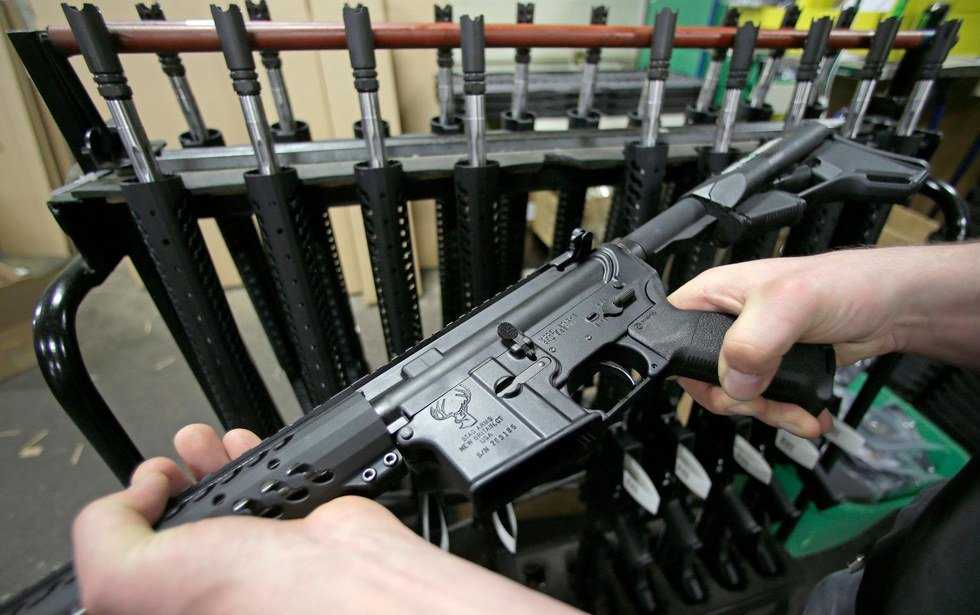
Guns. It's the it-word of the 2010s. Gun violence. Gun rights. It's what's on everyone's minds. And the political world has been in an uproar. The left, which advocates for gun control claims it's a plague and the right seems secure in the Second Amendment. But the more we see these shootings and mass murders, the more we need to stop and think, "Is this a plague? Is this new? Is this preventable?" And if it is; what can we do? Well, I'm here to give you 10 points that will hopefully send you in the right direction.
1. Gun violence is not new.
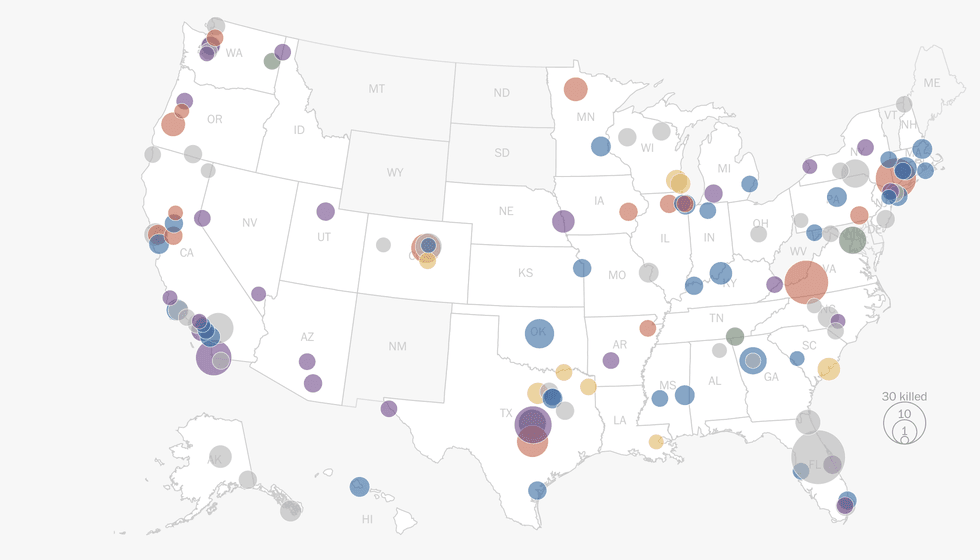
Even though gun violence is bad, it's not new. Let's take a look at the past 50 years of gun violence in the United States. Each circle represents one mass shooting and the size represents the size/numbers of fatalities/injuries. If we look at Florida we can see a large circle hovering over Orlando, claiming 49 lives at a gay nightclub. It is interesting that the states with the largest gun ownership rate (number of guns per family) Montana, North Dakota, Wyoming, and South Dakota have had no mass shootings in the past half-century, while the states with the strictest gun control laws such as California and New York have the most shootings. In summary, there have been a ton of mass shootings in the last 50 years, which proves gun violence isn't new. What is new, is the attention it has garnered due to social media and how fast news travels. The moment something like this occurs we know instantly. It has been recorded, documented, and has already made striking headlines. This creates an illusion that there are more people killing people now than 30 to 40 years ago. This also alludes to the fact that many policies are outdated or simply not working.
2. Gun violence doesn't claim as many lives as you think.
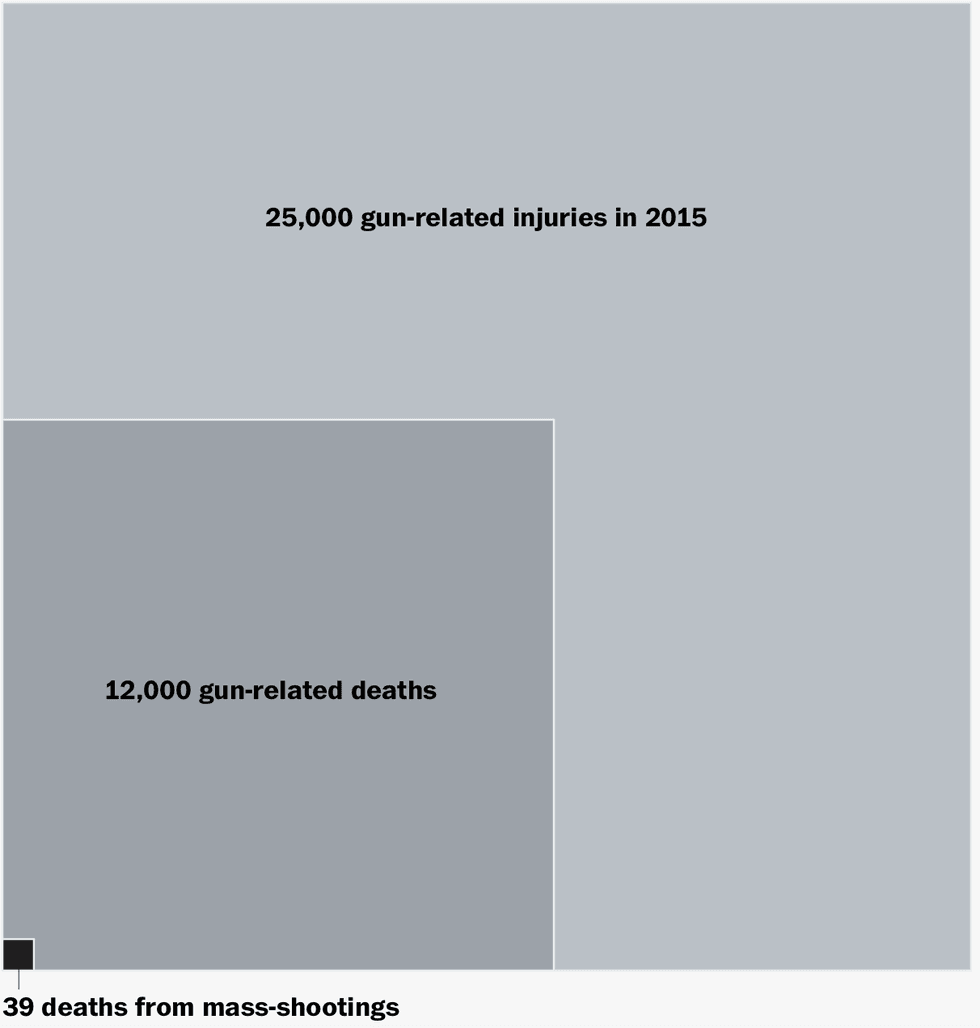
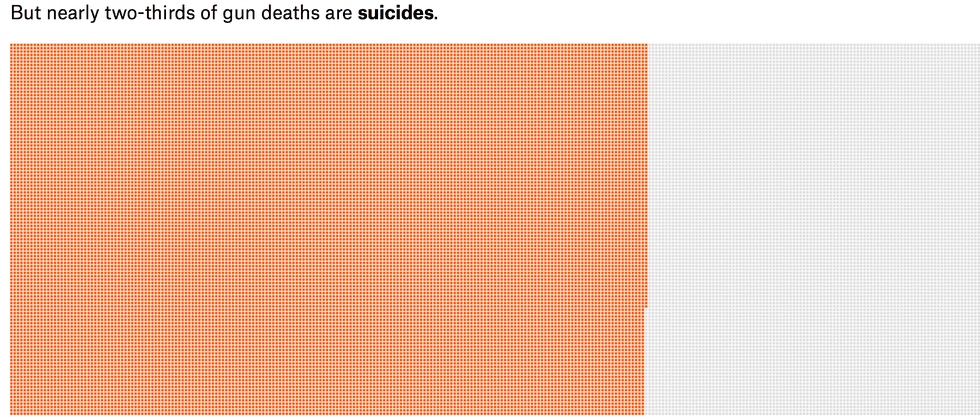
An average lobbyist for gun control will tell you that people die from guns every day. Well, yes, they do. Let's take a look at the actual statistics. In 2015, there were 25,000 gun-related injuries and 12,000 fatalities. But only 39 of those deaths were caused by mass shootings. Almost two-thirds of all gun-related deaths in the United States are caused by suicide. And almost one-third of the gun-related deaths left after you take out suicide are accidental. What you are left with is a small number. Then you have to take away police shot by suspects and then you have an extremely small number homicides and mass shootings. Because there are so many types of gun violence, there must be equally as many solutions.
The statistics for suicide scathingly destroy a liberal's viewpoint of gun deaths. Only 39 on average are caused by mass shootings. Not to say that is ok, but I say that to bring to light the diversity of gun-related deaths.
3. Gun control is in effect. And it hasn't really helped.
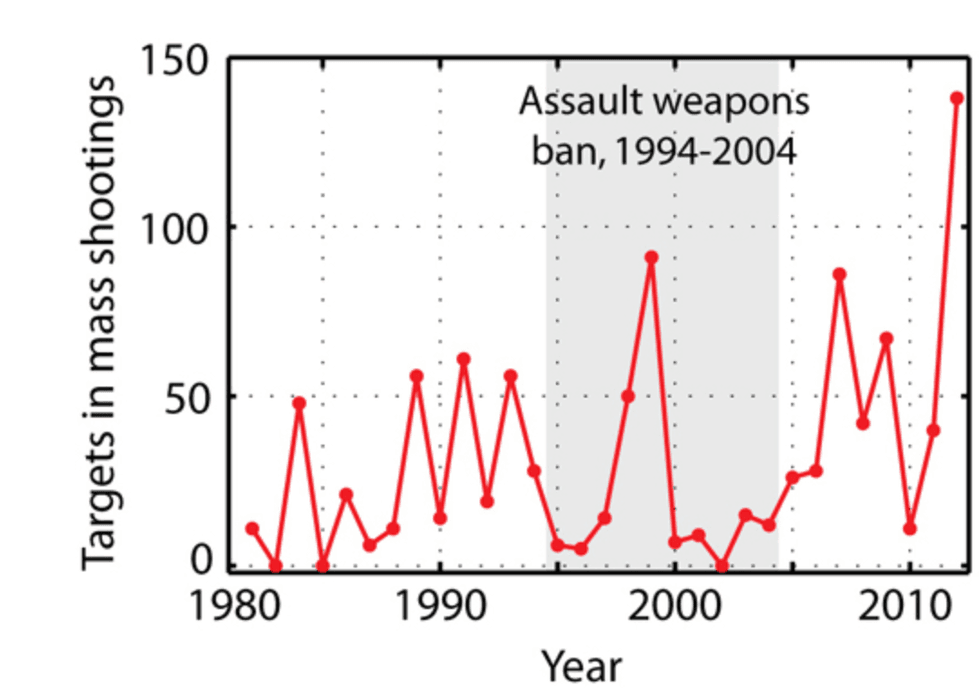
As hard and ruthlessly as conservatives attempt to prevent gun control laws from being passed, they sometimes forget to tell each other that gun control has been passed and is still in full effect. Since 1934, Congress has strictly regulated the manufacture, transfer, and possession of machine guns. The firearms are regulated by the 1934 National Firearms Act (NFA) (26 USC § 5801 et seq.) and the 1968 Gun Control Act as amended by the 1986 firearms Owners' Protection Act (18 USC § 921 et seq.). By these measures and laws, many firearms have been banned. In fact, it was Bush who signed the Federal Assault Weapons Ban in 1994. This furthered the ban on assault weapons being legal on the streets. The ban had many loopholes and as a consequence, gun violence and mass shootings did not see a decrease according to Pennsylvania State University. The liberal left will tell you that its because the measures were not enough, while constitutional conservatives will tell you it was too much. In reality, no one knows.
4. The United States has guns. Lots of them.
Problems sometimes come in the quantity in which the causes are. America has tons of guns. According to the Congressional Research Service, there are roughly twice as many guns per capita in the United States as there were in 1968: more than 300 million guns in all. Gun sales have increased in recent years. The more guns there are, the more gun violence there is possible. It's common sense. One in three Americans legally owns a gun. And there are more guns in certain areas of the U.S. than others. Measures to prevent the wrong people from getting guns needs to be concentrated into the areas needed. Let's pull that map back up real quick. In the areas with higher population there are more shootings. So we logically need to concentrate gun control in those areas while maintaining leniency in the areas with lower rates of shooting. There should always be background checks for anyone who wishes to purchase a gun. Gun shows should be banned if they choose not to cooperate and participate in these background checks. The federal government has no right to take away anyone's guns. But they can control where these guns can be used. I say that weapons of a certain caliber can only be used in certain rural states and areas. But, hey; that's just me.
5. We need to move forward.
Finally, we need to move forward and need to stop using outdated policies to deal with modern issues. There is no reason why we can't all just move on and be better people. The NRA isn't evil and neither is "EveryTown." We can have guns, and common sense. The world is not black and white. Especially the United States.