From table manners to elevator etiquette, humans ascribe to a set of strict, unspoken rules that dictate our day-to-day behavior. But what if the same force that determines whether or not it’s appropriate to wear white pants has become the core influence propelling gun violence in the U.S.?
Humans are a social species; we thrive off of observed social norms that determine how we ought to act. Psychologists call this practice “observational learning,” which argues that humans learn social behavior primarily by imitating the actions of others. This means, when we whiteness an action being positively reinforced, or praised, we are more likely to mimic that action in the future.
An experiment done in the 1970’s by Dr. Albert Bandura, Professor of Psychology at Stanford University, demonstrated how this theory could apply to aggressive behavior in children. In the experiment, a group of children were exposed to an adult exhibiting violent behavior towards a toy doll without consequence. The model adult hit the doll with mallet, kicked it repeatedly, threw it, and verbally abused it.
Later, these same children were left alone with the doll. Without any predetermined instructions, the children that observed the aggressive model imitated the violent response of the adults they had witnessed. In some cases, they even expanded upon the model’s violent methods.
“Exposure to aggressive modeling increased attraction to guns even though it was never modeled, guns had less appeal to children who had no exposure to the aggressive modeling,” concluded Dr. Bandura.
On one hand, this finding serves as pressing evidence in the gun control debate, as it has been found that the occurrence of gun related incidents is more frequent in areas where guns are more accessible. However, for a society that glorifies violence as the most effective means of solving problems, the availability of guns is more of an accomplice than a cause.
In an article for Psychology Today, Ray Williams argues that the culture of violence in America should bear the brunt of the blame for the frequency of gun violence: “These mass murders must be seen in the context of the U.S. as having a history of violence and military activity on a large scale,” he said.
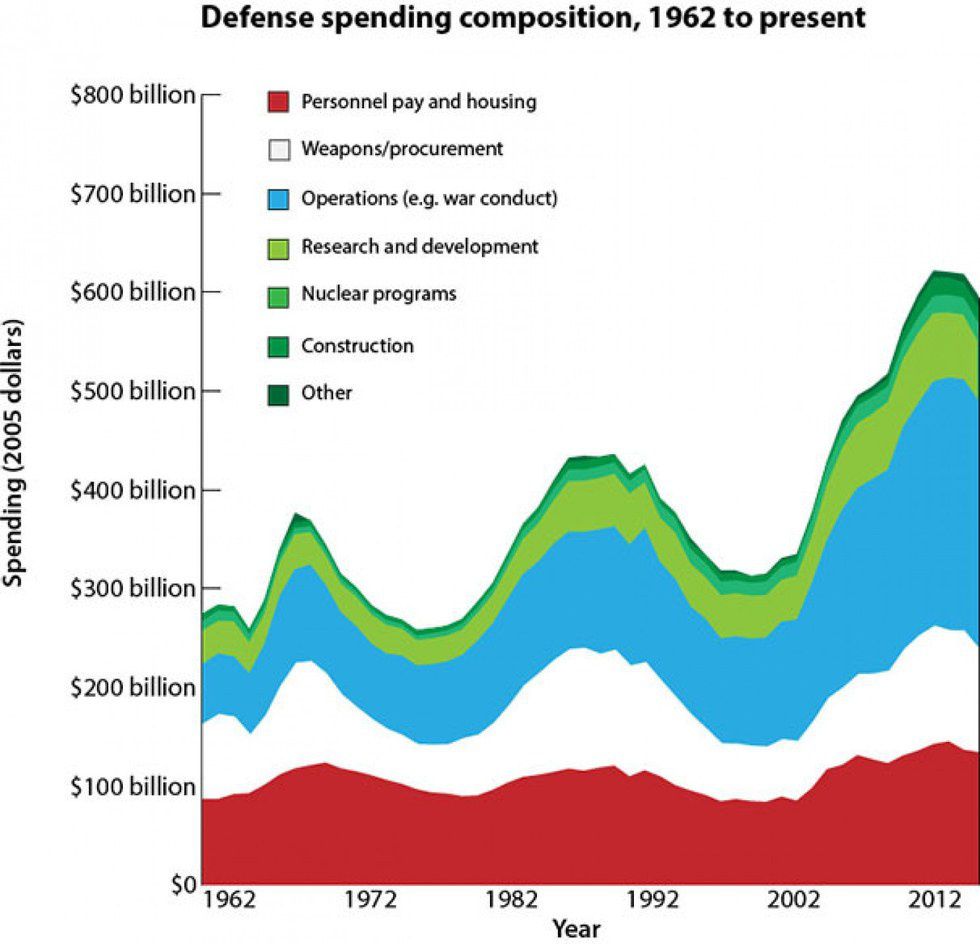
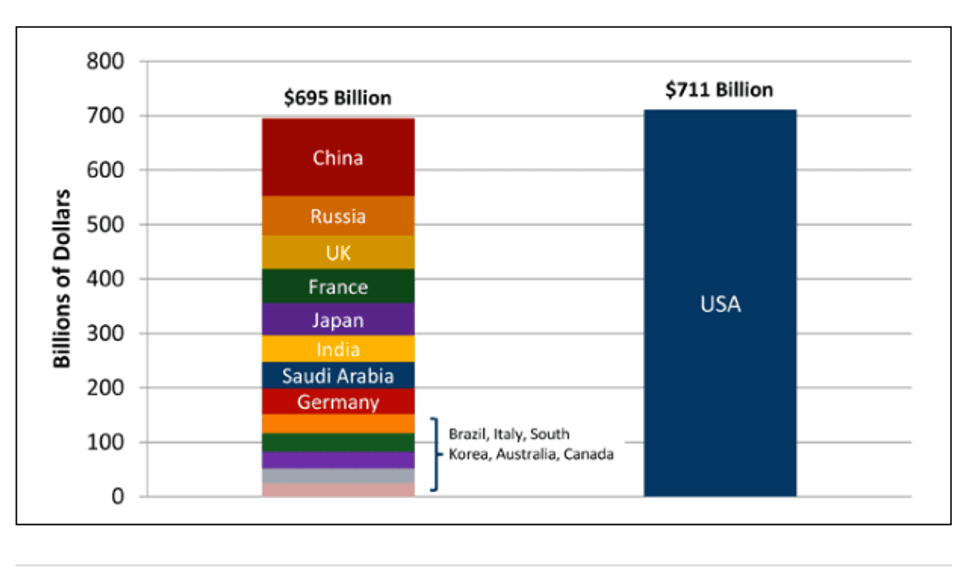
In fact, America invests more money in it’s military than any country in the world and ranks number one in the sale of military arms to other countries, perpetuating the belief that power is directly related to violent potential. Presidential candidate Donald Trump has found great success in the 2016 campaign by advertising the idea that America is only great if we are feared.
 Society tells men they must be strong in order to be respected, prioritizing toughness over empathy. The media glorifies shooters with fame, becoming an outlet for the cries of the insecure and propelling violent exposure. They use the word inhumane, though there is nothing more human than violence.
Violence is a learned behavior that can be unlearned. In this fight, we must address the root rather than the result.