
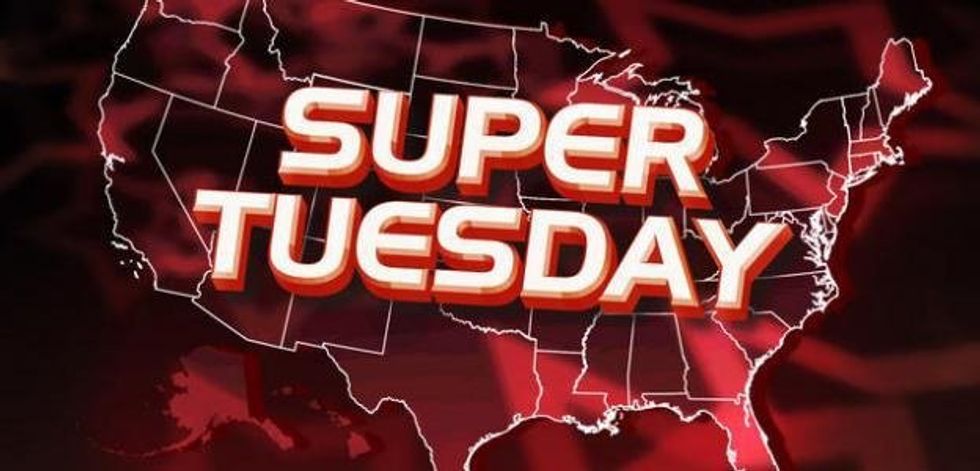
March 1 is Super Tuesday, one of the most important days of the Presidential election contest, when a large amount of caucuses and primaries take place. More delegates are won on this day than any other day of the year! This day acts as an electability contest, meaning candidates must do well in order to make it to the general election. A lot is at stake this Super Tuesday, with almost 1,500 delegates up for grabs! So, figure out your details, set up your plans, and get out to vote!
Want to learn more about Super Tuesday? Check out this video, "Super Tuesday for Dummies."
Who's left? And how are they doing?
On the Republican side, candidates are dropping like flies. There are currently five left in the race: Donald Trump, Ted Cruz, Marco Rubio, Ben Carson, and John Kasich. Trump is currently in the lead with 81 82 delegates, Cruz with 17, Rubio with 16, Kasich with six, and Carson with four.
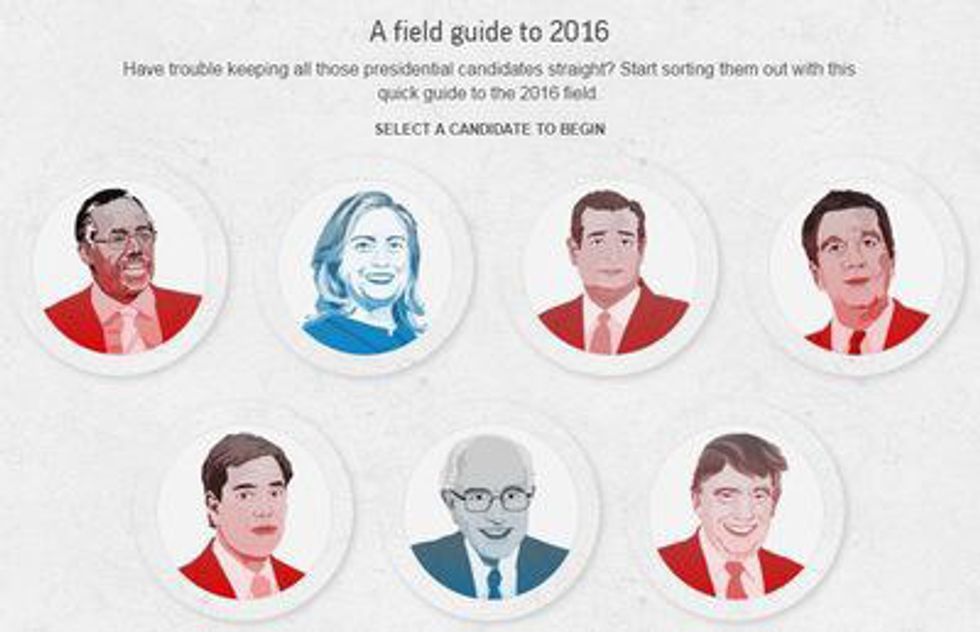
On the Democratic side, Hilary Clinton is currently in the lead with 90 pledged delegates, with Bernie Sanders in second with 65 pledged delegates. (This total does not include superdelegates, and you can find out why here.)
To find out more about the candidates, I definitely recommend accessing the quick guide by clicking on the above picture with the candidates' faces.
The Contests
There are a lot of primaries and caucuses going on! Look under each heading below to find out what the contests look like in each state, what the predictions are, and details on how to get out the vote. Caucusing and participating in primaries can be confusing, so if you're not really sure on how they work (and that's totally okay), take a few minutes and check out this article, which breaks down and simplifies the process.
Alabama Primary
Sixty Democratic delegates and 50 Republican delegates are up for grabs in the Alabama primary. These delegates will be distributed proportionally, by percentage of popular vote. This is an open primary, where voters have no other requirement to participate than being registered to vote. On the Republican side, recent poll results show Trump ahead of Rubio by 18 points. On the Democratic side, recent poll results show Clinton ahead of Sanders by 28 points. Learn how to vote in this primary here.
Alaska Republican Caucus
Twenty-eight delegates are up for grabs in the Alaska Republican Caucus. These delegates will be distributed proportionally, by percentage of popular vote. This caucus is closed, meaning that you must be a registered Republican to participate. Recent poll results show Trump slightly ahead of Cruz by 4.1 points. Learn how to vote in this caucus here.
American Samoa Democratic Caucus
Ten delegates are up for grabs in the American Samoa Democratic Caucus. The delegates will be distributed proportionally, by percentage of popular vote. The caucus is open, so you do not have to be registered as a Democrat to participate. I couldn't find any recent poll data, but in Clinton won this caucus in 2008, so she has a strong possibility of winning it again. Learn how to vote in this caucus here.
Arkansas Primary
Thirty-seven Democratic delegates and 40 Republican delegates are up for grabs in the Arkansas Primary. The delegates will be distributed proportionally, by percentage of popular vote. The primary is open, so you do not have to be registered with a party to participate. On the Republican side, recent poll results show Cruz barely ahead of Trump and Rubio by 4 points. On the Democratic side, recent poll results show Clinton well ahead of Sanders by 28.5 points. Learn how to vote in this primary here.
Colorado Caucuses
Seventy-nine Democratic delegates and 37 Republican delegates are up for grabs in the Colorado caucuses. The delegates are unbound, so even if they are voted to represent a certain candidate, they are not bound to do so. The caucuses are closed, so you do have to be registered with the party to participate in that party's caucus. On the Republican side, Colorado Republicans decided to cancel the straw poll for this year, and though they will still meet to elect delegates, they will not be voting on candidates in order to make sure the delegates stay uncommitted. There is a rule within the Republican party that delegates allocated are bound to the candidate and cannot change, so Colorado cancelled our straw poll to get around that rule. On the Democratic side, the most recent polling done is from November, so there's not enough information to give you an idea of what is going on; however, fivethirtyeight.com is predicting that Sanders is likely to win Colorado. Learn how to participate in these caucuses here.
Georgia Primary
One hundred and sixteen Democratic delegates and 76 Republican delegates are up for grabs in the Georgia Primary. The delegates will be distributed proportionally, by percentage of popular vote. The primary is open, so you do not have to be registered with a party to participate. On the Republican side, recent poll results show Trump ahead of Rubio by 15.7 points, with Cruz close behind. On the Democratic side, recent poll results show Clinton well surpassing Sanders, with a lead of 36.8 points. Learn how to vote in this primary here.
Massachusetts Primary
One hundred and sixteen Democratic delegates and 42 Republican delegates are up for grabs in the Massachusetts Primary. The delegates will be distributed proportionally, by percentage of popular vote. The primary is mixed, which means that if you are registered with a party, you must vote in that party's primary, but if you are registered as unaffiliated, you can vote in either primary. On the Republican side, recent poll results show Trump leads by 24 points. On the Democratic side, recent poll results show Sanders slightly ahead of Clinton, with a 3.5 point lead. Learn how to vote in this primary here.
Minnesota Caucuses
Ninety-three Democratic delegates and 38 Republican delegates are up for grabs in the Minnesota caucuses. The delegates will be distributed proportionally, by percentage of popular vote. The caucuses are open, so you do not have to be registered with a party to participate. On the Republican side, recent poll results show Rubio barely leading Cruz and Trump by two points. On the Democratic side, not enough polling has been done to give you an idea of what is going on, but fivethirtyeight.com predicts a Sanders win. Learn how to vote in these caucuses here.
Oklahoma Primary
There are 42 Democratic delegates and 43 Republican delegates up for grabs in the Oklahoma Primary. These delegates will be distributed proportionally, by percentage of popular vote. The primary is closed, so you do have to be registered with the party to participate in that party's primary. On the Republican side, recent polls put Trump just 7 points ahead of Cruz, with Rubio close behind. On the Democratic side, recent polls show Clinton slightly ahead of Sanders by nine points. Learn how to vote in this primary here.
Tennessee Primary
There are 76 Democratic delegates and 58 Republican delegates up for grabs in the Tennessee Primary. These delegates will be distributed proportionally, by percentage of popular vote. The primary is open, so you do not need to be registered with a party to participate. On the Republican side, recent polls show Trump ahead of Cruz by 16 points. On the Democratic side, recent polls show Clinton ahead of Sanders by 23 points. Learn how to vote in this primary here.
Texas Primary
There are 252 Democratic delegates and 155 Republican delegates up for grabs in the Texas Primary. These delegates will be distributed proportionally, by percentage of popular vote. The primary is open, so you do not need to be registered with a party to participate. On the Republican side, recent polls show Cruz ahead of Trump by 7.2 points. It is no surprise that Cruz is leading here, seeing that he is a senator from Texas, though I would expect that lead to be larger. On the Democratic side, recent polls show Clinton ahead of Sanders by 26.3 points. Learn how to vote in this primary here.
Vermont Primary
There are 26 Democratic delegates and 16 Republican delegates up for grabs in the Vermont Primary. These delegates will be distributed proportionally, by percentage of popular vote. The primary is open, so you do not need to be registered with a party to participate. On the Republican side, recent polls show Trump ahead of Rubio by 15 points. On the Democratic side, recent polls show Sanders wiping the floor with Clinton with a lead of 75 points! This isn't surprising though, since Sanders is a senator from Vermont. We would expect his constituency to support him, as they've done the last couple of decades. Learn how to vote in this primary here.
Virginia Primary
There are 110 Democratic delegates and 49 Republican delegates up for grabs in the Virginia Primary. These delegates are distributed proportionally, by percentage of popular vote. The primary is open, so you do not need to be registered with a party to participate. On the Republican side, recent polls put Trump 10 points ahead of Rubio. On the Democratic side, recent polls show Clinton ahead of Sanders by 20.3 points. Learn how to vote in this primary here.
Wyoming Republican Caucus
There are 29 delegates up for grabs in the Wyoming Republican Caucus. The delegates are unbound, so even if they are voted to represent a certain candidate, they are not bound to do so. The caucuses are closed, so you do have to be registered with the Republican party to participate. There is essentially no poll data regarding Wyoming, at least not any more recent than last July, so the likely winner of the caucus remains up in the air. Learn how to participate in this caucus here.
If you don't see your state, and you haven't voted yet, don't worry! There are plenty of contests coming up! Check out the upcoming contests here.