

We have all been there. Unsure of which word is grammatically correct, so we type it into Google to avoid admitting to someone we aren't entirely sure. Google saves us, and we are reminded of a 3rd grade grammar lesson that we should have paid better attention to.
Correctly using grammar is essential to being successful in life, and although Google is helpful, it is necessary for everyone to learn proper grammar rules. People judge others on the way they write, spell and communicate with others. Those who incorrectly use grammar are perceived as unintelligent. Taking the time to understand the grammar rules and word choice guidelines will only benefit your future and now is the perfect time to start.
1. Your and You're.
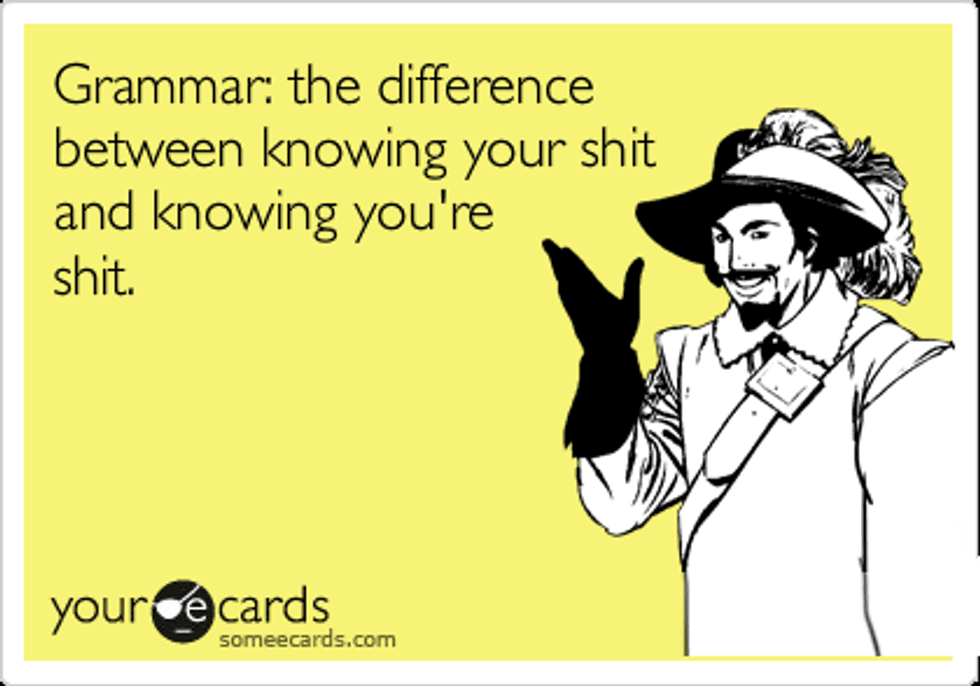
If you're going to take anything away from this article, please let it be this. Your is possessive. You're is a contraction of "you are." Tip: Can you replace YOU'RE with YOU ARE? Can you replace YOUR with MY? If the sentence sounds wrong then you're using the wrong word.
2. Fewer and Less.
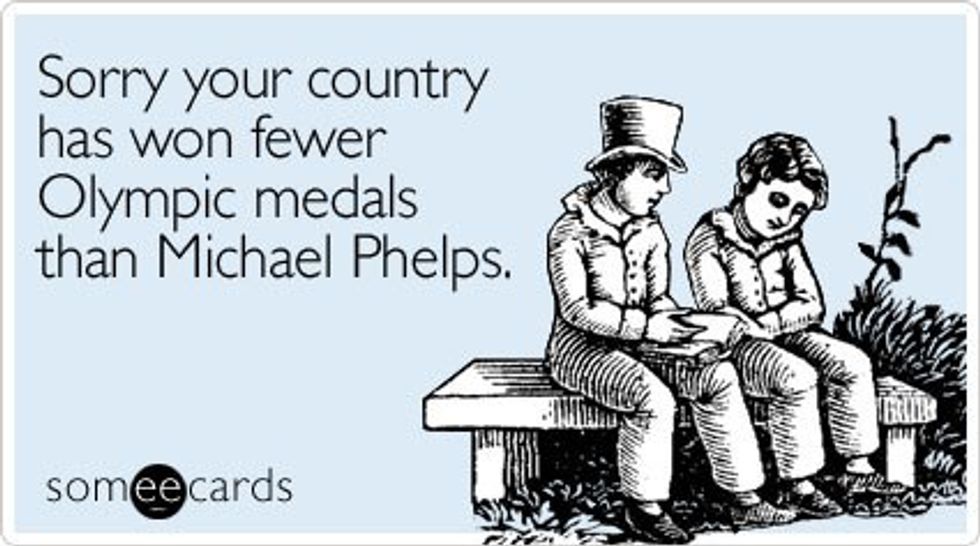
Fewer is used for individual items you can count. Less is used for bulk or quantity.
3. They're, Their and There.
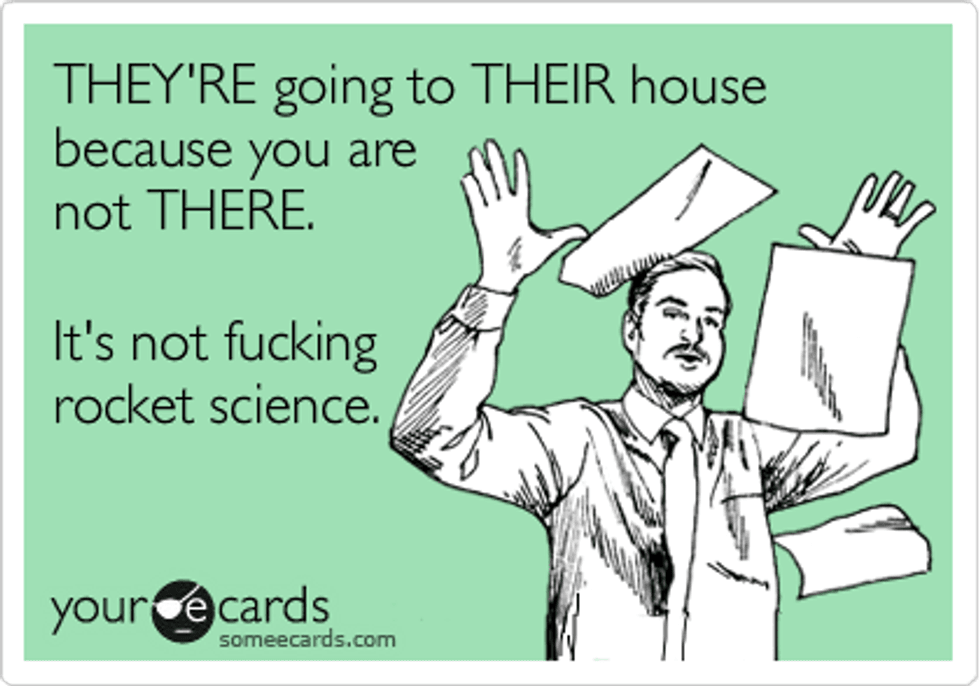
They're is a contraction of "they are." Their means belonging to others. There specifies location.
4. Then and Than.
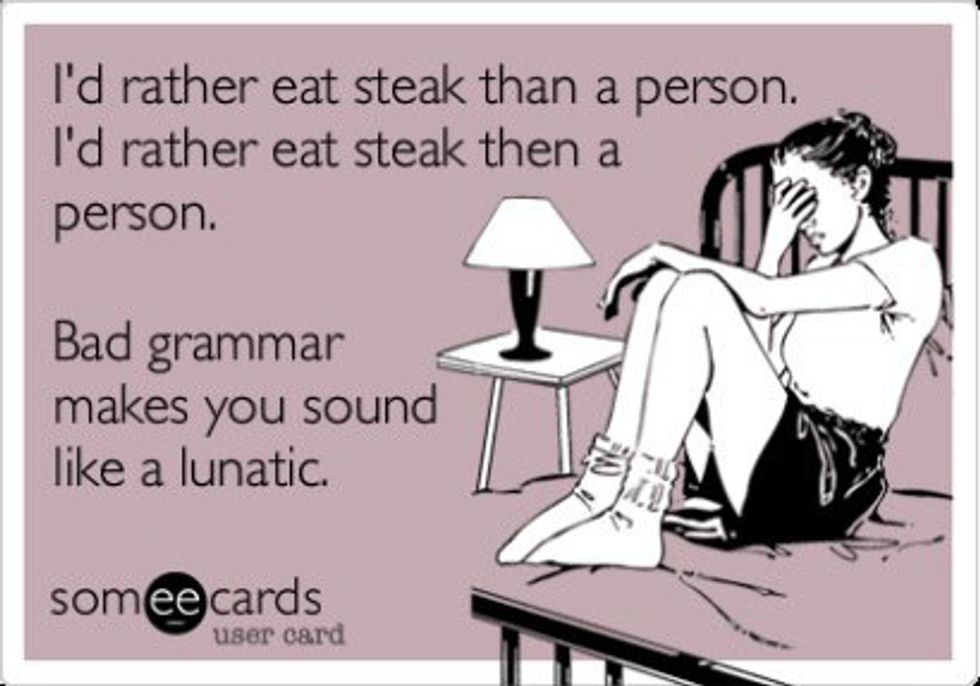
Then is used for time. Than is used for comparisons.
5. Too and To.

Everyone knows two means quantity, but too many people mix up too and to. Too means also, in addition too, or to an extensive extent. To is used to express motion or direction toward a person, place, time or thing.
6. Irregardless.
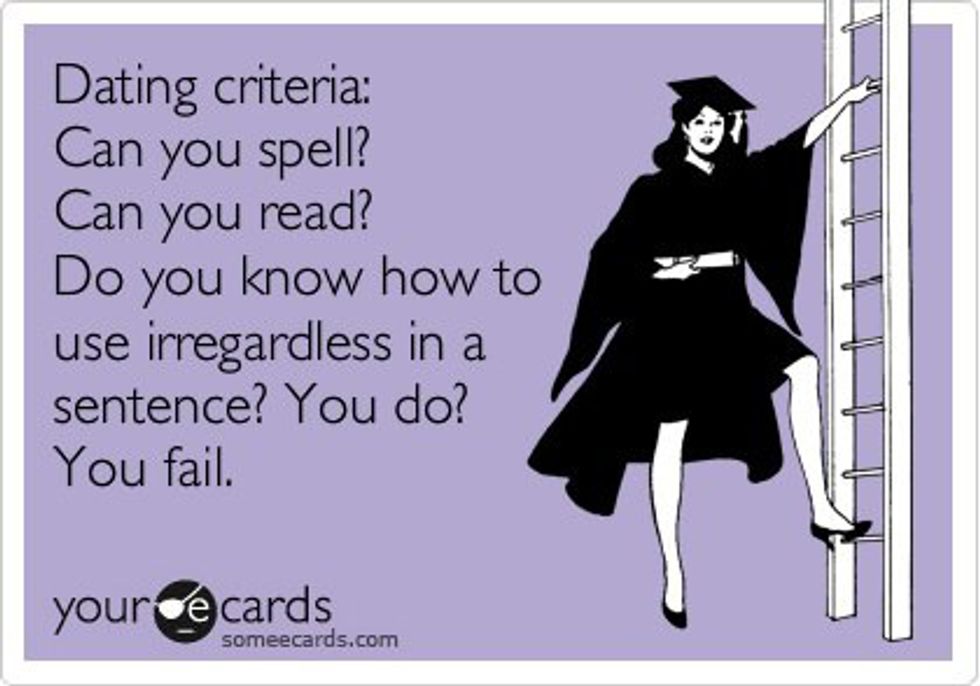
Irregardless is a double negative. Regardless is correct.
7. Affect and Effect.
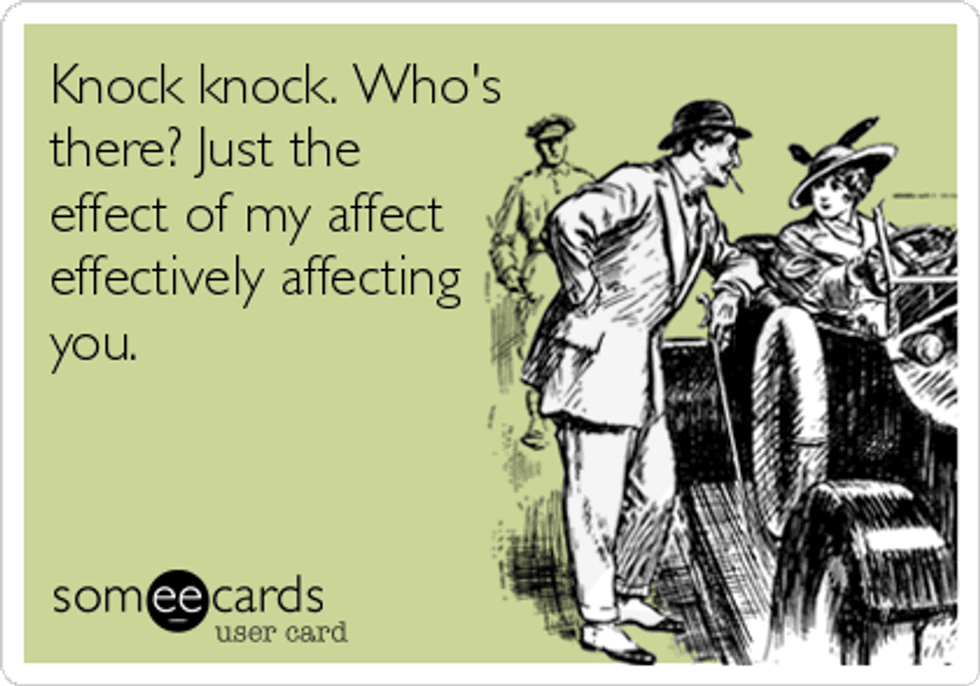
Affect, as a verb, means to influence. Affect, as a noun, is best avoided. It is occasionally used in psychology to describe emotion, but it is not common in everyday language. Effect, as a verb, means to cause. Effect, as a noun, means result.
8. A lot.
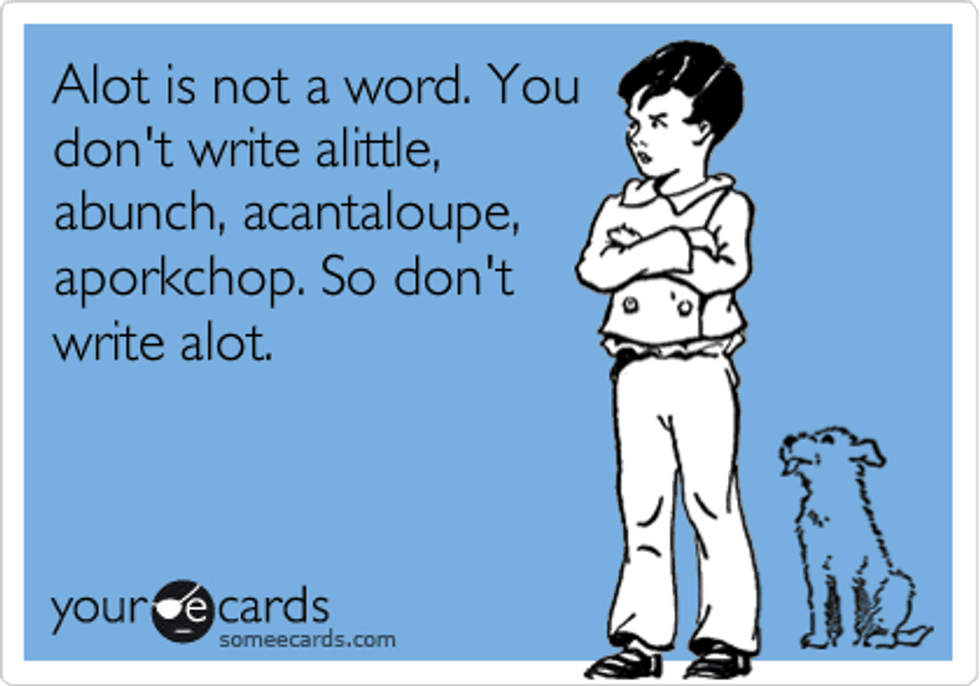
You need to add a space.
9. All Right.
Alright is actually not a word. All right is the correct spelling. However, the english language is constantly changing so I would not be surprised if alright made its way into the dictionary given it is so commonly used.
10. Who and Whom.
Who is the pronoun used for references to humans and animals with a name. Grammatically it is the subject of a sentence. Whom is used when someone is the object of a verb or preposition.
11. Dangling Modifiers

Avoid modifiers that do not refer clearly and logically to some word in the sentence. The AP Stylebook uses the example, Dangling: "Taking our seats, the game started." Correct: "Taking our seats, we watched the opening of the game."
12. Commas.
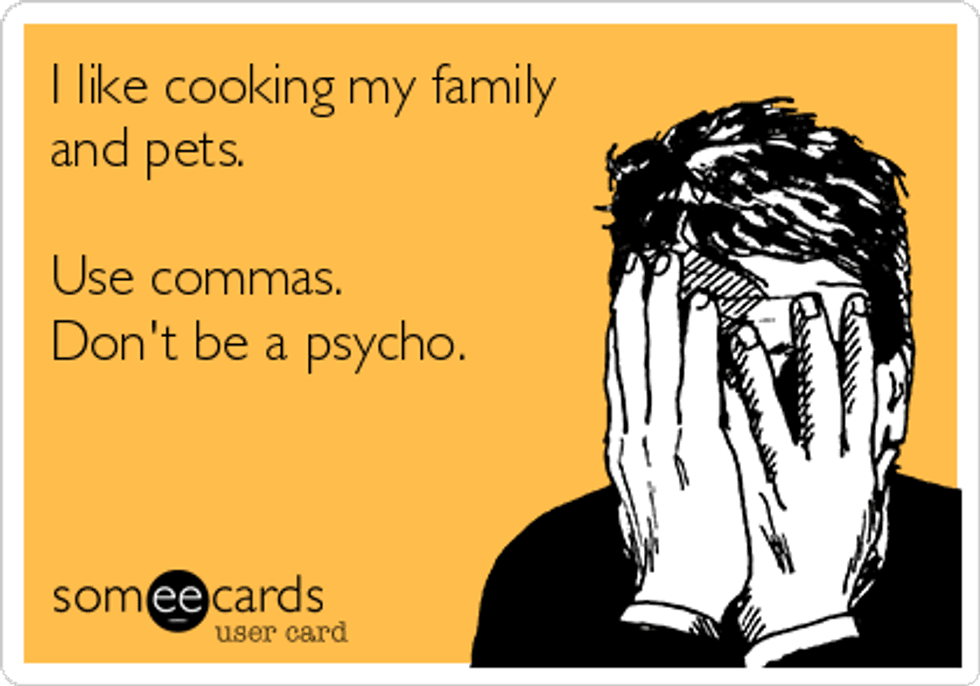
If there is any ambiguity that a comma would eliminate then add one! They are used for many different reasons, so refer to the punctuation section of a dictionary for more detailed help.
Now you're prepared to take on the grammar police!