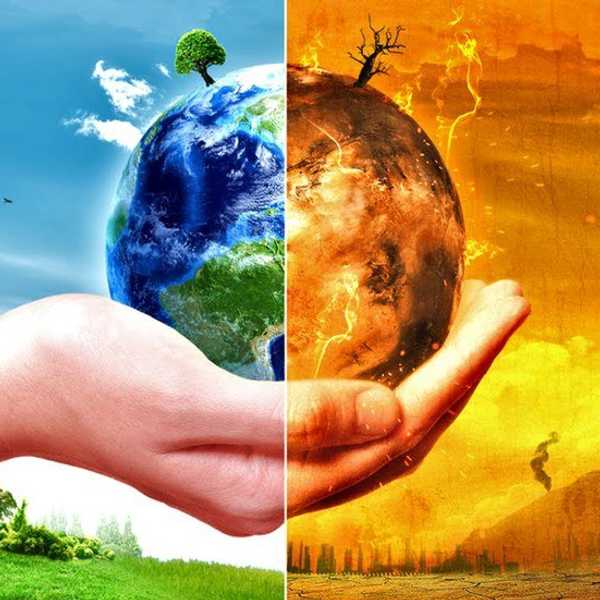

The debate has raged on for decades now - is the world really experiencing climate change due to human activity? Time and time again, scientific evidence has suggested that the answer is a solid ‘yes’, but skeptics and counter-arguments remain. The Earth experiences regular intervals of significant climate change, and this one is no different, they claim, among other arguments. The collapse of the Arctic is a strong counterpoint--glaciers don’t fall apart like they have been, to our knowledge. The arguments go on and on, but there’s something that both sides seem to be missing out on:
It doesn’t matter.
If anything, the debate itself is a smokescreen and a distraction which has only benefitted the very industries accused of promoting climate change skepticism--the fossil fuel industry. Whether these corporations have a hand in this, I can’t say, but I can say that it still doesn’t matter. The entire discourse surrounding global warming is a moot point: while the effects of climate change are apocalyptic, so too are the effects of no climate change. The fundamental problem doesn’t rely on whether or not humans are affecting the global climate system, it’s the fact that our entire civilization as we know it is built on sand.
Coal and crude oil have been used by human civilizations since antiquity, in Rome, Greece, and China. But it wasn’t until the late 1700s and the beginning the Industrial Revolution, when the power of coal-made steam, and then the early 1900s when oil’s chemical energy became the great source of electricity, that we began to truly rely on them. To more fully appreciate this reliance, consider for a moment that you are reading this article right now thanks to electricity and products produced by oil and coal. The clothing you wear is made from oil products; your beverage is likely contained in an oil-based plastic bottle; your car was made using coal and is powered by oil, and the roads it runs on were made thanks to oil. One cannot set foot on a piece of land touched by human civilization without seeing the impact of these resources.
Resources which are running out fast.
Whether the world weather system is growing unstable or not, it is undeniable that the Earth’s supply of oil and coal will be depleted within the lifetime of the modern generation. With a skyrocketing population and a world that is constantly expanding industrially, this rate is likely to only accelerate without change in our fundamental economic habits. Once fossil fuels reach a critically low level, there’s no telling what will happen if the world economy has removed itself from these finite resources. What can be expected, though, is a catastrophic breakdown of civilization as we know it--we’re just too reliant on these resources now for anything else to happen.
So whether it’s to preserve the precariously delicate harmony of Earth’s climate, or to maintain a stable, sustainable society, we as a civilization have to find alternative, superior resources to base our industries and economies on. Many alternatives are already known--solar, nuclear, hydrokinetic, wind, and several other somewhat more obscure energy sources and oil substitutes. But for these to work and supplant our finite resource pool, we have to stand behind them and stop arguing about whether a bitter cold winter means that the world’s not getting hotter.
As things stand, it’s a choice of “maybe” ending the world with climate change, or definitely ending the world with social and economic collapse. Those are our choices, but only if we choose not to change--and the choice is there, perfectly ready to be implemented whenever we’re ready to just commit to it.