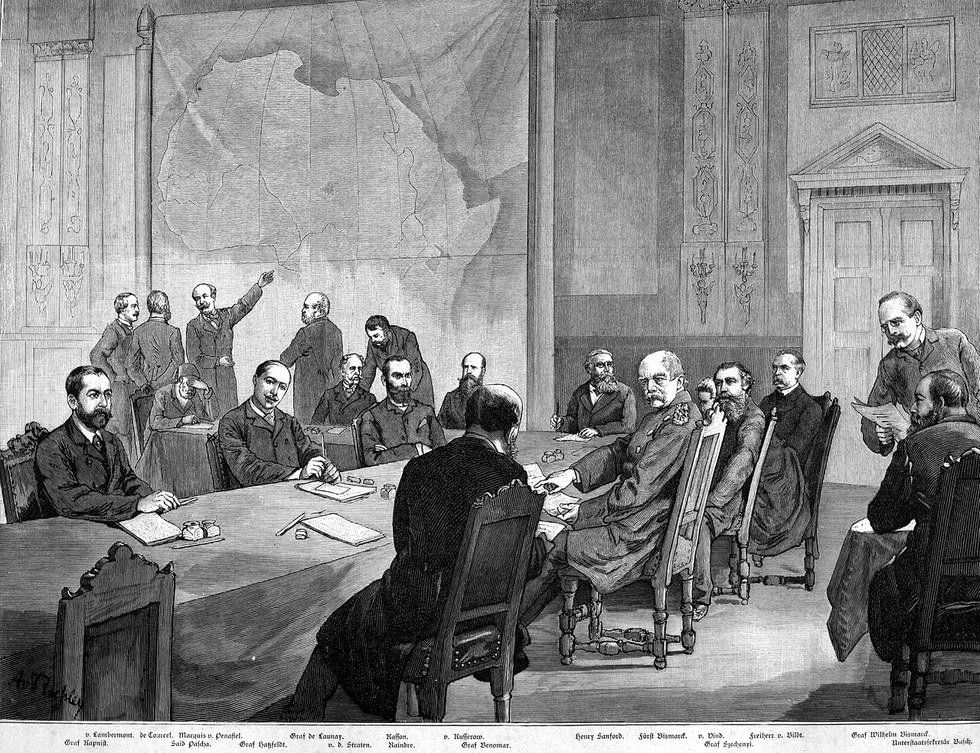
The world is at a nexus, where geopolitical concerns reign supreme. The global lines dividing peoples and cultures drawn by Europeans on tables in cabins along the Rhine, are finally realigning.
Fools are those who thought this wave of multi-demographic conglomerations of different entities called globalization would go on unfettered, imposed on through sly cunning and force. (See British Divide & Conquer Blueprint) These modern upheavals, genocidal massacres, and revolutions are symptoms of what I call the global reconfiguration, the natural successor to the age of post-colonialism.
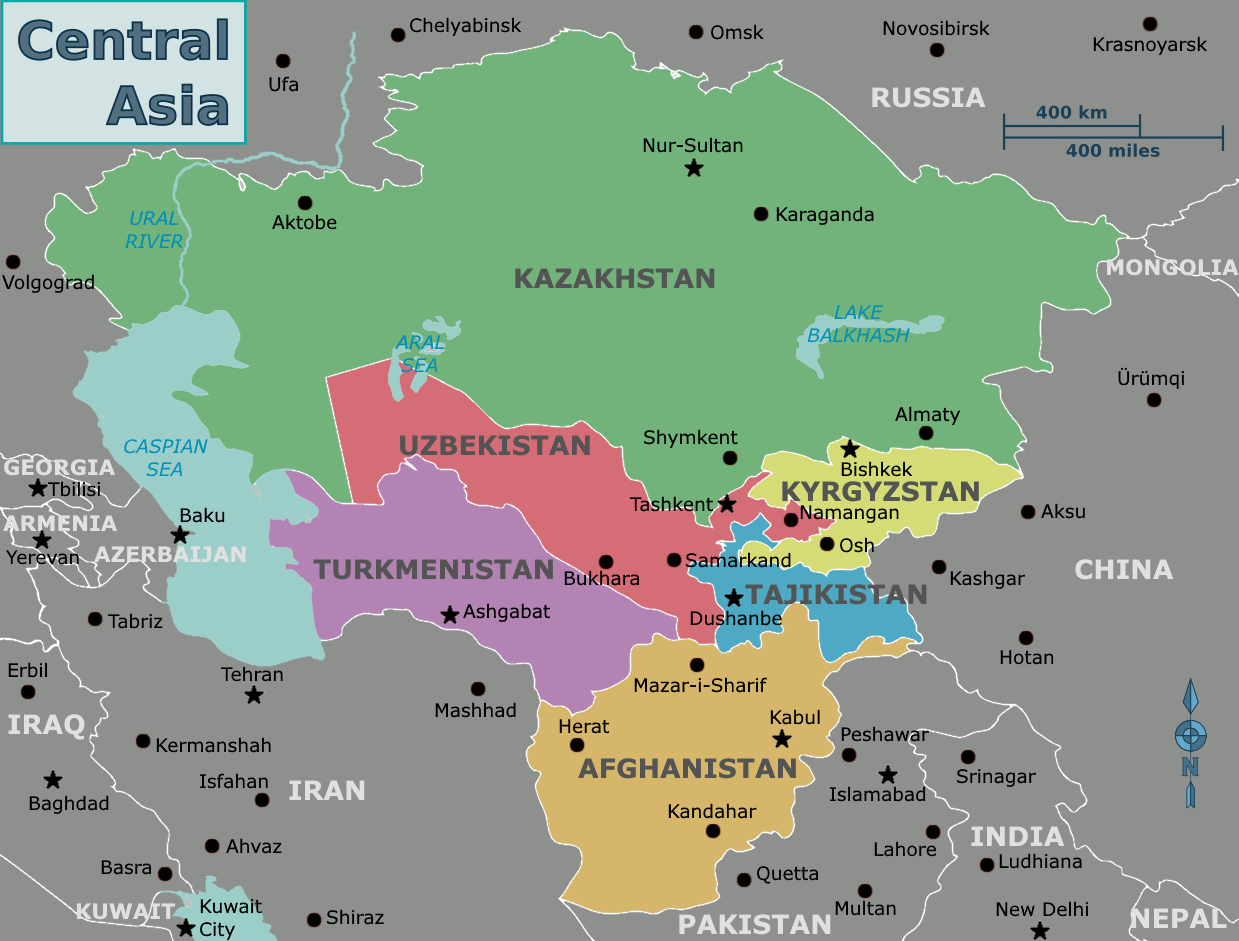
It is actually an extension of it, a long process where the global system rights itself as it has done throughout history in a cyclical pattern. (See The Rise & Fall Of Empires) But it's not just the artificial delineations drawn up by the West with capital and economic hegemony in mind, but also the artificial lines dividing up the former Communist world-- based just the same-- on a foreign ideology. With the ascendancy of the Western social order, it would be natural for the realignment to occur first in the peripheries of Europe. The collapse of the Soviet Union was actually the first breath of the novus ordo seclorum, demonstrating that distinct cultures and populations cannot coexist solely based on ideology, even if based on the common good or purpose. The only logical step after coming to that conclusion is that only overwhelming force can compel a continuing unity in that national polity, and a successive backlash against that show of force. The Central Asian nations (The "Stans') all retained their pre-Soviet Islamic character more or less.
A few years later in the 90's, the convolutions in the former Yugoslavia, in the Sudan and in the country of Rwanda provided more strength to the argument that antagonistic populations could not be compelled into the nation-state.

More recently, developments around the globe have greatly accelerated the aforementioned process. During the last eight years, the majority of the international community have welcomed two new member states, Kosovo and South Sudan.
(An interesting note, both of the mentioned new nations have seceded from nations that the West has labeled "pariah regimes". During that same period, Abhkazia and South Ossetia have claimed independence from Georgia following the Russian invasion and has only been recognized by Russia, Venezuela, Nicaragua, and a handful of others.)

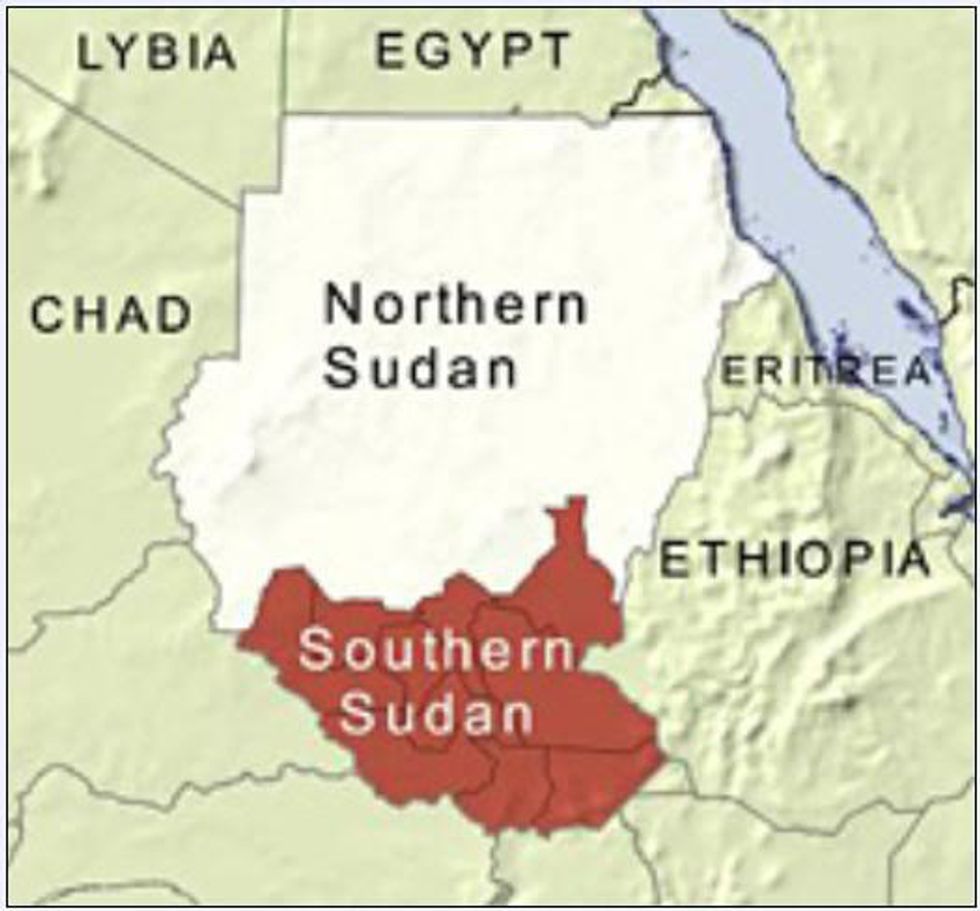
Sudan being a British amalgamation of different religions, peoples, and cultures, fought a long drawn out civil war with the current result being the formal separation of the "sub-Saharan" South and the predominantly Islamic North, something that cannot be reversed.
Across the other side of the Sahara, the Tuareg people have taken advantage of the Arab Spring and fought for their regional claims of Mali, on their path to a greater Tuareg region across the Sahara encompassing parts of Algeria, Libya, Mali, and Niger. There fight has been hijacked by the emboldened Salafists, but nonetheless, I believe that that trend is also irreversible, and the birth of Azawad will be set in the history books.
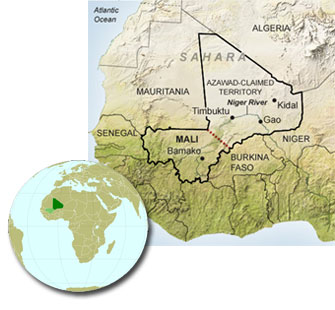
The African Union, the West African states, and the E.U. with France at the head will try to turn it back... and will stand on the wrong side of history for that decision and lack of foresight.
.jpg)
To refer back to the Arab Spring, I believe that these uprisings were one of the biggest game-changers to the global status quo. Libya has splintered along multiple fault lines. Most non-Arabs,especially of the darker variety were forced under threat of violence to abandon their homes. Tribes deemed as favored under the Gadhafi government were prime targets for beatings, forced migrations, public humiliation, and even death. The whole town of Tawergha, populated by dark-skinned Libyans, has been virtually emptied of its inhabitants. In their place, militias have seized the homes for their own Arab members. The country has also split along political fault lines, with a Western-backed administration based in the east, and a Islamist-aligned government seated in Tripoli.

The militias that have fought the Gadhafi regime in the past, now form new alliances against each other for political control. In the backdrop of all this, ISIS has formed an enclave in the center of the country taking over Sirte, the hometown of the late strongman.

The cancerous so-called caliphate has also taken control of parts of Benghazi. While recent counter operations against ISIS has pushed them back in areas, peace will still be scarce as different players jockey for better positioning. These alliances will continue to be formed and broken by necessity, but they will no longer be imposed upon through unorthodox calls for revolutionary or nationalistic pride.
The small Gulf nation of Bahrain was not immune to the effects of the uprisings taking place around the region.
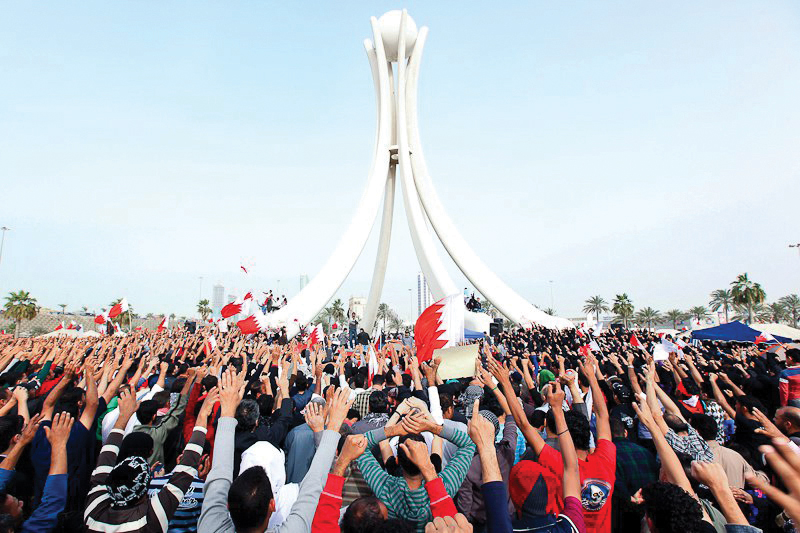
It has a majority Shi'a population due to it belonging to the Persian empire in the past, but it is ruled by a Saudi-backed Sunni monarchy. This uneasy arrangement has led to popular discontent and discrimination. It has also helped add another layer of distrust between Iran and the Arab Gulf nations, with Saudi claims of Iranian interference on the island. I believe Bahrain would eventually fall back into the Persian periphery were it not for the repressive actions taken by the Khalifahs and their Saudi kin.
Iraq's decentralization along sectarian grounds was actually pushed along significantly by the U.S. invasion, whether intentional or not. Strategically speaking, if the preeminent Shi'a power of Iran is the enemy, it doesn't make sense to topple the Sunni dictator of the neighboring country. Furthermore, it makes little sense when that neighboring country has a majority Shi'ite population with historic connections to Persia. But that was what was done, leading to the inevitable, a mostly Shi'ite Iraqi government progressively more aligned with Iran. Another unintended consequence of the U.S. war was the forcing together of the region's Sunnis and the eventual collapse of the Iraq/Syria border. The deserts of the Anbar and northwest provinces of Iraq that connected it with Syria served as conduits for insurgent activity, and helped groups like ISIS regroup and launch their current campaign. The campaign that ISIS has launched has just been an exaggerated, extremist vision of a sectarian call for power in the region bordering Iran. The U.S. war has also led to an autonomous region of North Iraq basically independent of the Baghdad government, Kurdistan (the land of the Kurds).They have a special relationship with the U.S., and have largely escaped the financial mismanagement and sectarian violence that have plagued the rest of Iraq even prior to the ISIS incursions. This Kurdish autonomy has exacerbated however with the war against the radical group, with cities changing hands and a central government no longer able to control its territory or protect its citizens. In this atmosphere,Iraqi Kurds have claimed the city of Kirkuk and claimed de facto independence from Baghdad independence from Baghdad.
But as with all pan-ethnic movements, a piece of a certain nation-state is not enough because what is demanded is the liberation and/or autonomy of the whole of the historically perceived lands of those peoples. Saddam was demonized for his gassing of the Kurds in the early 90's, but Turkey, a NATO member, has been fighting the same struggle against their Kurdish separatists for more than 30 years, with allegations of human rights abuses made against them as well. With the civil war in full swing, the Syrian Kurds have taken advantage and have established their leg of "Greater Kurdistan" with the tacit acquiescence of Bashar al-Assad, who undeniably has bigger problems on his hand. (It is also meant to apply pressure to Turkey, by increasing the power and political leverage of the Kurds, forcing the Turks to amplify their war and easing some of the pressure off the Assad regime) What can be said is that once the Kurds from Northern Iraq and Syria join forces politically, which is already under way, the momentum cannot be turned back save from an overwhelming repressive action taken by Turkey, NATO, and by extension, the E.U. and the United States. And we see what happens when powers try to stamp back the tides of change by coercion and force.