
As the hustle and bustle of the holiday season comes to a close and most of us no longer have to change a “5” into a “6” when we write down the year, we all look forward to one of the most wonderful times of the year: Girl Scout cookie season. Every year, Girl Scouts sell about 200 million boxes of their cookies to people all across the United States, making annual Girl Scout cookie sales remain one of the most successful fundraising traditions.
So when exactly did the tradition of selling these cookies become an icon of American culture? It all started in 1917, just five years after the creation of Girl Scouts by Juliette Gordon Law, when a Girl Scout troop in Oklahoma called the Mistletoe Troop sold homemade cookies in its high school cafeteria as a fundraiser.
Five years later, an article in The American Girl written by local director Florence E. Neil published a recipe for Girl Scout cookies. Based on the ingredients (butter, sugar, eggs, milk, vanilla, flour, and baking powder), Neil suggested troops sell these cookies for about 30 cents a dozen. Soon after, Girl Scouts from all over the country were going door to door to sell the cookies they made at home.
The 1930s was when Girl Scout Cookies really began to make their mark. In 1935, the Girl Scout Federation of Greater New York coined the name “Girl Scout Cookies.” Girl Scouts began to sell their cookies in gas and electric company windows. Soon after, the Girl Scouts of Greater Philadelphia became the first council to sell commercially baked cookies. The national Girl Scout organization took their cookie sales to the next level when they licensed the first commercial bakers that would bake cookies for Girl Scouts all over the country to sell. Following World War II, 29 bakers were licensed to bake Girl Scout cookies in three varieties: Sandwich, Shortbread, and Thin Mints.
Cookies sales had a significant increase in the 1960s as Baby Boomers expanded Girl Scout membership. Bakers began wrapping their boxes in aluminum foil to preserve their freshness. The amount of bakers reduced to four to ensure that cookies were uniformed and affordable. All boxes featured pictures of Girl Scouts hiking, canoeing, and doing other Girl Scout activities. The tell tale Girl Scout logo was created in 1979, and varieties of Girl Scout cookies increased to seven. By the 2000s, there were only two bakers who baked 8 varieties of kosher cookies, including sugar free options.
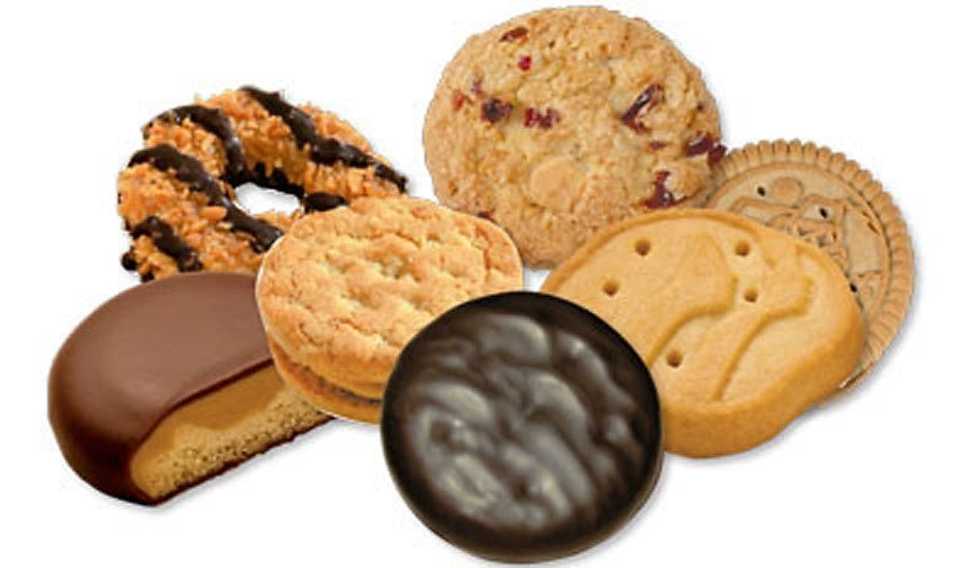
Almost a century after its creation, Girl Scout cookies continue to warm the hearts of people nationwide. Every winter people stock their pantries with Thin Mints, Samoas, and more, often finishing an entire box in a day. So next time you bite into a delectable Girl Scout cookie, remember to thank the Mistletoe Troop of Muskogee, Oklahoma for having a bake sale, Florence E. Neil for publishing the cookie recipe, and all the other people along the way for creating a tradition we all look forward to every January.