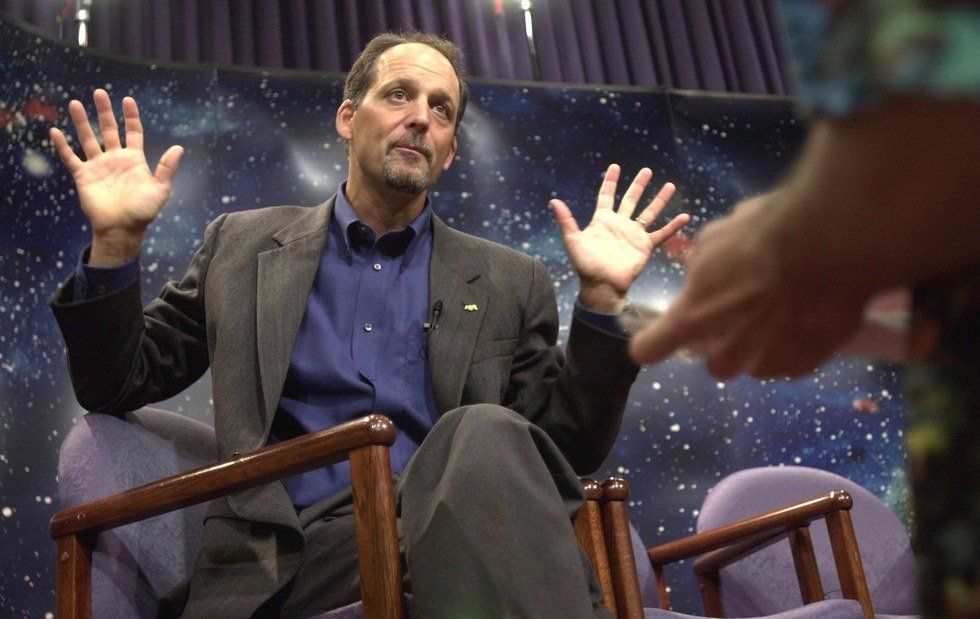
Tenured professor and astronomer Geoffrey Marcy was accused of sexual harassment of a student back in October. However, even after resigning from the University of California, Berkley, it was recently discovered that Marcy still receives benefits and a salary of $42,000 from the university.
According to Berkeley’s Academic Personnel Office, Marcy began to receive his last salary on Oct. 15, the day after he resigned, and it ended on Dec. 30, when his ties to the University were formally severed. He continued to have an office until the end of the month of December at the university.
In early October, Geoff Marcy, a potential Nobel laureate, was found to have violated campus sexual harassment policies between 2001 and 2010. Initially, Marcy was given a warning and agreed to give up his tenure protections, but this decision sparked a national outcry about sexual harassment in academia.
A group of graduate students in the Berkeley department issued a statement regarding the situation shortly after the investigation concluded, saying, "The university’s failure to impose meaningful consequences on Geoff Marcy — offering instead vague threats of future sanctions should the behavior continue — suggests that Berkeley’s administration values prestige and grant money over the well-being of the young scientists it is charged with training.”
He has also been accused by three women of sexual harassment at his previous university, San Francisco State University. The earliest allegation has been reported to have occurred in 1995, giving Marcy two decades worth of sexual assault complaints.
Two months after resigning from the University of California, Berkley, documents have been released as to how the professor objected to the accusations made against him. He referred to the allegations as either misunderstandings, mistakes, or outright lies.
Due to the allegations, science departments across the country have gathered to discuss the problem of sexual harassment in their fields, and several major conferences have set up panels on the issue. The American Astronomical Society is revising its ethics code to have its own mechanisms for investigations and sanctions relating to misconduct among its members.
But how could this have gone on for so long? How was Geoff Marcy not caught until now?
There isn't really a straight answer. Many say his prestige, his ability to bring in funding for the university, the employment protections he had as a tenured professor, colleagues looking the other way, and even the secretive nature of the sexual harassment investigations were all reasons for him to be able to get away with sexual harassment through the years. Was he lonely? Was his harassment a coping mechanism of the stress he had as a prominent professor?
We may never know exactly why Geoffrey Marcy made the decision to serially harass women for the past 20 years. We do, though, have the choice to not allow something like this to happen again. Through policy changes and social awareness, there is a way to not allow sexual harassment to enter a classroom. Sexual harassment does not need to be a part of the college experience, whether you are an undergraduate student, graduate student, or post-graduate student.