Dressing up is now more considered a chore than a luxury. It used to be that men and women would dress in more formal day attire before leaving the home. Men would don a suit and tie, while women a stylish dress and manicured hair. As the times have progressed, daily clothing styles have become more basic and casual. It appears as if the way to properly fit a suit and wear certain styles has become almost a lost art. I would like to take a moment today to assist the modern man on how his suit should fit, and what style would suit him best.
The Color
First, you must start with the basics. That is, what color suit you are going to wear. There is quite literally an incalculable number of styles and materials for a man to choose from when he is selecting his suit. However, we will simplify the choices down by color; there are typically five basic colors when selecting a suit, they would be the colors: charcoal, grey, navy, black, and occasionally brown. Black and charcoal are on the more versatile end of the spectrum, as they are the most neutral colors when selecting a suit. The darker the color, means the more seasons one could wear it in. For example, one would not wear a baby-blue linen suit in the middle of winter, typically the colder seasons call for more somber colors. However, your suit should be played off of your skin tone, people with darker skin should gravitate more towards a lighter shade of charcoal, and or grey, for the winter months while wear light brown or taupe in the spring and summer. In addition, to being perceived as more formal, darker colors are more slimming and flatter the body much more.
The Fit
After selecting the color that you like the best, you should select the fit. Suits and tuxedos are categorized by their fits. Different brands call their fits by specific names, but ultimately they are the same thing. For simplicities sake, the three most typical fits a gentleman will find are: the trim fit, the modern fit, and the classic fit. A trim fit is built for a slender person; girth of the suit is generally about three inches smaller than that of a classic fit. The shoulders from point to point are, on average, about a half an inch; as well as the armholes inside the coat being higher. This is an extremely form-fitting suit and is perfect for anyone with a very slender build.
The modern fit is a nice mold between a trim fit and a classic fit. The difference in girth from a modern fit to a classic fit is about two inches, and the differentiation between the shoulders from point to point is about a quarter of an inch. The arm holes are higher, but not as high as a trim fit; these suits work great for men with athletic builds who want to have a more slim-fitting suit without having to adjust their measurements for a trim fit.
Lastly, there is the classic fit. The classic fit is a more roomy suit fit that is very forgiving for larger gentlemen. These cuts were very popular in the 1900's, think people like Al Capone and John Dillinger, they would have worn a classic fit suit. With all nested suits, there is a six inch drop from the size of your coat to the waist of the trousers. Because the previous two fits evolved from the classic fit, there is no measurement differentiation, just your jacket size and waist size. With this suit being more loosely-fitting, there is more liberty one could take with alterations if need be. Your tailor or salesman will size you up in the store for the fit of your suit; this process will include a overarm and underarm measurement, as well as a waist and outseam measurement. Do not be distraught if your waist measurement for your trousers is not what you typically wear, suit pants are to be worn higher than jeans or chinos and are to fit snugly around your naval. This will help the tailor determine the ideal fit for you.
How To Wear Your Suit
I know what you are thinking. "There is a specific way to wear my suit?" In fact, yes there is. Suits have different jacket styles; there is the simple one-button jacket, the more traditional two-button, the ever so rare three-button, and then the double breasted jackets that come in four, six, and eight button formats. With every jacket, there is an unwritten rule that is known as jacket etiquette. Traditionally you would always button one less button than you have, of course the exception to this rule was the one-button jacket as it is to stay buttoned the whole time when you are not seated. If a gentleman is wearing a two-button jacket, he would button the top button and leave the bottom one undone. That way he can quickly unfasten the top button when he is to sit down. If he is to wear a three button jacket, there two ways one can wear a three-button jacket; the first one is to button the top two buttons leaving the bottom button undone. The second way is to button only the middle button, this makes the jacket slightly less formal thus making it a more contemporary style while the three-button is, for the most part, out of style.
Now that we have covered the single breasted jackets, we shall discuss the double breasted jacket. This jacket is much more formal, more popular in Europe especially, but also quite popular along the coasts of the United States in places like Los Angeles and New York. If a gentleman is to wear a four-button double breasted jacket he would button the top right button and leave the bottom right one unbuttoned. With a six-button double breasted jacket, again the top right button would be buttoned while the bottom right would be left unbuttoned. The practice continues on with the eight-button as well. What should be noted though is that the double breasted suit provides faux buttons that are purely for decoration. The buttons that actually function will be located on the midsection of the jacket, with the buttons laying on your stomach. The buttons on the left side or at the base of the shoulder provide no function aside from pleasing aesthetics.
Selecting the Proper Shirt and Tie
So you have selected your suit, it has been tailored to your body, now you just need to select your dress shirt and the proper tie. Shirts come in all different styles, colors, designs, and fits, but you want one that fits your body the best. If you are a gentleman with either a muscular or thin build you will want a slim fit shirt, and if you are larger you would be more comfortable in a regular fit dress shirt. After you have an idea for your fit selected, you should have the salesman measure your neck and arm length, once he has taken these measurements they will help you select your shirt. Shirts come in a variety of colors, so it is best to complement your shirt to your suit. A neutral white will go with any suit regardless of color or material, but you should avoid matching the shirt to the color of the suit; the only exception to this is black on black for suit, shirt, and tie. For example: if a gentleman was to wear a navy suit, he should look at shirts in yellow, pink, silver, and light blue.
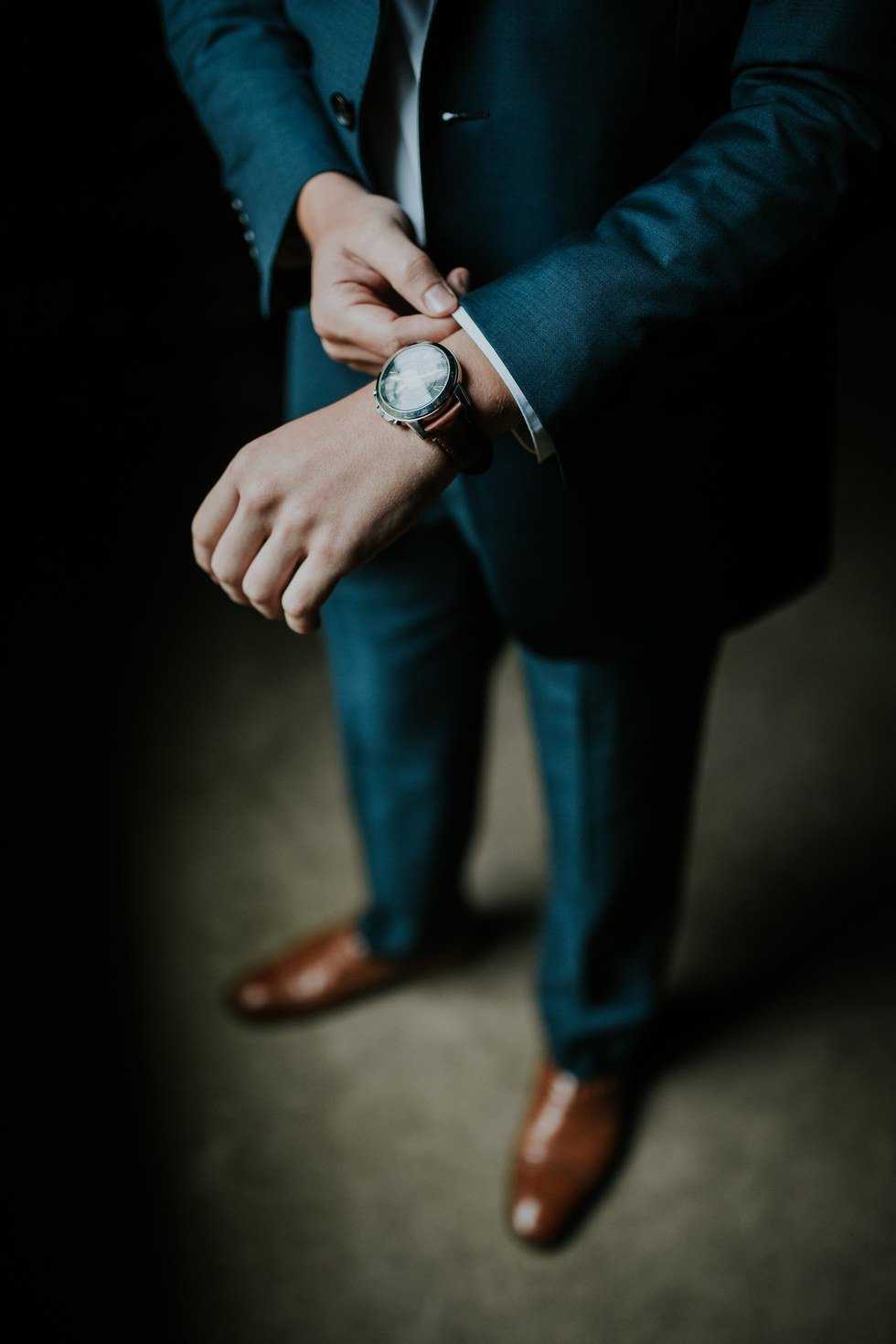
Shirt styles vary greatly as well, your typical Oxford style dress shirt with barrel cuffs is the quintessential dress shirt; the style is streamlined, timeless and simple. There is the more formal French cuff shirt, which has larger cuffs around the wrists that can only be closed via the usage of cufflinks. Tired of your collar bouncing about? You can invest in a button down dress shirt, this phrase is commonly used interchangeably to describe a dress shirt however they are not the same thing. For you see, a button down shirt refers to the collar of the shirt, the tips have button holes that fasten the collar to the shirt. These shirts were the traditional "polo shirts" as they were designed to keep the collars of the jockey down when he was at full gallop. When the collar is buttoned down with a necktie, it gives a very formal appearance and is extremely versatile for any wearer
Neckwear is generally a matter of personal preference. However, you want to ensure that your tie is not clashing with the pattern of your suit. If you were to wear a pinstripe suit, you would want a solid tie, or a tie with stripes going the same way. Always remember though that the tie has to complement bot your suit and your dress shirt, a good rule of thumb to live by is to match the tie to your dress shirt for the primary color, then the tertiary colors or patterns can bring more attention to your outfit.
Concluding Thoughts
It is my hope that this article gives a better insight about the complexity of men's attire. While it is not common practice for men to wear suits everyday, I do hope that this article allows someone to have a bit more understanding on how formal wear is supposed to fit them, that way when they must don a suit and tie they look professionally well-kempt rather than giving off an abysmal impression.