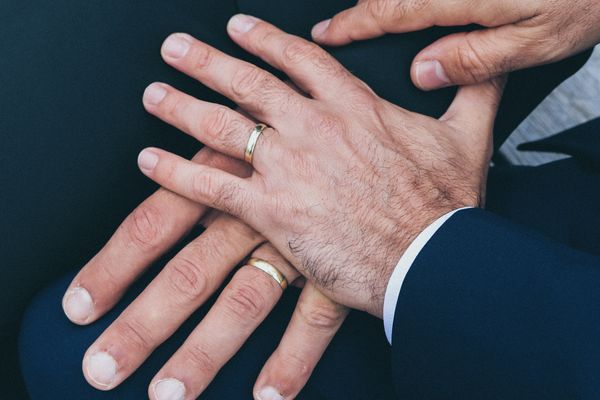
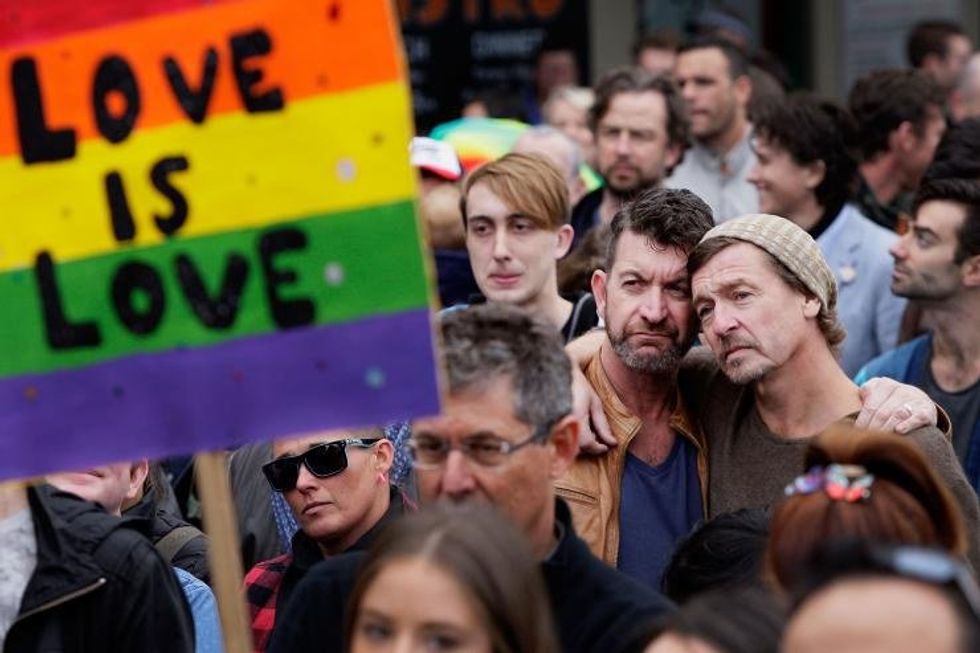

For over 40 years, the feud over gay marriage raged. Then, on July 26, 2015, the feud ended in what many considered a victory: the U.S. Supreme Court legalized gay marriage nationally. It was ruled that marriage is a right protected by the Constitution in all 50 states, even though same-sex marriage had been banned in 13 states. As a citizen of one of those 13 states, Tennessee, the allowance of gay marriage received mixed reviews. Some felt this was a sign of America’s damnation while others rejoiced in America’s progression.
To get a better perspective on the effects of gay marriage legalization, I went to three different schools in Nashville, Tennessee and asked students how it affected them, how it affects them, and how they think it will affect them. One thing stood out: whether people agreed or disagreed with the movement, everyone I spoke to said anger and hate are never solutions. Some people were more passionate about the issue, like Chloe (Belmont University) and Poulumi (Vanderbilt University) who both felt very strongly about equality of marriage.
“I was so excited [when gay marriage was legalized],” recalled Chloe. “Equal rights are for everyone. Why didn’t it happen sooner?” Chloe went on to explain that she had a lot of friends who didn’t identify with heterosexual normality and she couldn’t be happier to see them achieve this right. Her joy can be summed in her exclamation, “Get married, have children, do what you want!”
Chloe was not the only one to have such an open-minded point of view, though. Nick (Vanderbilt University) remembered his excitement as well. He talked about the pride fest he witnessed in St. Louis the evening gay marriage was legalized.
“I’m straight, but I have a lot of gay friends. We’re all young, so no one’s looking to get married yet, but it’s nice to know that everyone can. The legal mountain has been crossed”.
Nick also talked about how it shouldn’t have been hard to say all people - no matter sexual orientation - have the right to marry. That’s why there’s separation of church and state. Corey (Lipscomb University) agreed that gay marriage is a Constitutional right as well, despite disagreeing with it morally. As a Christian, Corey admitted that he didn’t agree with homosexuality. When it became legal, Corey was faced with what he referred to as “Southern disgust”.
“How do I love something I was taught to hate?" he questioned. "I had to come to terms with hating the sin, and not the person. It’s easier to do that now that [gay marriage] is in the open”. Since he had said he didn’t support gay marriage morally, I asked how he felt about the potential increase of income tax, to which he responded, “Give to Caesar what is Caesar’s”. Daniel (Lipscomb University) disagreed with the separation of church and state justification, though.
“Law in and of itself is essentially a religion. It’s a governing entity regulating morality. What we do in a democracy is we take the morality of every individual and attempt to come up with a common rule to ensure the happiness of the whole”. He went on to say that he would not have voted for the legalization of gay marriage because it goes against his beliefs as a Christian, but he also wasn’t going to respond negatively to it. He did mention that it concerned him that his children would ultimately grow up in a culture where it was okay to be something he believed to be morally wrong.
Daniel wasn’t the only one thinking of how this would affect our future. While Daniel expressed concern, Paulumi, Chloe, and Nick all felt that the legalization of gay marriage was a fantastic thing.
“I strongly believe that in our generation, gay marriage legalization has set the precedent for eliminating discrimination of gender, race, sexual orientation, and religious affiliation,” Poulumi declared. Nick felt similar, saying that it has been frustrating growing up under the government of the previous generation, who he believes made several bad decisions.
Similarly, Chloe explained, “The government can only tell us so much of what to do. We won’t take their crap. Soon it’ll be our turn”. She was referring to equal rights in this statement, but many of the people I spoke to mentioned that they don’t agree with the government and feel they never get anything done. But, many believe that since our generation is connected, that will change.
Nick stated, “We’re the most connected generation in history. So, I think we’ll see a willingness to work together”. Poulumi also claimed that the legalization of gay marriage will push us towards judging people on quantitative metrics (performance abilities, academics) and the intrinsic value of a person (kindness, ability to treat others with love and respect) instead of things he/she can't control.
Overall, most people I spoke to were excited about the legalization of gay marriage and the equality it could lead to. Everyone was passionate about what they believed, one way or another, and believed that, above all else, our generation will be free. Free to be whom they wanted, where they wanted, and how they wanted. My generation loves a lot, and it bleeds into our life. We accept others for who they choose to be instead of what life chose for them, and we fight for what we believe to be right. No one can judge us, or tell us we can’t be who we want to be. Because the truth is: we can do anything - all of us. Some say we are the lazy generation or the push-over generation...but they're wrong. We're the next greatest generation, and no one can take that from us. For many, July 26 was proof of that.