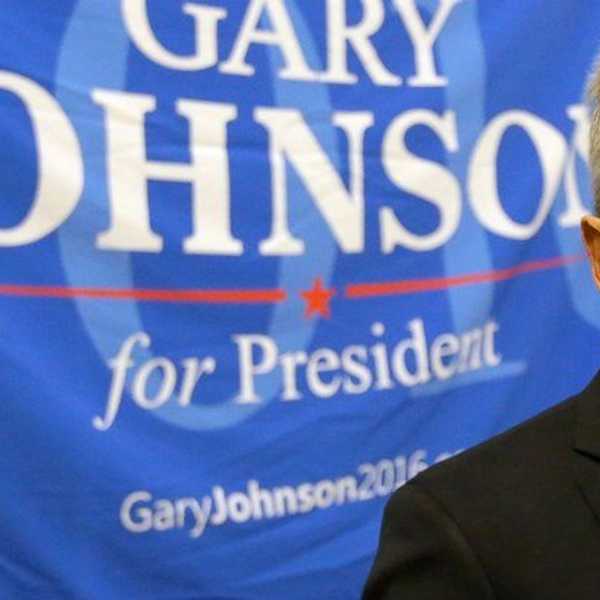
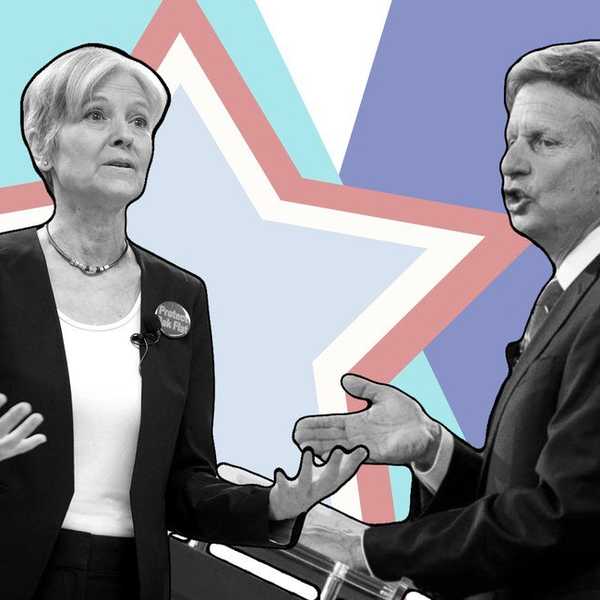
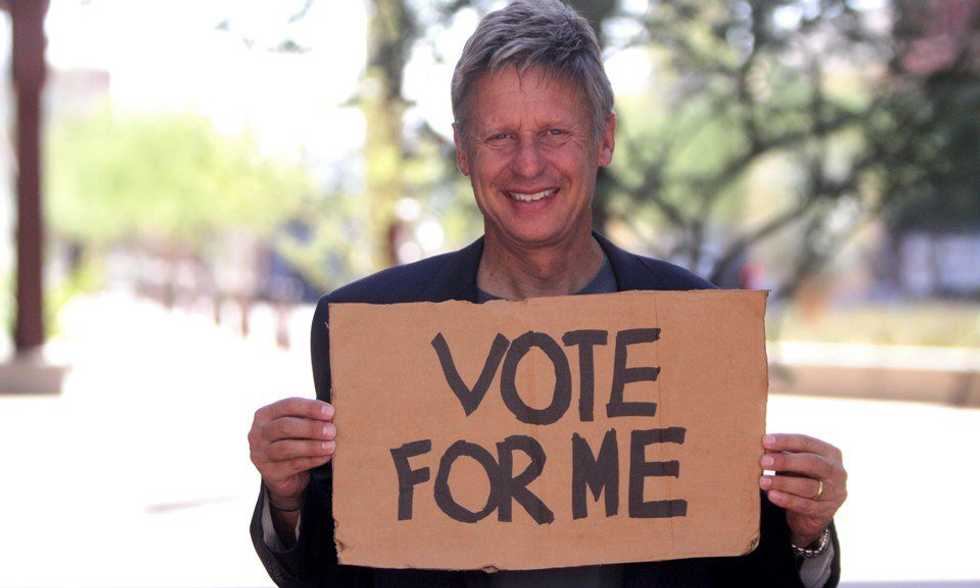
A two-party incumbency dominates the American presidency. Democrats and Republicans win overwhelming victories in Presidential elections, whereas third-party candidates achieve only marginal and infrequent success in their bids for the Office. This week, Gary Johnson, a Libertarian, was chosen to be the Presidential nominee for his party. There seems to be much hope among Libertarians and among cynical main party voters, hope which rests upon Mr. Johnson’s shoulders. Wishing to capitalize on the widespread dislike for the presumptive nominees of both the Democratic and Republican parties, Johnson will aim to lure discontented main party voters to the polls this November, and make waves as the first third-party candidate to win the Office of the President in the history of the modern American Presidency. Valiant as they may be, his efforts are doubtful to result in a win this November.
American voters increasingly are drawn away from the two party matrix, moving towards non-major party affiliated registration instead. Although disillusionment with establishment politics, ideological variance, and political cynicism are factors that contribute to third-party success, and are all apparent in this election cycle, it is highly doubtful that Gary Johnson will have the support needed to win the presidency. Even when candidates have robust support from the electorate, they are scantly able to capitalize on that support in the form of electoral votes due to the political system of the United States, which acts as the biggest inhibitor of third-party success.
Innovations of the political system like the first-past-the-post (winner-take-all) system, media exclusions, and the negative overall climate towards third-party candidacies work in conjunction to overshadow popular support for third-party candidates and ensure the continuity of the incumbent two-party political system. Johnson has a steep hill to climb.
Posing a clear disadvantage to attempts by third-party candidates to win the presidency, the system by which votes are counted favors the status quo and sets the stage for the failure of election of minor party candidates. As it stands, the electoral system makes it all but impossible for a third-party to gain an electoral majority needed for a winning Whitehouse bid. Winner-take-all ignores completely the popular support for candidates and instead rewards major party candidates that win by razor-thin margins. The system favors the major two parties because, in awarding electoral votes based on majority rule, the portion of voters who support a third-party are disenfranchised as the weight of their vote is meaningless due to geographical inconvenience. Though Libertarians are one of the largest third-parties in the country, there is not a significant conglomerate of Libertarian voters in any one state—let alone in the many states needed to gain an electoral majority. Johnson, even if siphoning voters from one of the major parties, will have a tough time gaining anywhere near the 270 electoral votes needed to win.
Johnson additionally would need to combat his lack of visibility to the electorate if hoping to have a fighting chance. Third-party candidates, rarely the subject of media attention, have an even more difficult time gaining visibility due to restrictions on debate participation. Debate participation, contingent upon surpassing the 15% rule, wherein candidates must be polling at at least 15% in opinion polls, knocks most third-party candidates out of the contest early on. Johnson is polling around 10% nationally and has yet to debate either of the Democratic candidates, nor Mr. Trump. Without debating, without making his name known beyond his own constituents, Libertarians and voters in New Mexico, Johnson stands no chance.
Gary Johnson will not be the next President of the United States. He will not win an electoral majority, and may not win even one state. This is not say that he will not have an impact, for that is the beauty of third-party candidacies: Johnson alone has the unique ability, in the two-party system, to stand as an outsider, free to proclaim views without regressions to center, to bring neglected topics into the discourse, to keep the major candidates in check. While he may stand as an attractive alternative to voters turned-off by Clinton or Trump, he remains only that—the alternative, not the main choice.