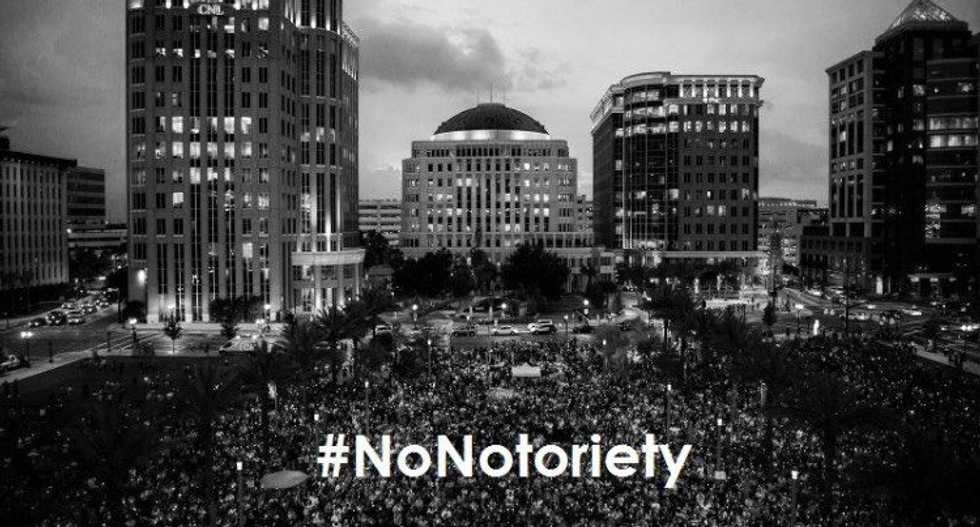
By now, it has become an all-too-familiar scene: person commits heinous crime, innocent people are killed and by the next morning the world knows the killer's name. This was the case on June 12 when a 29 year-old gunman murdered 49 people at a nightclub in Orlando: the deadliest mass shooting by a single gunman in American history. His name will not be mentioned; it deserves to be erased from history while we mourn and remember the legacies of the victims. But so many—too many— of us already know his name because his backstory is spreading through the media like wildfire. Journalists are doing this with good intentions, of course; journalism can be a powerful tool for change, and the media should not hesitate to provide the public with relevant information on tragedies. However in constantly naming these killers, displaying their pictures hour after hour and diving deep into their personal history, the media provides the notoriety and perverse fame that these killers crave. In October of 2015 the 26 year-old man who murdered nine and injured nine others at the Umpqua Community College in Oregon had posted comments on his blog expressing admiration for the perpetrator of a recent shooting in Virginia:
"A man who was known by no one, is now known by everyone. His face splashed across every screen, his name across the lips of every person on the planet, all in the course of one day. Seems the more people you kill, the more you're in the limelight."
Human nature is curious and journalists need stories to fulfill their jobs, but this should not come at the cost of being a tipping-point for aspiring murderers. Since the 20th century, forensic investigators have been finding examples of mass killers emulating their most infamous predecessors. Now, there is an increasing amount of evidence that the copycat problem is far more severe than previously understood. According to researchers at Arizona State University and Northeastern Illinois University, as many as 20 to 30 percent of attacks are set off by other attacks.
"Past studies have found that media reports of suicides and homicides appear to subsequently increase the incidence of similar events in the community, apparently due to the coverage planting the seeds of idealization in at-risk individuals to commit similar attacks," the researchers wrote.
When the media focuses its lens on the life story of the killer, this casts the situation as the wrath of an individual. But the situation is an embodiment of a slew of societal issues. Fixating too deeply on the elaborate biographies of these criminals can be a jolt of inspiration for the next shooter, is a gut punch to the loved ones of the victims and shifts our focus away from discussing the problems that fuel this far too common violence. Journalism is a powerful mechanism, and the media holds a responsibility to the public to report incidents sensitively. This sickening chain can be broken, and it is up to the media to start the remedy.