
As a college student, I balk at the price of my college tuition, and I go to a public school that is already “discounted.” Yet, my middle-class family still feels the financial sting every time tuition bills are due for both my brother and me. However, there is no alternative if I desire a higher education.
Or is there?
Earlier this year, Vermont
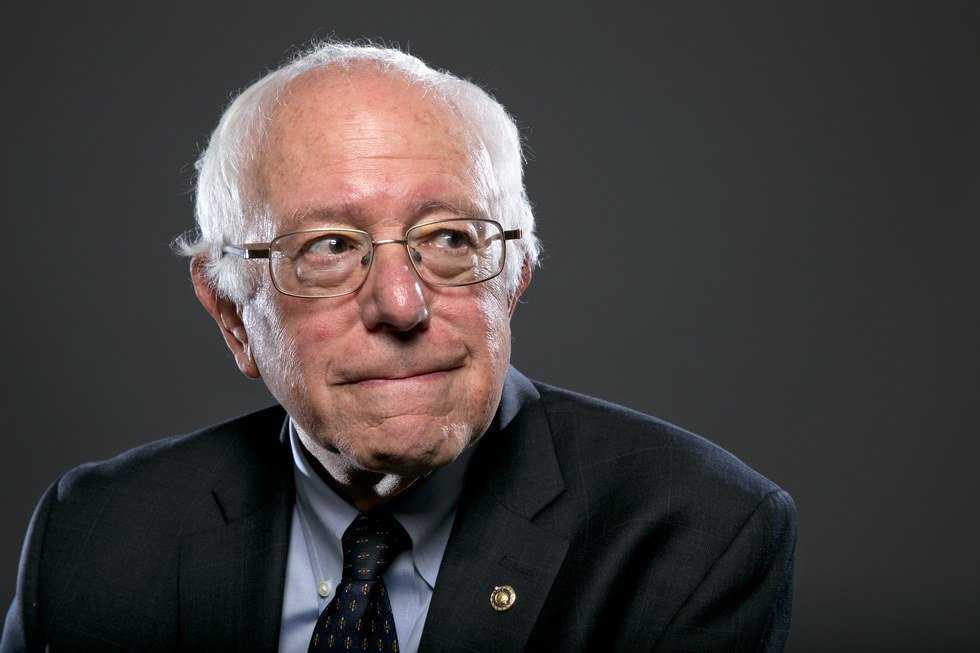
Senator Sanders has a point, that remaining competitive in the field of education is important for the United States’ global standing. After doing some research, I have decided that I would rather not have free tuition.
Why?
Because it isn’t actually free. According to Sanders' own summary of the bill, public university tuition costs $70 billion a year. The bill proposes that $47 billion will be covered by the federal government, and the rest will be handled by the states. That money has to come from somewhere. At the federal level, revenue will be generated by a Wall Street Round Robin Hood tax. And since I am not buying and trading stock, will not likely directly affect me (and probably not you, my peers). However, states have to pay for 33% of the cost, or about $23.1 billion. This revenue will likely come from us, the taxpayers, in the form of increased income, sales, and property taxes at the state level.
That is not the only financial burden. Under this plan, college tuition for the wealthy would be paid by the taxes of everyone in the state. This means that while some families are struggling to pay for textbooks, they are helping a “rich kid” attend the same college as their kid, free of charge. It is estimated that of the $70 billion, over half will be devoted to paying the tuition of students from families with above average income. However, every student will now have increased room and board costs, as states try to manage a new $23.1 billion budget item. In Sweden, where college tuition is free, the cost of room and board has become so bad that students are graduating with more debt than students from Britain (where tuition is not free).
I am not arguing that something shouldn’t be done, because it should. But if free college tuition isn’t the solution, then what is?
Many see the price tag as the problem of college, however that may not be true. Economist Sue Dynarski argues that research has shown that college pays for itself the majority of the time. While alarmists argue that college tuition has skyrocketed, evidence shows that to be false. According to the National Center for Education Statistics, college has only doubled since 1985. The NCES also shows that college graduates earn about $15,000 more a year, meaning that, yes, public tuition is worth the cost. The crisis is that students are required to pay back their loans too early. This suggests that a new framework for how student loans are structured is what is needed to make college more “affordable” for those facing debt.
What about students who can’t afford college at all? High school students below the poverty line, by and large, don’t go to college (only 7% do). Instead of spending money to make college free, money should be raised to help those students’ chances of going to college. Offering free tuition won’t help the students who aren’t going to go to college anyway. Decisions about whether to attend college are made earlier, and whether a child is prepared starts before school. Among the solutions to this are public preschools to give all kids a head start, increased information for families about the college application process and scholarship applications, and an increased presence of high school college preparatory programs. A healthy debate should take place in America to determine which solution will work to solve the problem. But while that is taking place, it is clear free college tuition will not solve the problem.
This is why I am saying no to free college tuition. It may benefit me in the short term, but it isn’t a long term solution. I want our country to focus on helping the next generation succeed. A handout that will cost taxpayers - without actually solving the issue of affordability - isn’t going to fit the bill. As this bill continues to push presidential candidates and other elected officials to take sides on this debate, I will be thankful for the ones who look for effective solutions.